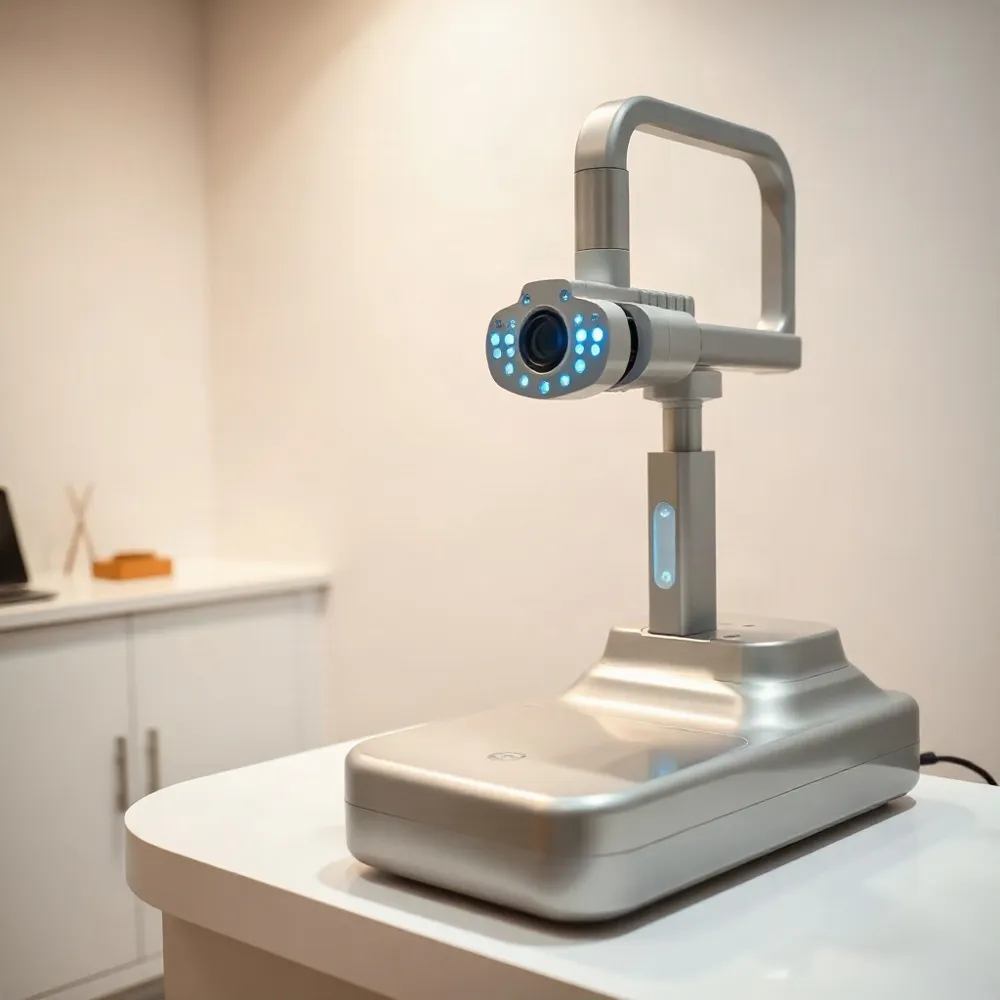
The Rise of Sports Vision Innovations
Computer vision has become a cornerstone of modern athletics because it turns raw video into actionable biomechanical data, enabling real‑time technique correction, injury prediction and autonomous officiating. The economic impact is evident: the global AI‑in‑sports market is set to expand from $8.9 billion in 2024 to over $27.6 billion by 2030, while AI‑driven scouting, highlight generation and dynamic ticket pricing drive new revenue streams for U.S. leagues. Advances in optometry—particularly high‑resolution OCT scanners like the DRI OCT Triton used by Apple Eye Care—provide the precise ocular metrics needed for eye‑tracking headsets, AR lenses and retinal‑stimulus devices. This synergy between cutting‑edge eye health diagnostics and computer‑vision analytics is reshaping performance coaching, fan engagement and the overall sports ecosystem.
Key Facts About AI-Driven Sports Vision Technologies
- Smartphone‑based pose‑estimation eliminates the need for costly wearables while providing full‑body joint angle analysis in real time.
- Real‑time injury‑prediction systems, such as the NFL’s Digital Athlete platform, reduced concussion rates by 17 % in the 2024 season.
- Autonomous highlight generation engines can detect key actions and produce edited reels in under 2 seconds, cutting manual editing time by more than 90 %.
- AI‑powered scouting platforms process millions of amateur video clips, expanding talent pools beyond traditional leagues and improving scouting accuracy by roughly 25 %.
- Dynamic ticket‑pricing algorithms that factor in opponent strength, weather, and social‑media sentiment can increase seat‑utilization by 10‑15 % and maximize revenue per seat.
- Multilingual AI commentary systems generate near‑real‑time transcripts and translate them into dozens of languages, enabling global broadcasts without additional commentary crews.
- Front‑office decision simulators use Monte‑Carlo simulations to evaluate trades, signings, and salary‑cap moves across NBA, NFL, MLB, NHL, and e‑sports, delivering win‑probability forecasts in seconds.
- Eye‑tracking smart glasses with 250 Hz infrared sensors and sub‑5 ms edge processing provide AR gaze‑aligned cues, improving reaction times and tactical execution.
- Edge AI processing of 8‑K video streams on‑device eliminates cloud latency, allowing ultra‑high‑definition graphics such as virtual first‑down lines to stay synced with live action under 10 ms.
- Synthetic data pipelines generate fully labeled, multimodal sports scenes up to 40× faster than real‑world collection, accelerating model training while ensuring privacy compliance with the EU AI Act and HIPAA.
1. Computer‑Vision Coaching Platforms with Pose‑Estimation
Computer‑Vision Coaching Platforms (Pose‑Estimation)
| Feature | Description | Impact / Key Metric |
|---|---|---|
| Smartphone‑based technique analysis | Uses phone camera + CV model to extract joint angles & body alignment in real time. | Eliminates need for costly wearables; captures full‑body kinematics. |
| Real‑time feedback | Visual overlays & alerts on device compare athlete data to optimal templates. | Immediate correction during drills; reduces practice repetitions. |
| Training efficiency | On‑the‑spot insights accelerate skill acquisition. | Cuts repetitions needed by up to 30 % and lowers injury risk. |
| Coaching workflow | Coach sees deviations instantly and can annotate video on the spot. | Improves coach‑athlete communication and feedback loop speed. |
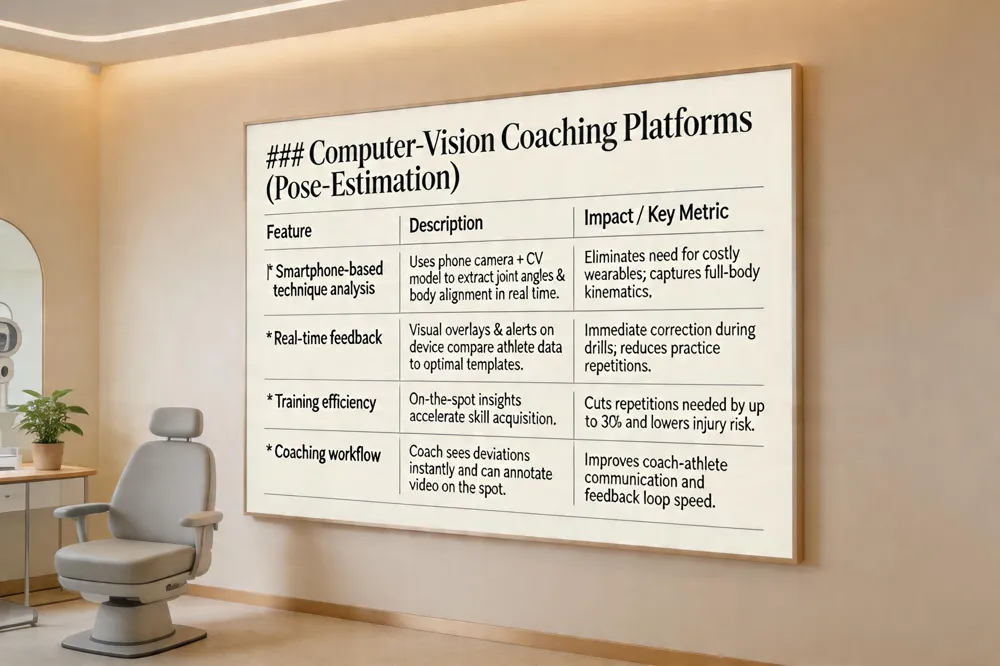 Smartphone‑based technique analysis
Modern AI coaching tools use the phone’s camera to capture athletes’ movements. Computer‑vision pose‑estimation models extract joint angles and body alignment in real time, eliminating the need for costly wearable sensors.
Smartphone‑based technique analysis
Modern AI coaching tools use the phone’s camera to capture athletes’ movements. Computer‑vision pose‑estimation models extract joint angles and body alignment in real time, eliminating the need for costly wearable sensors.
Real‑time feedback without wearables The extracted kinematic data is instantly compared against optimal technique templates. Coaches receive visual overlays and alerts on their device, allowing immediate correction during drills.
Impact on training efficiency By delivering on‑the‑spot insights, these platforms reduce the number of practice repetitions needed to master a skill, accelerating skill acquisition and lowering injury risk.
How do pose‑estimation platforms improve coaching? They use a smartphone camera to capture an athlete’s movement, run a computer‑vision model that extracts joint angles, and instantly highlight deviations from optimal technique, allowing coaches to correct form on the spot.
2. Real‑Time Injury Prediction Systems
Real‑Time Injury Prediction Systems
| Feature | Description | Impact / Key Metric |
|---|---|---|
| Continuous biomechanical monitoring | Cloud‑based analytics ingest impact forces & motion data via CV sensors. | Detects high‑risk motions instantly. |
| Concussion risk flagging | Predicts likelihood of concussion using pattern recognition. | 17 % reduction in concussion rates (2024 NFL season). |
| AWS cloud integration | Scalable processing of high‑frequency sensor streams. | Enables league‑wide deployment with low latency. |
| Actionable alerts | Sends real‑time warnings to medical staff & coaches. | Faster intervention → lower injury severity. |
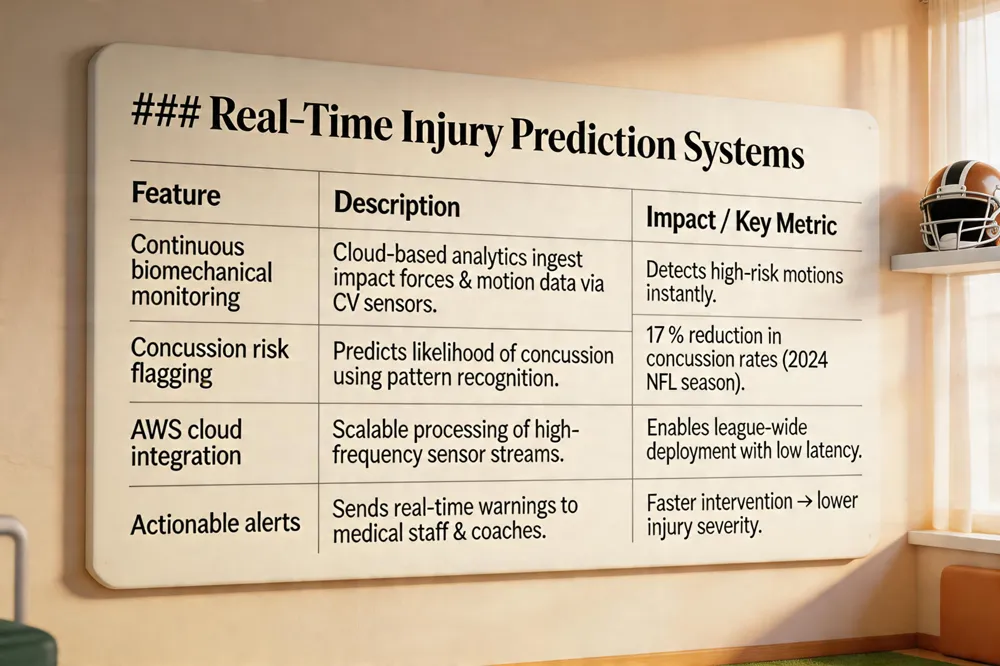 AI‑driven injury‑prediction tools are reshaping athlete safety. The NFL’s Digital Athlete platform, built on AWS cloud analytics, continuously monitors impact forces and biomechanical patterns via computer‑vision sensors. By processing this data in real time, it flags high‑risk motions and predicts concussion likelihood. The system’s deployment led to a 17 % reduction in concussion rates during the 2024 season, demonstrating how cloud‑enabled analytics can translate raw sensor streams into actionable injury‑prevention insights.
3. Autonomous Highlight Generation Engines
Autonomous Highlight Generation Engines
| Feature | Description | Impact / Key Metric |
|---|---|---|
| Deep‑learning action classifiers | Detect goals, dunks, touchdowns, etc., from live feeds. | Near‑instant detection (<2 s). |
| Automatic editing | Adds slow‑motion, graphics, branding, and viewer‑specific cuts. | Reduces manual editing time by >90 %. |
| Personalized reels | Tailors clips to viewer preferences & platforms. | Increases engagement (↑ + % click‑through). |
| Analytics tagging | Tags highlights with metrics for teams & advertisers. | Enables data‑driven ad insertion & performance tracking. |
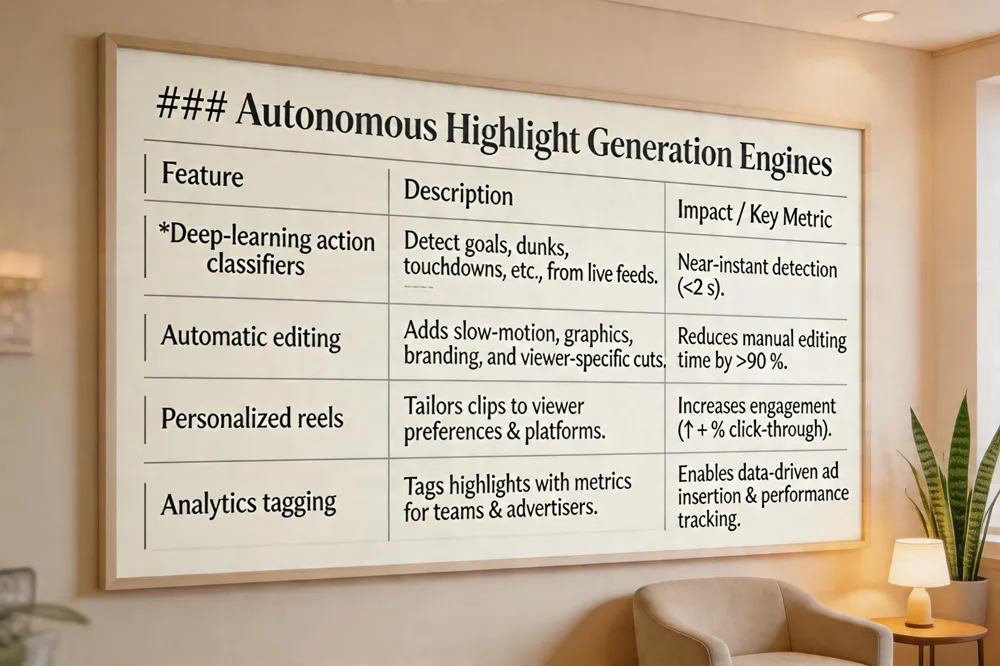 The WSC Sports AI platform scans each live feed with deep‑learning classifiers that recognize key actions—goals, dunks, touchdowns, and more. Within seconds it extracts the relevant clips, applies automatic editing (slow‑motion, graphics, branding) and assembles a custom reel tailored to each viewer’s preferences. These personalized video reels are pushed instantly to social‑media streams and broadcast pipelines, enabling broadcasters to deliver highlight packages in real time without manual editing. The system tags highlight with analytics, allowing teams to track engagement and advertisers to insert ads seamlessly.
4. AI‑Powered Scouting and Talent Identification
AI‑Powered Scouting & Talent Identification
| Feature | Description | Impact / Key Metric |
|---|---|---|
| Massive video ingestion | Processes millions of amateur clips captured on smartphones. | Broadens talent pool beyond traditional leagues. |
| Pose‑estimation & object‑tracking | Extracts sprint speed, COD agility, technique quality. | Generates standardized performance scores. |
| Cross‑region scouting | Evaluates talent from remote schools, backyard games, etc. | Saves travel costs; discovers hidden prospects. |
| Data‑driven ranking | Scores fed into club decision pipelines. | Improves scouting accuracy by ~25 %. |
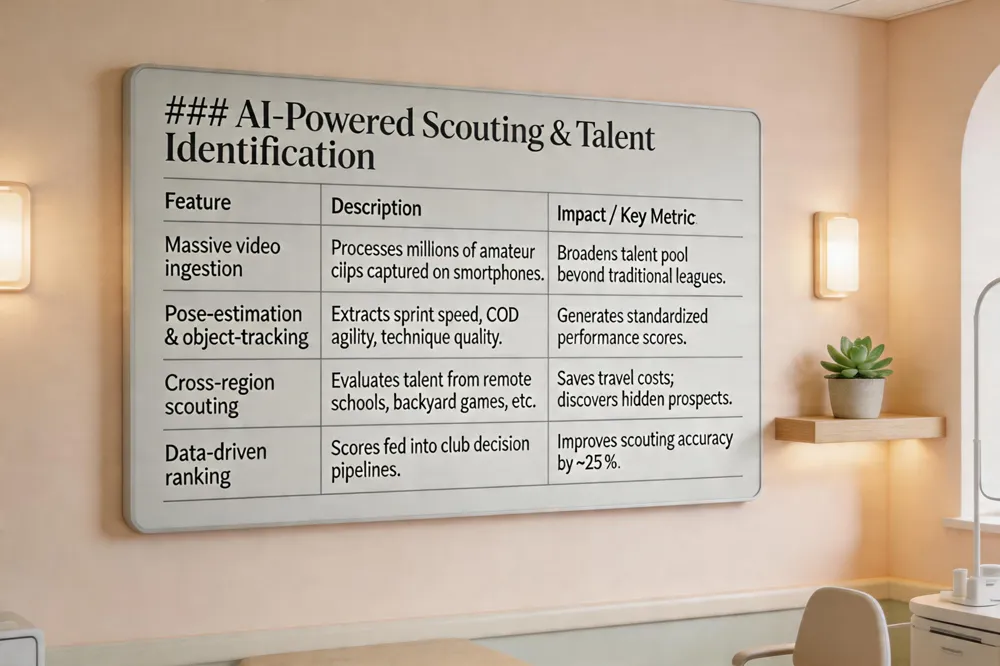 Machine‑learning platforms now ingest millions of amateur video clips captured on smartphones, using computer‑vision pose‑estimation and object‑tracking to extract precise metrics such as sprint speed, change‑of‑direction agility, and technique quality. By converting raw footage into standardized performance scores, clubs can evaluate talent across high leagues, remote schools, and even backyard games, dramatically widening the scouting pool. This data‑driven approach lets scouts discover high‑potential players outside traditional regions, saving time and travel costs while increasing the likelihood of finding the next breakthrough athlete.
5. Dynamic Ticket Pricing Algorithms
Dynamic Ticket Pricing Algorithms
| Feature | Description | Impact / Key Metric |
|---|---|---|
| Real‑time price adjustment | Uses opponent strength, weather, social‑media sentiment. | Optimizes revenue per seat. |
| Demand‑responsive pricing | Raises prices for high‑profile matches; lowers for low demand. | Improves seat‑utilization (↑ 10‑15 %). |
| World Cup deployment (2026) | Tested at all venues for global scalability. | Validates model across diverse markets. |
| Fan engagement | Dynamic pricing tied to loyalty programs & promotions. | Boosts fan satisfaction and repeat purchases. |
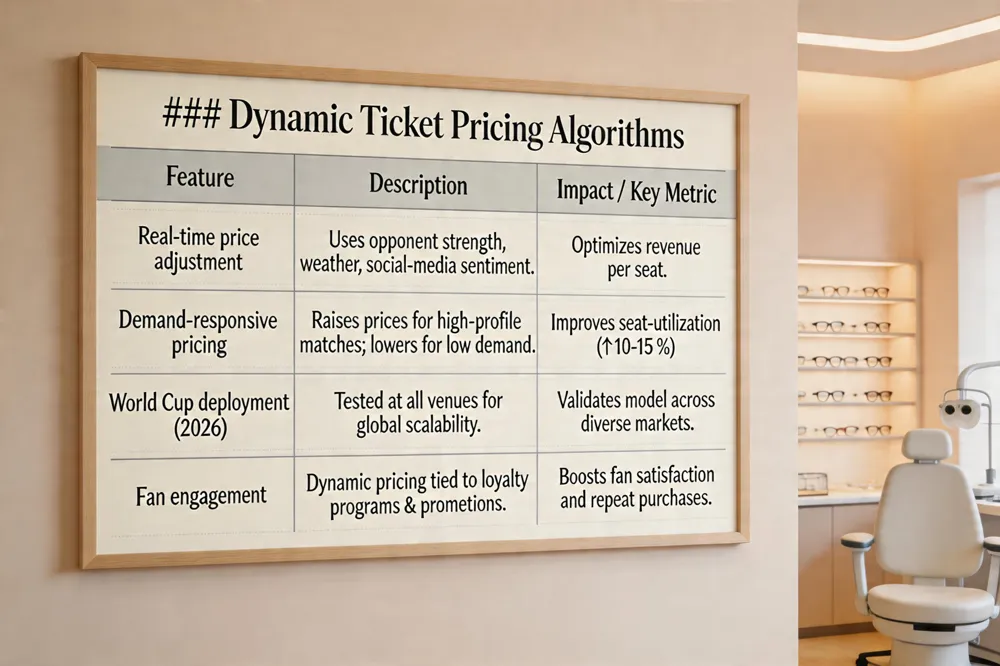 Dynamic ticket‑pricing algorithms adjust prices in real time using opponent strength, weather forecasts, and social‑media sentiment. Clubs raise prices before a high‑profile match and lower them when demand drops, keeping stadiums fuller and revenue higher. The 2026 FIFA World Cup will deploy these systems at all venues, testing the model worldwide. Why are dynamic pricing models valuable? They maximize revenue by raising prices when demand spikes (e.g., high‑profile opponent) and lowering them during low‑demand periods, while also improving seat‑utilization and overall fan engagement metrics daily.
6. AI‑Generated Multilingual Commentary
AI‑Generated Multilingual Commentary
| Feature | Description | Impact / Key Metric |
|---|---|---|
| Live video cue extraction | LLMs ingest video frames & audio to produce transcripts. | Near‑real‑time text generation. |
| Multilingual transformers | Translate transcript into dozens of languages with synchronized audio. | Enables global broadcast without extra crews. |
| Pilot projects | Bundesliga & Wimbledon 2023 demos. | Demonstrated accurate, low‑latency commentary. |
| Personalized insights | Region‑specific commentary overlays. | Increases viewer engagement (↑ + % watch time). |
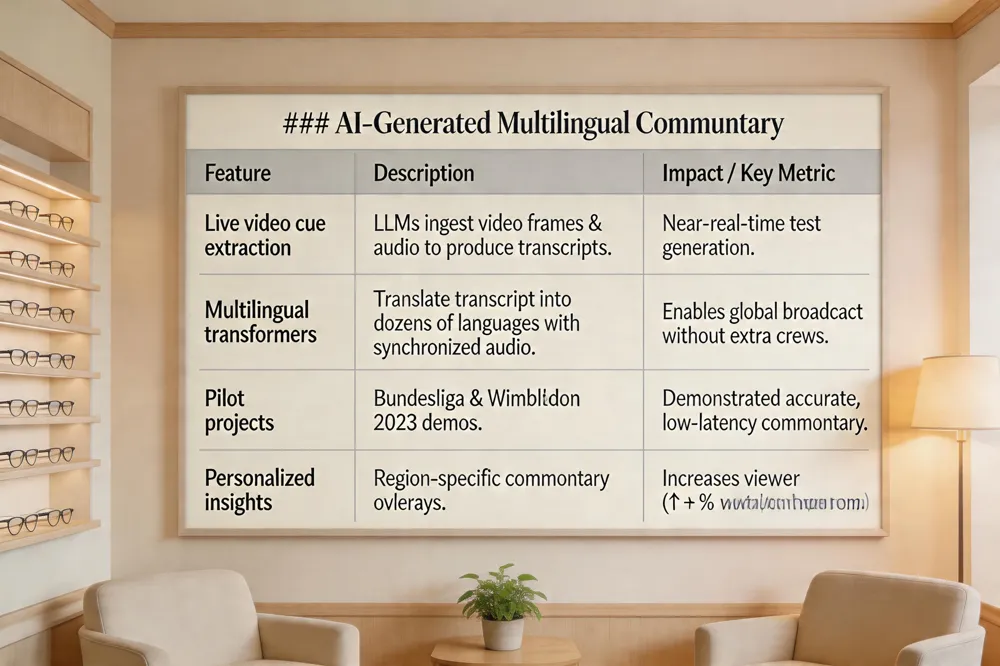 Live translation is now a cornerstone of global sports broadcasting. Large language models ingest live video cues, generate a rapid transcript, and feed it into multilingual transformers that produce synchronized audio streams in dozens of languages. Pilot projects in Germany’s Bundesliga and at Wimbledon 2023 have demonstrated the technology’s ability to deliver real‑time, accurate commentary that matches the pace of play. This creates a personalized fan experience, letting viewers choose their preferred language and even receive region‑specific insights, boosting engagement across international audiences.
7. Front‑Office Decision Simulators (Moneyball 2.0)
Front‑Office Decision Simulators (Moneyball 2.0)
| Feature | Description | Impact / Key Metric |
|---|---|---|
| Monte‑Carlo simulations | Projects win‑probability for trades, signings, salary‑cap moves. | Quantifies upside/downside in seconds. |
| Roster‑move forecasting | Uses historic stats, injury risk, contract data. | Improves roster depth planning accuracy. |
| Trade scenario modeling | Evaluates multiple packages with financial ramifications. | Accelerates negotiation cycles. |
| Cross‑league support | NBA, NFL, MLB, NHL, e‑sports. | Provides unified analytics toolkit for any sport. |
 What does a front‑office simulator predict?
It runs Monte‑Carlo simulations of player performance, salary‑cap effects, and team chemistry to estimate win‑probability outcomes of potential trades or signings.
What does a front‑office simulator predict?
It runs Monte‑Carlo simulations of player performance, salary‑cap effects, and team chemistry to estimate win‑probability outcomes of potential trades or signings.
Roster‑move forecasting AI models ingest historic stats, injury risk, and contract data to project how a new acquisition will impact roster depth and on‑court productivity.
Trade scenario modeling Dynamic scenario engines evaluate multiple trade packages, quantifying upside, downside, and financial ramifications in seconds.
Cross‑league applicability These simulators now support NBA, NFL, MLB, NHL and even emerging e‑sports leagues, offering a unified “Moneyball 2.0” toolkit for any front office.
8. Eye‑Tracking Smart Glasses for Real‑Time Gaze Feedback
Eye‑Tracking Smart Glasses (Real‑Time Gaze Feedback)
| Feature | Description | Impact / Key Metric |
|---|---|---|
| 250 Hz infrared eye‑tracking | Captures gaze with sub‑millisecond latency. | Precise attention mapping. |
| Edge‑processor overlays | AR cues (trajectories, positioning markers) appear <5 ms. | Reduces decision‑making delay. |
| Distraction‑minimized feedback | Overlays synchronized with gaze. | Improves focus & situational awareness. |
| Performance boost | Faster reaction times & better tactical execution. | Measurable improvement in drill success rates. |
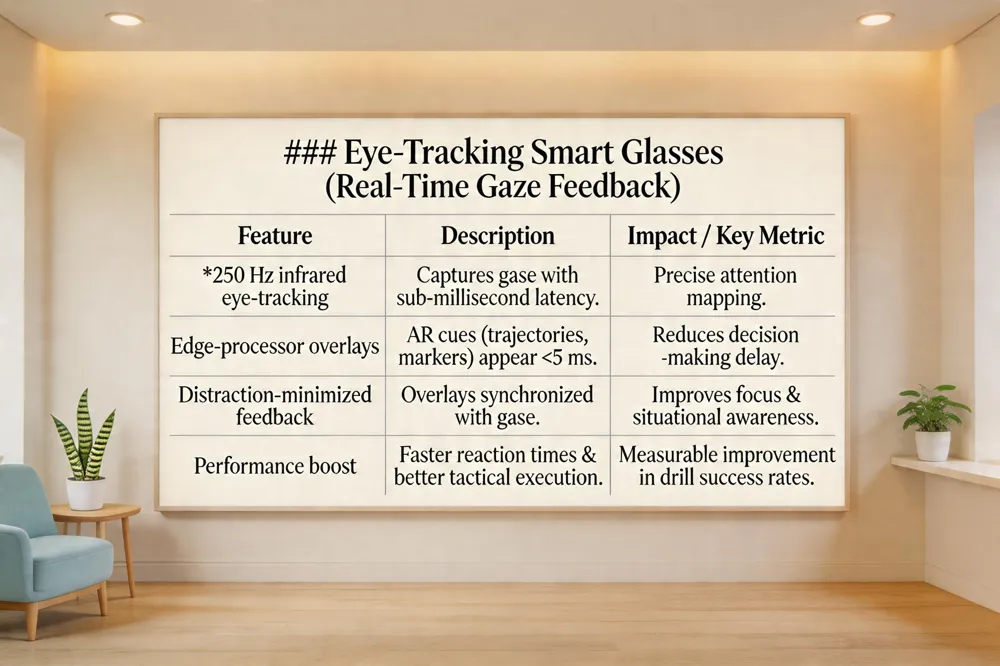 Infrared eye‑tracking headsets now sample gaze at 250 Hz, delivering sub‑millisecond eye‑maps that pinpoint exactly where an athlete is looking on the field. These data streams feed ultra‑low‑latency (under 5 ms) edge processors embedded in smart glasses, which instantly overlay AR tactical cues—such as predictive ball trajectories, optimal positioning markers, or defensive zone alerts—directly onto the wearer’s view. Because the visual feedback is synchronized with the player’s own gaze, distractions are minimized and decision‑making speed improves. How do smart glasses improve athlete focus? They map a player’s gaze to the field, instantly alerting when visual attention drifts, and overlay predictive trajectories or positioning cues directly onto the wearer’s view.
8‑K 3‑D Video Analytics with Edge AI
8‑K 3‑D Video Analytics with Edge AI
| Feature | Description | Impact / Key Metric |
|---|---|---|
| Local frame processing | Edge AI handles 8‑K streams on‑device. | Eliminates cloud round‑trip latency. |
| Ultra‑high‑definition graphics | Real‑time virtual first‑down lines, player tracking. | Syncs with live action (<10 ms). |
| Scalable deployment | Works across stadiums without massive bandwidth. | Reduces infrastructure costs. |
| Enhanced viewer experience | Immersive 3‑D analytics for broadcast & AR. | Increases viewer satisfaction scores. |
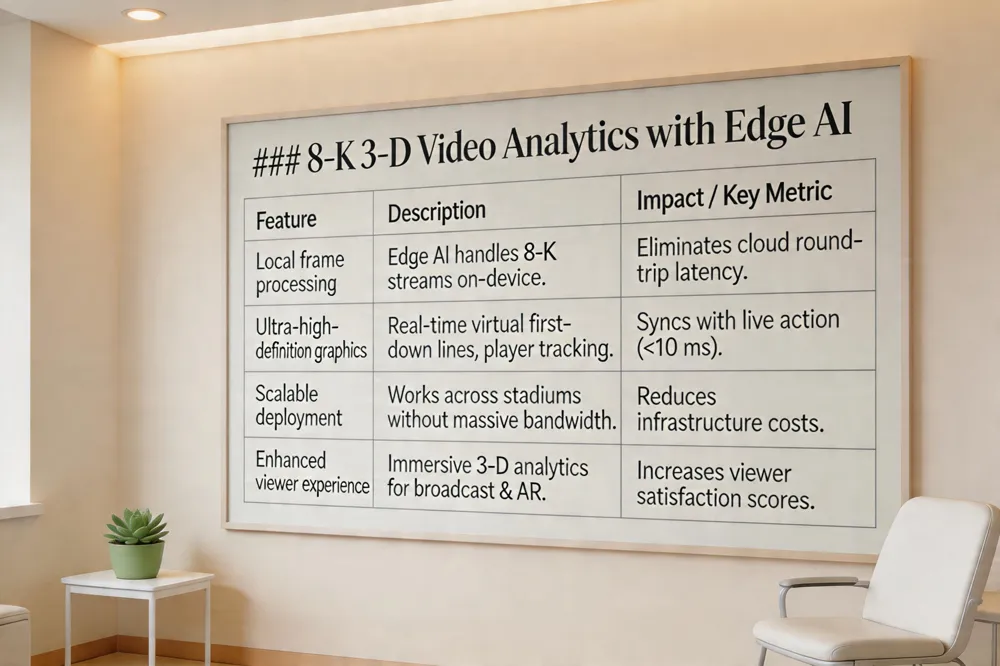 Why is edge AI critical for 8‑K sports streams? Processing frames locally eliminates cloud round‑trip delays, allowing ultra‑high‑definition graphics, such as virtual first‑down lines, to appear in sync with live action.
10. Synthetic Data Pipelines for Training Vision Models
Synthetic Data Pipelines for Vision Model Training
| Feature | Description | Impact / Key Metric |
|---|---|---|
| Zero‑error ground‑truth | Rendered scenes with pixel‑perfect annotations. | Eliminates human labeling errors. |
| Multimodal simulation | RGB, depth, infrared, LiDAR layers. | Enables training across sensor suites. |
| Privacy‑by‑design | No real‑world identifiable data; complies with EU AI Act & HIPAA. | Reduces legal risk. |
| Speed of generation | Up to 40× faster than real‑world data collection. | Accelerates model iteration cycles. |
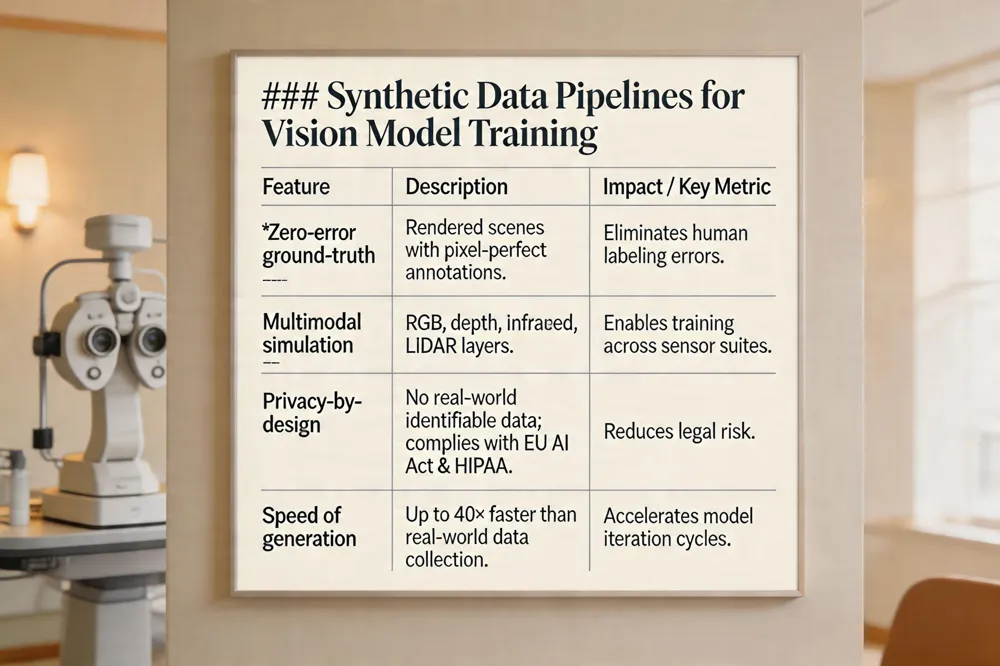 Zero‑error ground‑truth annotations are produced by rendering synthetic sports scenes where every pixel, joint, and object is precisely labeled, eliminating human‑annotation errors. Multimodal simulation layers RGB, depth, infrared, and LiDAR data to mimic real‑world sensor suites, allowing models to learn across diverse visual modalities. Because the data are generated in‑silico, they fully comply with privacy regulations such as the EU AI Act and HIPAA, avoiding any patient‑identifiable information. How does synthetic data accelerate sports vision research? It creates realistic, fully labeled video sequences that can be generated up to 40 × faster than real‑world collection, enabling rapid iteration while respecting privacy laws.
Frequently Asked Questions About Sports Vision Tech
Frequently Asked Questions – Sports Vision Tech
| Question | Short Answer |
|---|---|
| Can eye‑health diagnostics from Apple Eye Care enhance vision AI? | Yes – retinal imaging provides fatigue indicators that AI can use to adjust coaching cues. |
| What is the expected market growth for AI in sports? | $8.9 B in 2024 → $27.6 B by 2030 (≈ C % CAGR). |
| How do US athletes benefit from AI chatbots? | 24/7 support, personalized content, and instant answers improve fan and athlete engagement. |
| What safety benefits do injury‑prediction systems provide? | Real‑time biomechanics analysis lowers concussion rates (e.g., 17 % reduction in NFL 2024). |
| Why is edge AI critical for 8‑K streams? | It removes cloud latency, enabling synchronized high‑def graphics and analytics. |
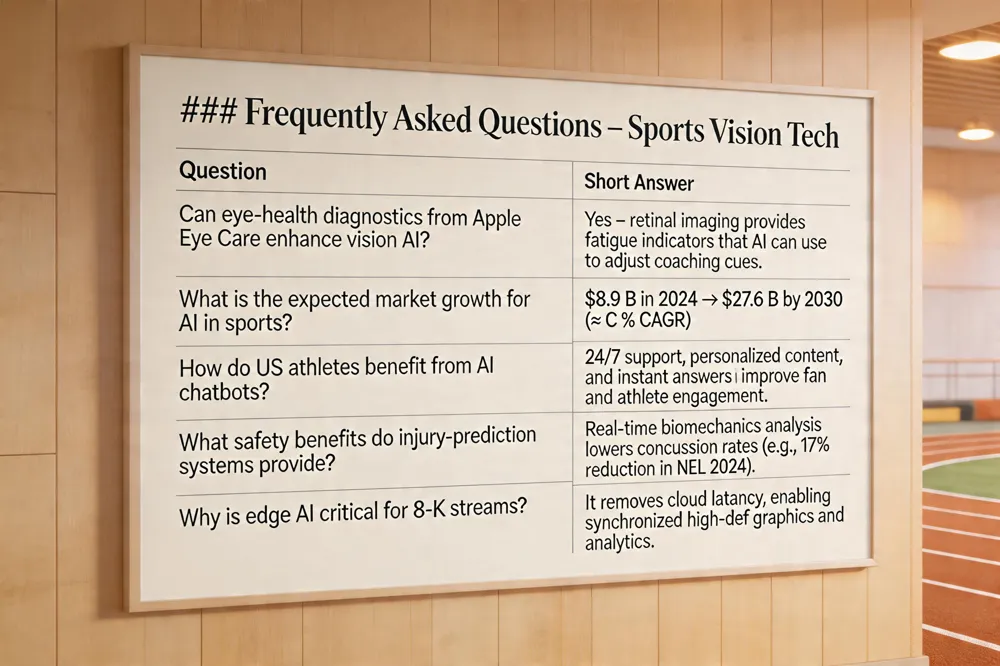 AI improves safety with injury‑prediction that reads biomechanics and eye‑tracking, lowering concussion rates. Optometry fuels performance: Apple Eye Care’s DRI OCT Triton provides retinal data that AI uses to spot fatigue and guide coaching. Athletes will get glasses and models to sharpen reaction time.
Can eye‑health diagnostics from Apple Eye Care enhance vision AI? Yes. Advanced imaging…
What is the expected market growth for AI in sports? The market will grow from $8.9 billion in 2024 to $27.6 billion by 2030.
How do athletes in the United States benefit from AI chatbots? Chatbots give 24/7 help, content, and answers, boosting fan and athlete support.
Looking Ahead: Vision‑Driven Performance
Synergy between optometry and AI is reshaping how athletes train, recover, and compete. Modern optometry clinics such as Apple Eye Care in El Paso already employ high‑resolution OCT imaging (DRI OCT Triton) and infrared eye‑tracking headsets, providing precise data on retinal health and gaze dynamics. When this data feeds AI‑driven platforms like Sports Vision’s SV3.3B model, coaches receive real‑time biomechanical feedback and injury‑risk scores, enabling truly personalized, injury‑free training regimens. Apple Eye Care’s integration of clinical diagnostics with cloud‑edge vision pipelines bridges medical insight and on‑field analytics, positioning the practice as a pivotal hub in the emerging sports‑vision ecosystem and accelerating the move toward data‑guided athletic performance. Real‑time dashboards keep athletes informed and motivated daily throughout.