Why Lifestyle Matters
Dry eye disease affects more than 16 million in the United States, with a higher prevalence among women and older adults. While prescription eye drops, punctal plugs, and in‑office therapies such as thermal pulsation or IPL address tear‑film instability and inflammation, they work best when paired with daily habits that support ocular surface health. Evidence shows that smoking cessation, a Mediterranean‑style diet rich in omega‑3 fatty acids, regular screen‑breaks (the 20‑20‑20 rule), proper ergonomics, adequate hydration, and maintaining indoor humidity together improve tear‑film stability and reduce inflammation. By integrating these evidence‑based lifestyle modifications into the patient’s routine, clinicians can enhance the efficacy of medical treatments, lower the need for aggressive interventions, and ultimately improve visual comfort and quality of life.
Screen‑Time Management and Blink Health
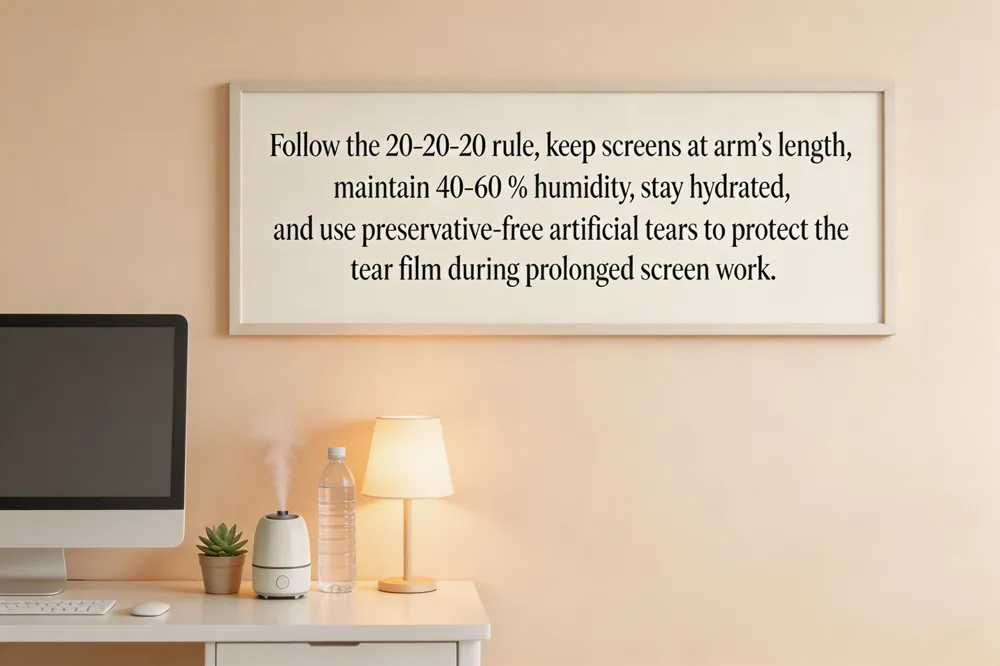 Dry‑eye symptoms are amplified by prolonged screen work, low ambient humidity, and inadequate blinking. The the 20‑20‑20 rule—look at something at least 20 feet away for 20 seconds every 20 minutes—relaxes the ciliary muscles, restores a natural blink cadence, and replenishes the tear film. Pair this with an ergonomic workstation: keep the monitor about an arm’s length (≈90 cm) away, position the screen slightly below eye level, and use a matte screen filter to reduce glare. Ambient humidity of 40‑60 % is optimal; a tabletop humidifier or placing a bowl of water near a heat source can prevent tear evaporation in dry, air‑conditioned rooms. Staying well‑hydrated (8‑10 glasses of water daily) supports lacrimal gland function, and preservative‑free artificial tears can be used liberally when the eyes feel dry.
How to prevent dry eyes from screen – Follow the the 20‑20‑20 rule, blink fully and frequently, adjust lighting and screen distance, keep humidity up, stay hydrated, and use preservative‑free tears.
What is the the 20‑20‑20 rule for dry eyes? – Every 20 minutes of close‑up work, look 20 feet away for at least 20 seconds; this pause relaxes eye muscles and encourages blinking.
What lifestyle changes help dry eyes? – Hydration, regular screen breaks, humidified air, protective wrap‑around sunglasses, avoidance of smoke, omega‑3‑rich diet, warm lid compresses, preservative‑free tears, and consistent sleep.
How to prevent dry eye syndrome – Maintain humid air, wear protective eyewear outdoors, blink often with the the 20‑20‑20 rule, stay hydrated, use preservative‑free tears, perform nightly warm compresses, and seek professional evaluation if symptoms persist.
Medical Devices and In‑Office Therapies
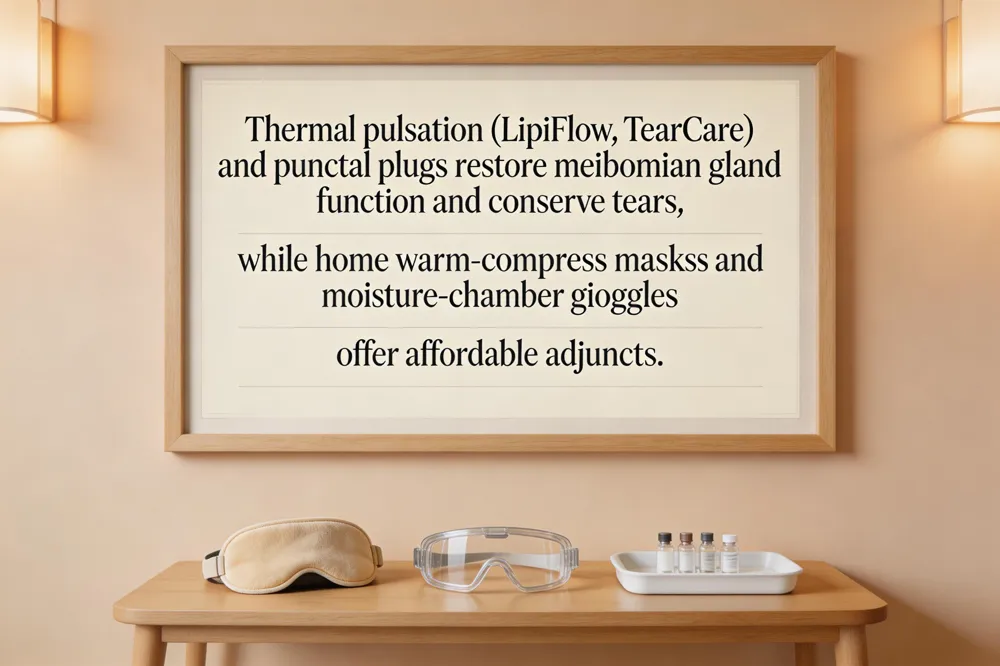 Dry‑eye treatment devices aim to unblock meibomian glands and stabilize the tear film. The most widely used in‑office systems are LipiFlow and TearCare, which deliver controlled thermal pulsation to melt hardened meibum while a clinician massages the lids. At home, warm‑compress masks or handheld heated eye‑mask devices provide gentle heat to the eyelid margin for several minutes each day. Punctal plugs—tiny silicone or collagen inserts placed in the tear ducts—conserve natural tears when evaporation remains excessive. Moisture‑chamber goggles and specialized humidifiers create a protective environment that reduces tear loss.
LipiFlow therapy typically costs between $700 and $1,500 for a single session; most patients need one initial treatment with follow‑up every 9 to 24 months, depending on meibomian‑gland dysfunction severity. Costs vary by location and provider, and many offices offer financing options because insurance coverage is uncommon.
Management of evaporative dry eye focuses on restoring the lipid layer and reducing tear evaporation. First‑line care includes daily lid hygiene, warm compresses, gentle eyelid massage, and omega‑3 supplementation. In‑office thermal‑pulsation (LipiFlow, iLux) and intense‑pulsed‑light therapy further enhance gland function, while preservative‑free lipid‑based lubricants provide symptomatic relief. Emerging treatments such as the FDA‑approved drop MIEBO target tear evaporation directly, and future research is exploring anti‑inflammatory biologics, autologous serum, and regenerative approaches to restore gland architecture and ocular surface homeostasis.
Nutrition, Vitamins and Supplements
 Omega‑3 fatty acids, olive oil, and adequate hydration form the backbone of a dry‑eye‑friendly diet. Foods rich in EPA/DHA—such as salmon, walnuts, flaxseed, and chia seeds—improve the lipid layer of the tear film and reduce ocular surface inflammation. Extra‑virgin olive oil supplies polyphenols and antioxidants that further stabilize tears.
Vitamins often low in dry‑eye patients include A, B2, B6, B12, C, and E. Vitamin A supports mucin production; B‑vitamins maintain cell integrity and nerve signaling; vitamin C and E provide antioxidant protection against oxidative stress.
Hydrating the eyes without drops involves drinking 8‑10 glasses of water daily and using a humidifier to keep indoor humidity between 40‑60 %. Regular blinking and the 20‑20‑20 rule during screen work refresh the tear film, while warm compresses and lid massage enhance natural tear secretion.
In summary, a Mediterranean‑style diet rich in Omega‑3 fatty acids, olive oil, and vitamins, combined with proper hydration and eyelid hygiene, can markedly lessen dry‑eye symptoms and overall ocular comfort.
Contact Lens Strategies
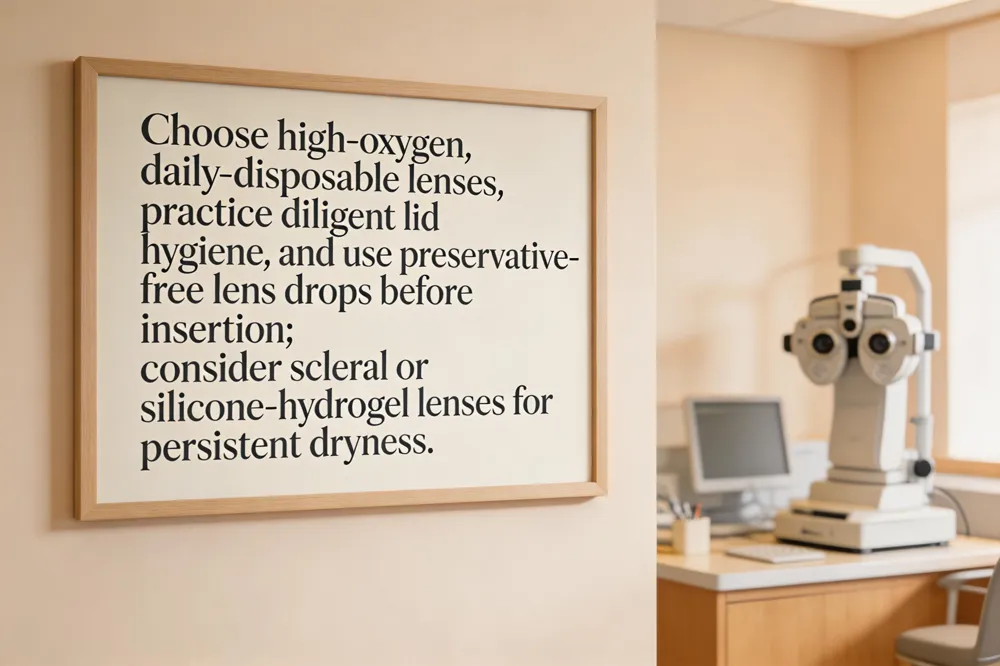 Choosing the right lens material and replacement schedule is the foundation of dry‑eye management for contact‑wearers. Daily‑disposable or high‑oxygen, moisture‑retaining soft lenses minimize tear‑film disruption, while strict adherence to the prescribed replacement timetable prevents protein buildup and irritation. For on‑the‑go lubrication, use preservative‑free artificial tears formulated for contact‑lens use; apply a drop before insertion and re‑apply as needed throughout the day, especially during prolonged screen work. Complement this with diligent lid hygiene: each evening, gently cleanse the lids and lashes with a mild, preservative‑free cleanser such as diluted baby shampoo, then massage the eyelids to promote Meibomian gland drainage and reduce inflammation. When standard lenses still cause dryness, discuss specialty options—scleral lenses that vault the cornea with a fluid reservoir, or lenses made from silicone‑hydrogel with superior oxygen permeability. Finally, maintain environmental control (humidifier, break airflow) and stay well‑hydrated, and schedule regular follow‑ups at Apple Eye Care to monitor the ocular surface and adjust therapy, including prescription anti‑inflammatory drops, if needed.
Artificial Tears and Prescription Options
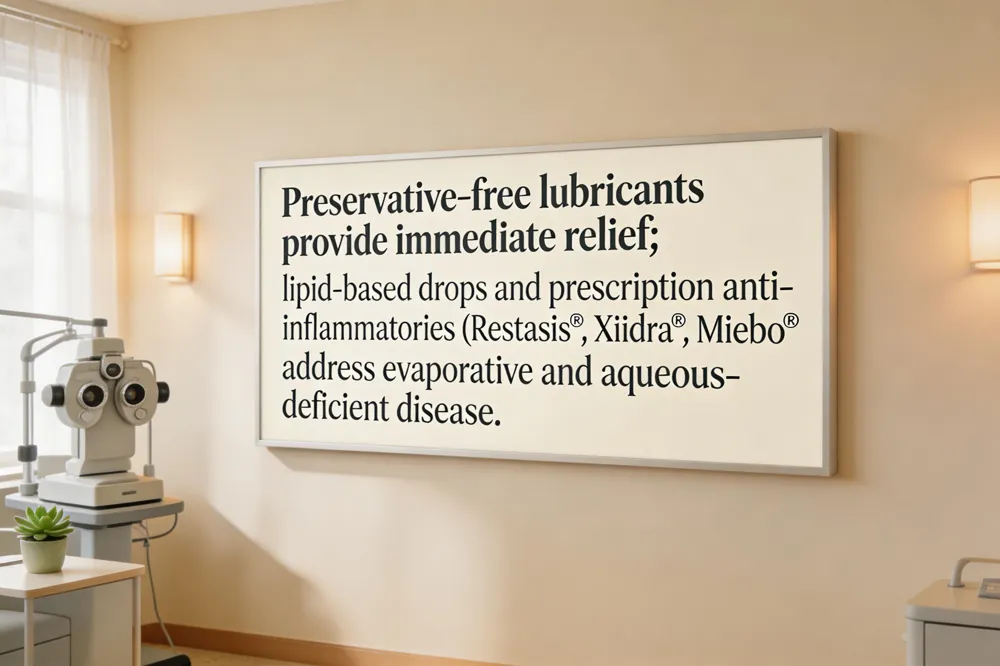 Artificial tears are the first‑line therapy for mild to moderate dry‑eye disease, offering immediate lubrication and symptom relief. Over‑the‑counter products such as Refresh® Tears, Systane® Ultra, and TheraTears® are widely used; preservative‑free single‑use vials are preferred for frequent dosing or sensitive eyes. For evaporative dry eye, lipid‑based drops like Systane Complete PF or Retaine MGD restore the oily tear layer, while hypotonic, electrolyte‑rich formulations support aqueous‑deficient eyes. Gel drops and nighttime ointments (e.g., Refresh Celluvisc, Systane Gel Drops) provide longer‑lasting hydration.
Prescription options include FDA‑approved cyclosporine drops (Restasis®) and lifitegrast (Xiidra®). These agents target ocular surface inflammation, improving tear stability. Newer agents such as Miebo® (perfluorohexyloctane) treat meibomian gland dysfunction, while XDEMVY® (lotilaner) addresses Demodex‑related blepharitis. For patients whose symptoms persist despite artificial tears, a comprehensive evaluation at Apple Eye Care can determine the underlying subtype and guide personalized therapy, often combining preservative‑free drops with anti‑inflammatory prescription medication for optimal relief.
Comprehensive Treatment Plans
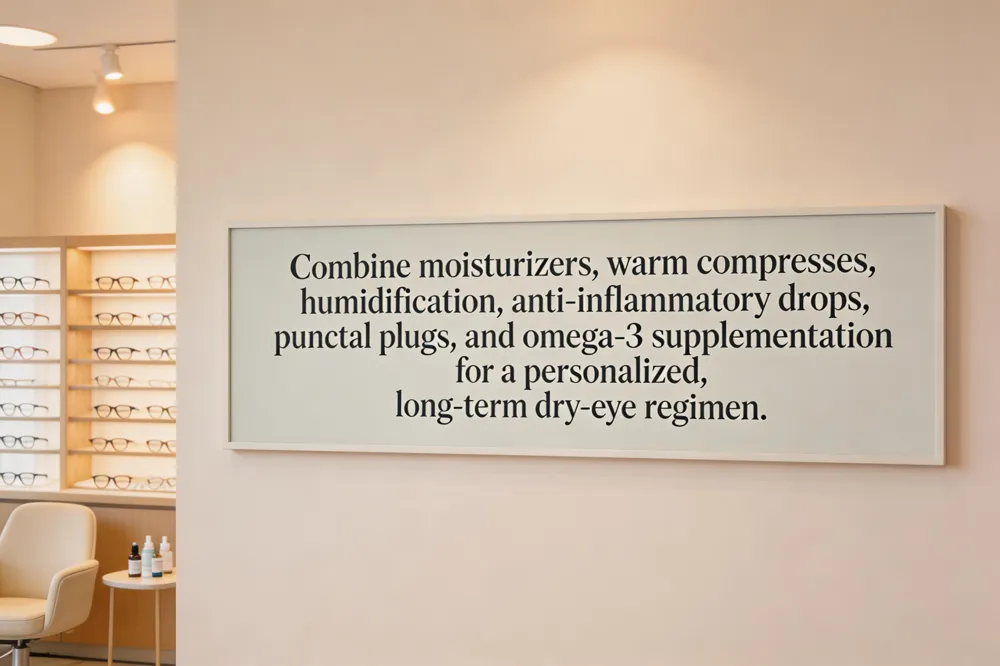 Dry‑eye disease is chronic and multifactorial, so a permanent cure does not exist; lasting relief requires a personalized, long‑term plan that tackles tear‑production deficits, evaporative loss, and eyelid‑gland blockage. Artificial tears, warm‑compress therapy with lid massage, and a humidifier keeping indoor humidity at 40‑60 % reduce evaporation. Prescription anti‑inflammatory drops (cyclosporine, lifitegrast) and punctal plugs retain tears, while omega‑3 intake supports meibomian gland function.
How to cure dry eyes permanently
There is no single permanent cure; sustained comfort comes from the combined regimen above, tailored by an eye‑care professional.
Best dry eye treatment
A multi‑step regimen begins with preservative‑free lubricants, followed by anti‑inflammatory drops, warm compresses, and eyelid hygiene. Punctal plugs are added, and lipid‑based drops such as Miebo or XDEMVY address meibomian gland dysfunction.
Humidifier for dry eyes
Increasing ambient humidity to 40‑60 % slows tear evaporation, especially in heated or air‑conditioned rooms. Use distilled water, clean the unit, and combine the humidifier with tears, warm compresses, and exams.
Latest treatment for dry eye syndrome
Recent FDA‑approved options include Miebo (perfluorohexyloctane) lipid drops, XDEMVY (lotilaner) for blepharitis, and the nasal spray Varenicline (Tyrvaya). Office‑based thermal‑pulsation (TearCare, LipiFlow) and IPL therapy clear clogged meibomian glands, while autologous serum drops provide growth‑factor‑rich lubrication for severe disease.
Home Care and Immediate Relief
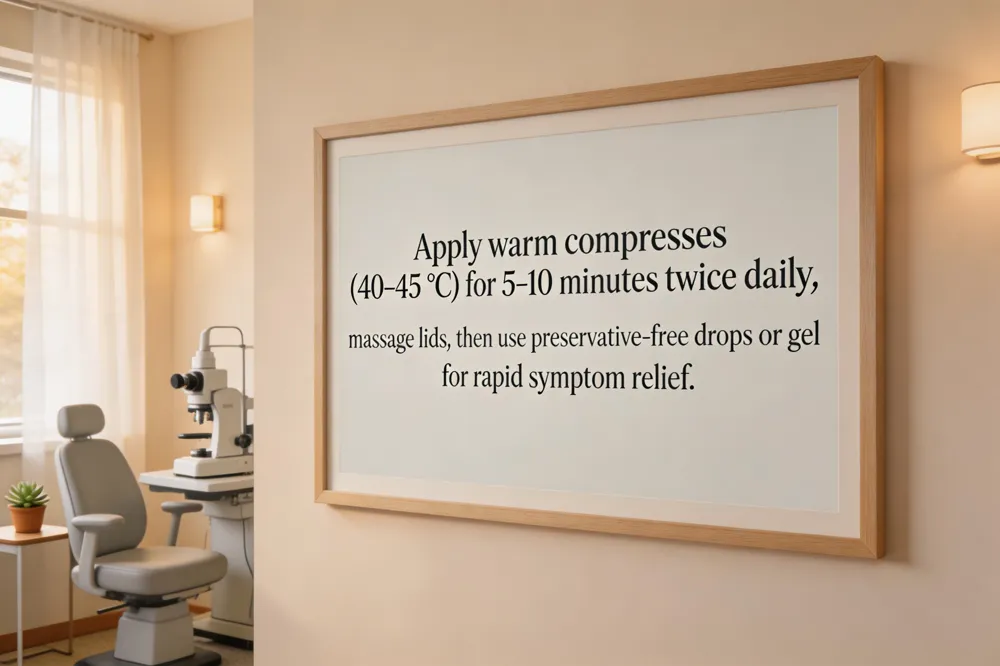 A warm compress is the cornerstone of immediate dry‑eye care. Use a damp washcloth or a heated eye mask (≈40‑45 °C) over closed eyelids for 5‑10 minutes, twice daily. The heat melts clogged meibum; after removal, gently massage the lids in a circular motion to express the softened oil and restore the lipid layer. Follow each session with preservative‑free artificial tears or a lubricating gel for added moisture.
Eyelid hygiene reinforces the compress. Each night, cleanse lids and lashes with a diluted baby‑shampoo solution or a commercial lid scrub, then rinse with warm water. This removes debris, reduces bacterial load, and prevents blepharitis‑related dry eye.
Quick relief strategies include: ‑ Instantly lubricate the surface with preservative‑free drops or a nighttime ointment. ‑ Perform a 30‑second blink‑exercise (slow, deliberate blinks) after a 3‑5‑minute warm compress to spread tears evenly. ‑ Increase indoor humidity with a portable humidifier and take regular 20‑20‑20 screen breaks. ‑ Boost omega‑3 intake through fish or supplements to improve tear quality.
Homemade eye drops are unsafe; always choose sterile, preserv‑‑free products. For persistent symptoms, schedule an evaluation with Dr. Stephen Applebaum at Apple Eye Care.
Root Causes, Testing and Long‑Term Outlook
 What is the root cause of dry eyes?
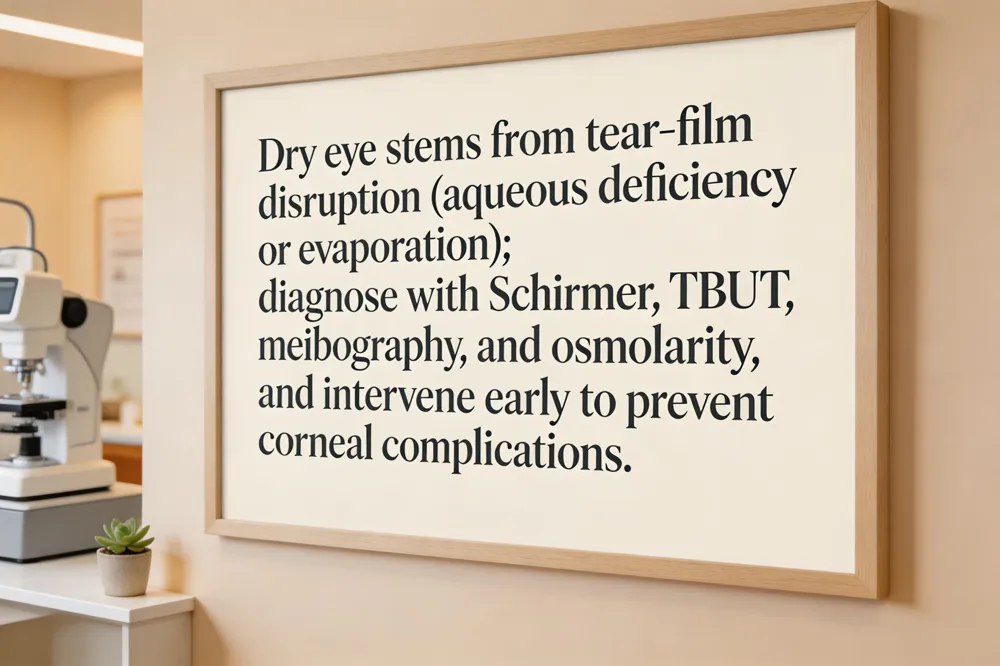
Dry eye disease stems from a disrupted tear film. Either insufficient aqueous production (often due to aging, hormonal shifts, autoimmune disease, or medications) or excessive evaporation (caused by lipid‑layer dysfunction, low humidity, wind, prolonged screen use, or eyelid abnormalities) leads to ocular surface inflammation. Most patients have a mix of reduced volume and poor quality tears, so restoring tear‑film balance is the primary treatment goal.
Test for dry eye syndrome
Evaluation begins with tear‑production tests (Schirmer or phenol‑red thread). Tear‑film stability is checked with tear‑break‑up time (TBUT) using fluorescein. Ocular surface staining, meibography, and point‑of‑care osmolarity or MMP‑9 assays help differentiate aqueous‑deficient, evaporative, or mixed disease, guiding individualized therapy.
Can dry eyes cause blindness?
Severe, untreated dry eye can damage the cornea, leading to ulceration, scarring, infection, and rarely blindness. Early detection, regular follow‑up, and proper lubrication dramatically lower this risk.
What is the best prescription eye drop for dry eyes?
Top options include Xiidra (lifitegrast) and Restasis (cyclosporine), with Cequa offering a higher cyclosporine concentration. Choice depends on disease severity, tolerance, and clinician assessment of tear film and meibomian gland function.
Taking the Next Step with Apple Eye Care
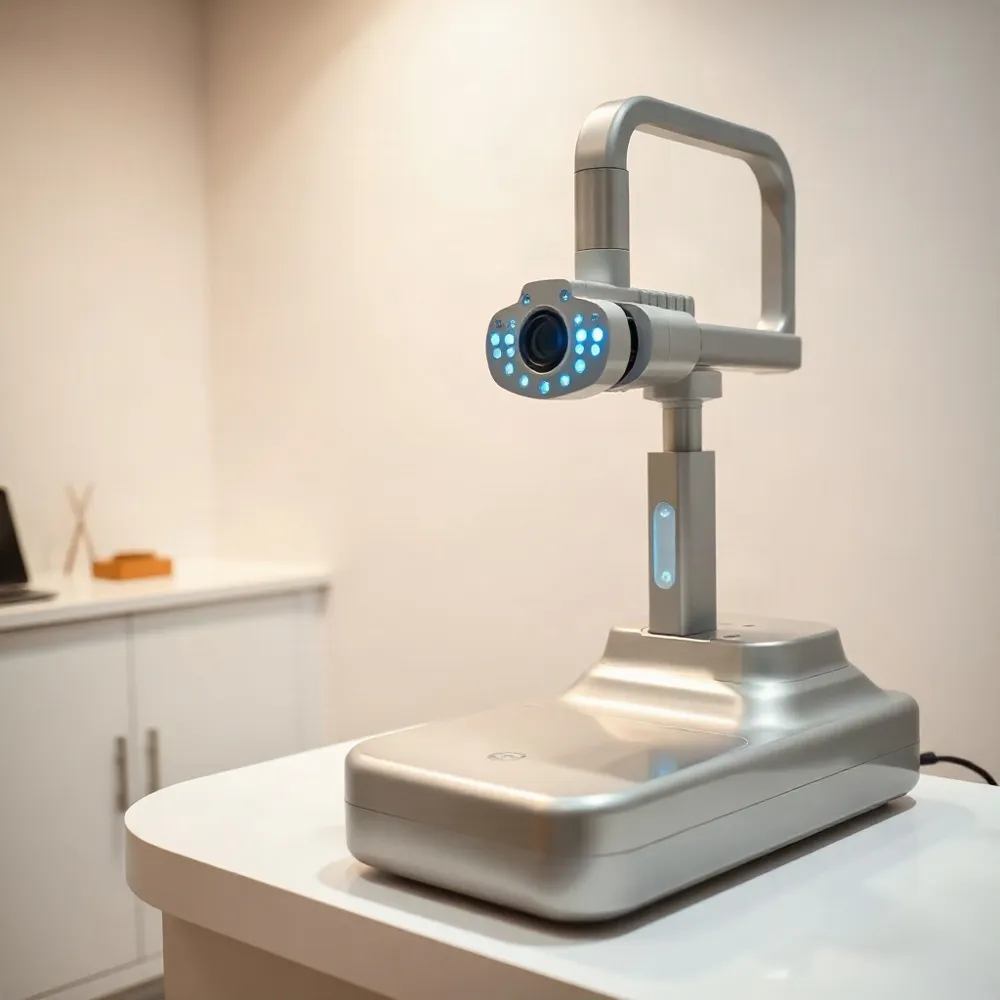
At Apple Eye Care in El Paso, TX, every patient begins with a personalized evaluation that reviews medical history, medication use, and daily habits that affect tear health. The clinician then employs advanced diagnostics, most notably the DRI OCT Triton, which captures high‑resolution images of the tear film, meibomian glands, and ocular surface to pinpoint the exact subtype of dry‑eye disease. Findings from the OCT are combined with standard tests (Schirmer, TBUT, osmolarity) to create an integrated medical‑and‑lifestyle plan. This plan may include prescription anti‑inflammatory drops, punctal plugs, or thermal pulsation therapy, alongside evidence‑based lifestyle changes such as omega‑3‑rich nutrition, humidifier use, screen‑break protocols, and smoking cessation. By marrying cutting‑edge technology with targeted home‑care strategies, Apple Eye Care delivers a comprehensive, individualized roadmap toward lasting symptom relief.