Understanding Dry Eye and Its Impact
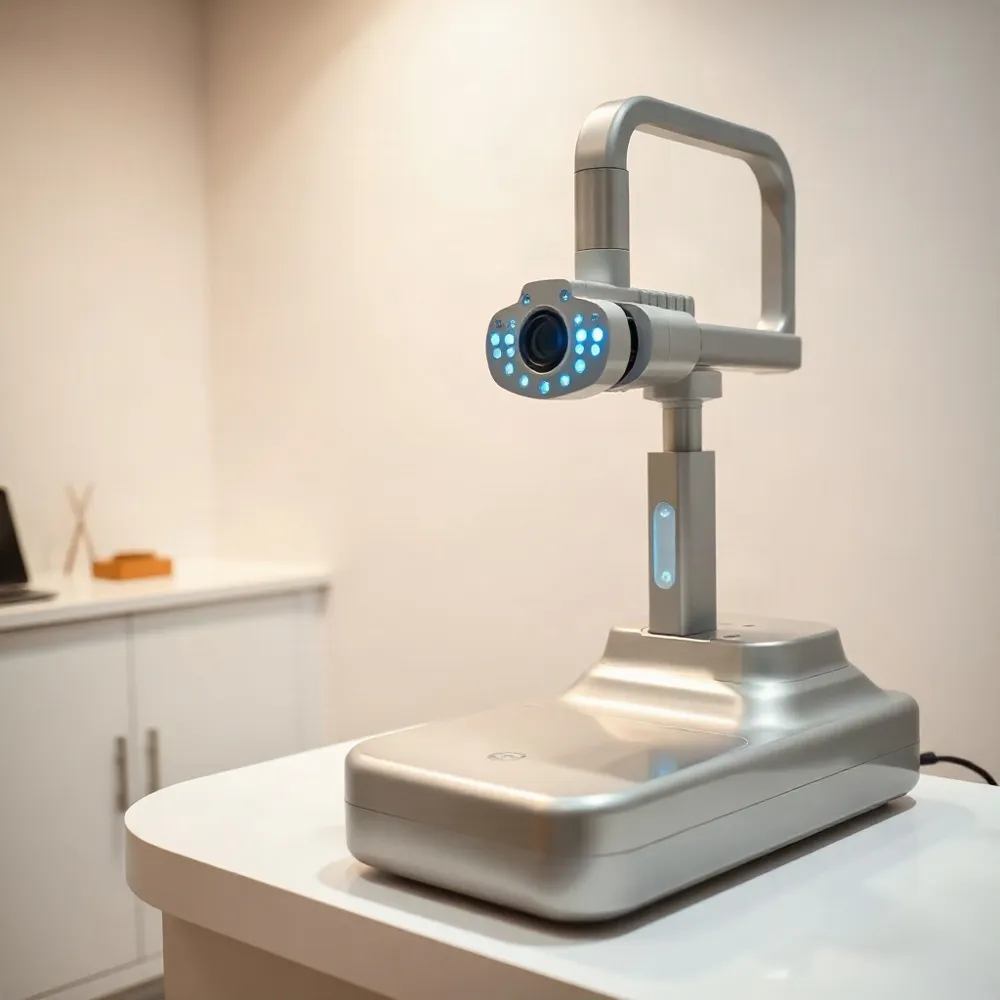
Dry eye disease affects roughly 16 million Americans—about 5‑15 % of the U.S. population—and becomes more common with age, especially after 65. Key risk factors include prolonged screen use that reduces blink rate, environmental exposures such as wind, low humidity, and air‑conditioning, hormonal changes in women, chronic diseases (e.g., Sjögren’s syndrome, diabetes), certain medications (antihistamines, antidepressants, diuretics), and contact‑lens wear. Because untreated dry eye can progress to corneal inflammation, ulceration, and even vision loss, early evaluation is essential. A comprehensive eye exam—including symptom questionnaires, tear‑film tests, and imaging like DRI OCT Triton—helps identify the underlying subtype (aqueous‑deficient, evaporative, or mixed) and guides a personalized treatment plan before irreversible damage occurs.
Recognizing Dry Eye Symptoms
| Symptom | Description | When to Seek Care |
|---|---|---|
| Stinging / Burning / Gritty sensation | Feeling of foreign body in the eye | Persistent > few times/day or worsening despite OTC tears |
| Excessive tearing | Over‑production of water as compensatory response | If accompanied by pain, visual changes, or redness |
| Redness & Light sensitivity | Irritation of ocular surface | Persistent redness, pain, or blurred vision |
| Blurred / Fluctuating vision | Tear‑film instability | If vision does not improve with lubricants |
| Stringy mucus / Watery discharge | Poor tear quality | Persistent discharge with irritation |
| Contact lens discomfort | Difficulty wearing lenses | Discomfort lasting > few days |
| Eye fatigue / Heavy eyelids | After prolonged reading or screen use | Fatigue interfering with daily tasks |
| Night‑time driving difficulty | Glare and blurred vision at night | Seek evaluation if affecting safety |
Key takeaway: If symptoms occur > few times/day, persist > 3 days of OTC tears, or are accompanied by significant redness, pain, visual changes, or lens intolerance, schedule a comprehensive eye exam at Apple Eye Care (El Paso, TX).
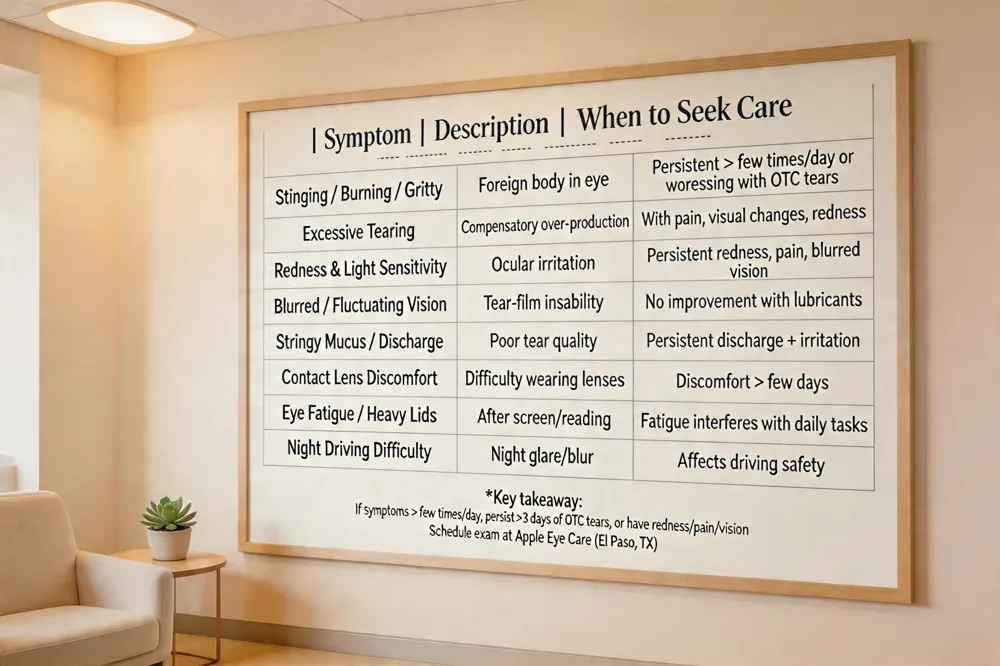 Dry eye disease typically causes a stinging, burning or gritty sensation that feels like something is lodged in the eye. You may notice excessive tearing as the eye overproduces water to compensate for irritation, along with redness, light sensitivity, and blurred or fluctuating vision. Stringy mucus or a watery discharge can appear, and many people find it uncomfortable to wear contact lenses or to drive at night. Eye fatigue and a feeling of heaviness in the eyelids are common after prolonged reading or screen use. These symptoms can interfere with everyday tasks such as computer work, driving, reading, and even social interactions, especially when the eyes feel gritty or blurry. When symptoms occur more than a few times a day, persist despite using over‑the‑counter artificial tears for three days, or are accompanied by significant redness, pain, visual changes, or difficulty wearing lenses, it’s time to seek professional evaluation. A comprehensive eye exam at Apple Eye Care in El Paso, TX can identify the underlying cause—whether inflammation, meibomian gland dysfunction, or tear‑film instability—and guide a personalized treatment plan.
Quick Relief Strategies
| Strategy | How to Use | Benefits |
|---|---|---|
| Preservative‑free artificial tears | 1–2 drops every 2–4 hrs | Immediate surface hydration without irritation |
| Warm compress | 5–10 min application | Melts clogged Meibomian glands, restores lipid layer |
| Lid hygiene | Gentle wash with baby‑shampoo or preservative‑free wipes after compress | Keeps gland openings clear |
| Oral Omega‑3 supplements | 1,200 mg daily | Supports gland function, reduces inflammation |
| Prescription anti‑inflammatory drops (Cyclosporine, Lifitegrast) | As prescribed, usually twice daily | Addresses underlying inflammation, boosts tear production |
| Punctal plugs | In‑office placement | Conserves natural & artificial tears for longer moisture |
Action: Book an exam with Apple Eye Care to personalize a rapid‑action plan based on your triggers.
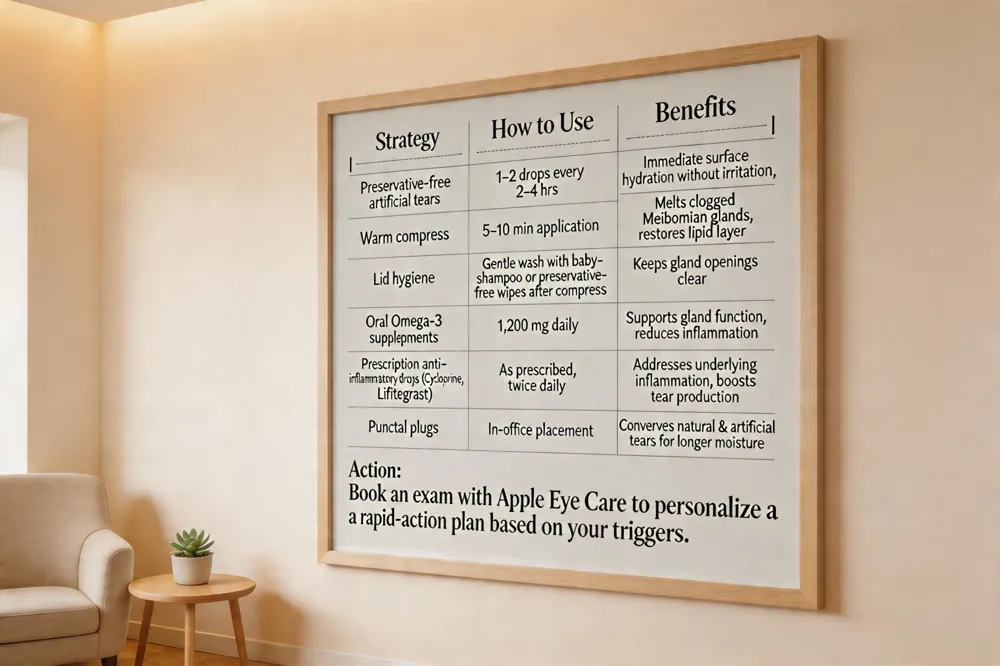 For fast relief of dry‑eye discomfort, start with preservative‑free artificial tears — apply a few drops every 2–4 hours to hydrate the ocular surface without irritating sensitive eyes. Follow each application with a warm compress for 5–10 minutes; the heat melts clogged Meibomian gland secretions, improving the lipid layer and reducing evaporation. After the compress, perform gentle lid hygiene—wash the eyelid margin with a mild baby‑shampoo solution or use preservative‑free eyelid wipes—to keep the glands clear.
If symptoms linger, consider oral omega‑3 supplements (1,200 mg daily) to support gland function and reduce inflammation. For moderate‑to‑severe cases, a short course of prescription anti‑inflammatory drops such as cyclosporine (Restasis) or lifitegrast (Xiidra) can address underlying inflammation and boost natural tear production. When drops alone are insufficient, punctal plugs can be placed by a clinician to conserve both natural and artificial tears, providing longer‑lasting moisture. Schedule an exam with Apple Eye Care so a personalized, rapid‑action plan can be tailored to your specific dry‑eye triggers.
Cost‑Effective Prescription Options
| Medication | Typical Monthly Cost (USD) | Insurance / Discount Options |
|---|---|---|
| Generic Cyclosporine (equivalent to Restasis) | $10‑$30 (generic) | Preferred‑drug tier, copay <$20 |
| Xiidra (Lifitegrast) | $0‑$20 with manufacturer savings card | Savings card, coupons, patient‑assistance programs |
| Cequa (Cyclosporine) | $30‑$60 (brand) | May be on preferred tier for some plans |
| OTC preservative‑free tears (adjunct) | $5‑$15 per bottle | Reduces frequency of prescription dosing |
Tip: Apple Eye Care can help apply manufacturer coupons, assistance programs, and identify the most affordable options for your insurance plan.
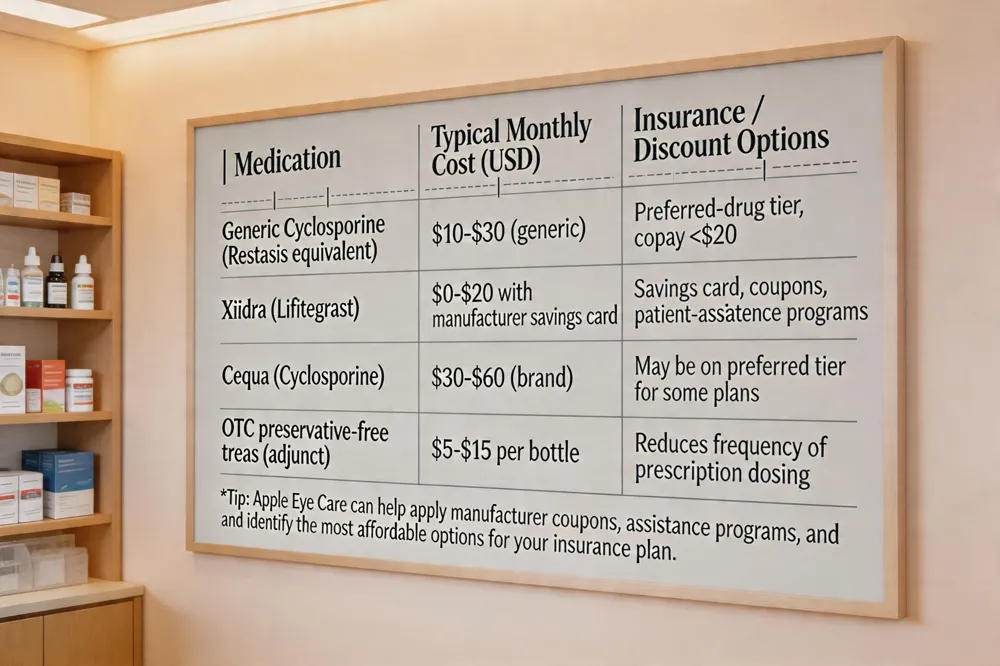 When dry‑eye symptoms persist despite over‑the‑counter (OTC) lubricants, many patients wonder which prescription drop offers the best value. The most affordable prescription choice is often a generic cyclosporine ophthalmic emulsion, which contains the same active ingredient as Restasis but is sold at a lower price point. For those with insurance, both generic cyclosporine and higher Xiidra (lifitegrast) can be placed on a preferred‑drug tier, reducing monthly copays to under $20. Xiidra also offers a manufacturer‑savings card that can bring the out‑of‑pocket cost to $0 or a minimal amount for eligible patients, making it a competitive low‑cost option. In addition, many manufacturers provide coupons, patient‑assistance programs, or sample bottles that further lower expenses; Apple Eye Care in El Paso can help identify and apply these resources. Before committing to long‑term prescription therapy, consider adjunctive OTC strategies such as preservative‑free artificial tears, gels, or ointments used multiple times daily, which can reduce the frequency of prescription dosing and keep overall costs down.
Emerging Therapies and Device Options
| Therapy / Device | Target Mechanism | Expected Duration of Relief |
|---|---|---|
| Miebo (perfluorohexyloctane) | Forms protective lipid barrier, reduces evaporation | Up to 6‑12 months with repeat treatment |
| XDEMVY (Lotilaner) | Kills Demodex mites, treats blepharitis | 3‑6 months, depending on reinfestation |
| Intense Pulsed Light (IPL) | Heat‑induced Meibomian gland expression | 6‑12 months after series of sessions |
| Lipiflow | Warm compress + massage to express glands | 6‑12 months after treatment |
| TearCare | Controlled thermal therapy for glands | 6‑12 months after 3‑session protocol |
| iLux 2 | Automated heat & pressure for gland clearance | 6‑12 months after treatment |
| Slow‑release ocular implants / Nanotech drops | Prolonged anti‑inflammatory drug delivery | Weeks‑months with fewer applications |
Future outlook: Gene‑therapy vectors, stem‑cell ocular surface regeneration, and gut‑microbiome modulation are under investigation as disease‑modifying strategies.
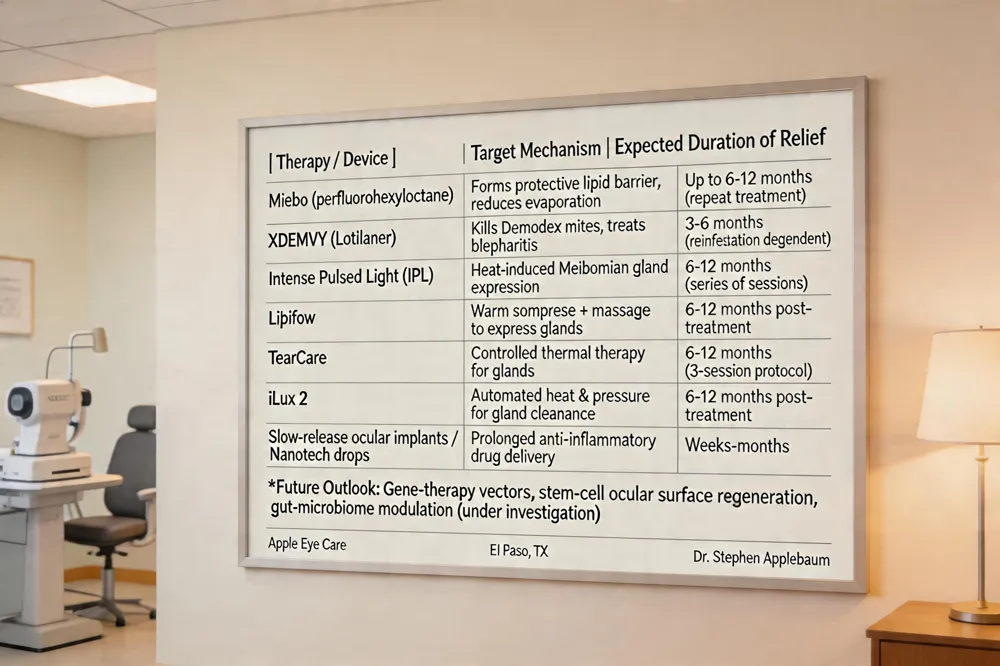 The latest FDA‑approved treatments for dry‑eye syndrome focus on both the ocular surface and the meibomian glands. Miebo (perfluorohexyloctane) targets Meibomian‑gland dysfunction by forming a protective barrier that reduces tear evaporation, while XDEMVY (lotilaner) eliminates Demodex mites that trigger blepharitis‑related inflammation. In‑office device therapies such as Intense Pulsed Light (IPL), Lipiflow, TearCare, and iLux 2 deliver controlled heat or light to melt and express clogged gland secretions, restore the lipid layer, and provide 6‑12 months of symptom relief after a short series of sessions.
Advanced drug‑delivery platforms are emerging to extend therapeutic exposure: slow‑release ocular implants and nanotechnology‑based drops can maintain anti‑inflammatory drug levels with fewer daily applications. Biologics and immunomodulators—Xiidra, Cequa, Vevye—continue to expand pharmacologic options for chronic inflammation.
Future research points toward gene‑therapy vectors, stem‑cell‑derived ocular surface regeneration, and gut‑microbiome modulation as potential disease‑modifying strategies. Together, these innovations give clinicians a broader toolbox to tailor therapy to each patient’s underlying dry‑eye mechanism, reducing reliance on frequent artificial‑tear use and improving long‑term visual comfort.
Prescription Eye Drop Arsenal
| Drop | Class / Mechanism | Typical Use |
|---|---|---|
| Restasis (Cyclosporine) | Calcineurin inhibitor – reduces inflammation, boosts tear production | Moderate‑to‑severe inflammation |
| Cequa (Cyclosporine) | Higher‑strength cyclosporine formulation | Similar to Restasis, often for patients needing stronger effect |
| Xiidra (Lifitegrast) | LFA‑1/ICAM‑1 antagonist – anti‑inflammatory | Faster symptom relief, moderate‑to‑severe cases |
| Lotemax / Eysuvis (Steroid) | Short‑term corticosteroid – rapid flare‑up control | ≤2 weeks to avoid cataract/IOP rise |
| Miebo (perfluorohexyloctane) | Evaporative disease – lipid barrier | Meibomian‑gland dysfunction dominant |
| Tyrvaya (Varenicline) nasal spray | Neural stimulation – ↑ tear, oil, mucin | Chronic dry eye with neurogenic component |
| XDEMVY (Lotilaner) | Anti‑Demodex – treats blepharitis | Demodex‑related inflammation |
Clinician preference: Start with cyclosporine or lifitegrast; add Miebo for evaporative disease; use steroids briefly for acute inflammation; consider XDEMVY for mite involvement.
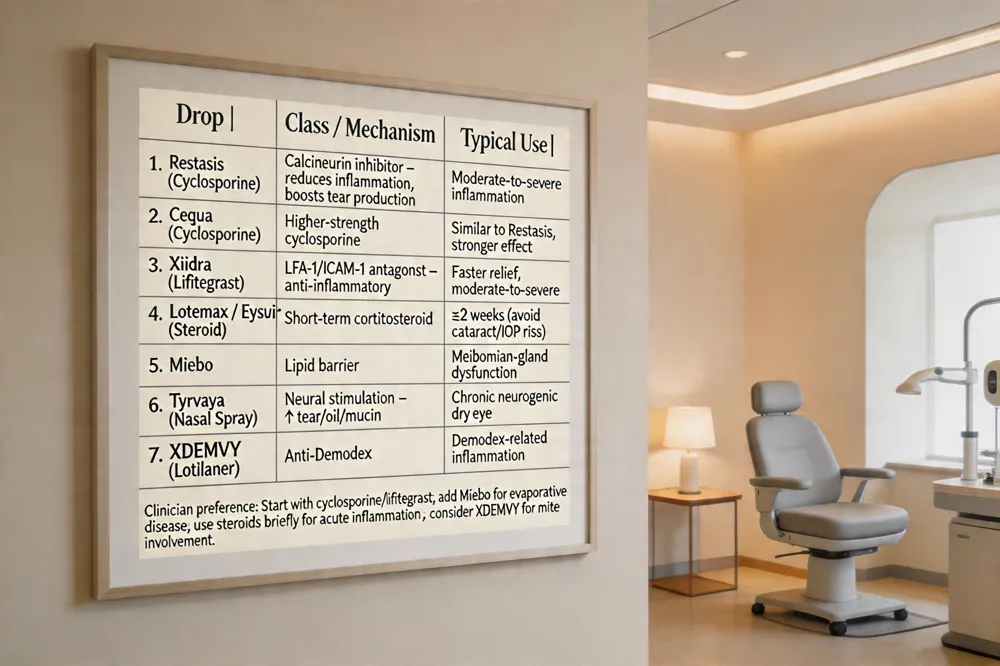 Prescription dry eye drops list
Cyclosporine‑based products (Restasis, Cequa) reduce ocular inflammation and boost natural tear production. Lifitegrast (Xiidra blocks LFA‑1/ICAM‑1 interaction, also decreasing inflammation. Short‑term steroid drops (e.g., Lotemax, Eysuvis) provide rapid flare‑up relief but are limited to 2 weeks to avoid cataract or pressure rise. Miebo (perfluorohexyloctane) targets evaporative disease by forming a protective lipid layer that cuts tear evaporation. Tyrvaya (varenicline) nasal spray stimulates tear, oil, and mucin secretion via neural pathways.
Best prescription eye drops for dry eyes (ophthalmologist recommended)
Most clinicians start with cyclosporine (Restasis, Cequa or lifitegrast (Xiidra for moderate‑to‑severe inflammation. When Meibomian‑gland dysfunction dominates, Miebo is preferred for its anti‑evaporative action. For acute inflammation, a brief course of Lotemax or Eysuvis is used. XDEMVY (lotilaner) may be added for Demodex‑related blepharitis. Choice is driven by the underlying mechanism—whether inflammation, tear‑film instability, or gland blockage.
Restasis eye drops – efficacy and alternatives
Restasis, an FDA‑approved calcineurin inhibitor, typically shows symptom improvement after 4‑12 weeks of twice‑daily use; common side effects are burning and transient blurred vision. Alternatives include Xiidra (lifitegrast with a quicker onset, higher‑strength Cequa, or combination therapy with preservative‑free artificial tears. Patients intolerant to Restasis often switch to these options for comparable anti‑inflammatory benefit.
Over‑the‑Counter Solutions and Decision Guide
| Product Type | Example Brands | Ideal Use |
|---|---|---|
| Preservative‑free artificial tears | TheraTears, Refresh Tears, Systane Ultra | Mild‑moderate dryness, frequent dosing |
| Gel drops | Systane Gel Drops, Refresh Celluvisc | Moderate‑severe dryness, longer surface retention |
| Ointments | Refresh PM, Systane Nighttime Ointment | Night‑time protection, overnight hydration |
| Lipid‑based drops | Systane Complete, Retaine MGD | Evaporative dry eye (Meibomian gland dysfunction) |
| Hypotonic drops | Refresh Optive | Aqueous‑deficient dry eye, hyperosmolarity |
| Red‑eye drops (vasoconstrictors) | Naphazoline, Tetrahydrozoline | Avoid long‑term – can worsen dryness |
Decision guide: Start with preservative‑free tears; upgrade to gels/ointments if symptoms persist; choose lipid‑based for evaporative disease; use hypotonic for aqueous deficiency.
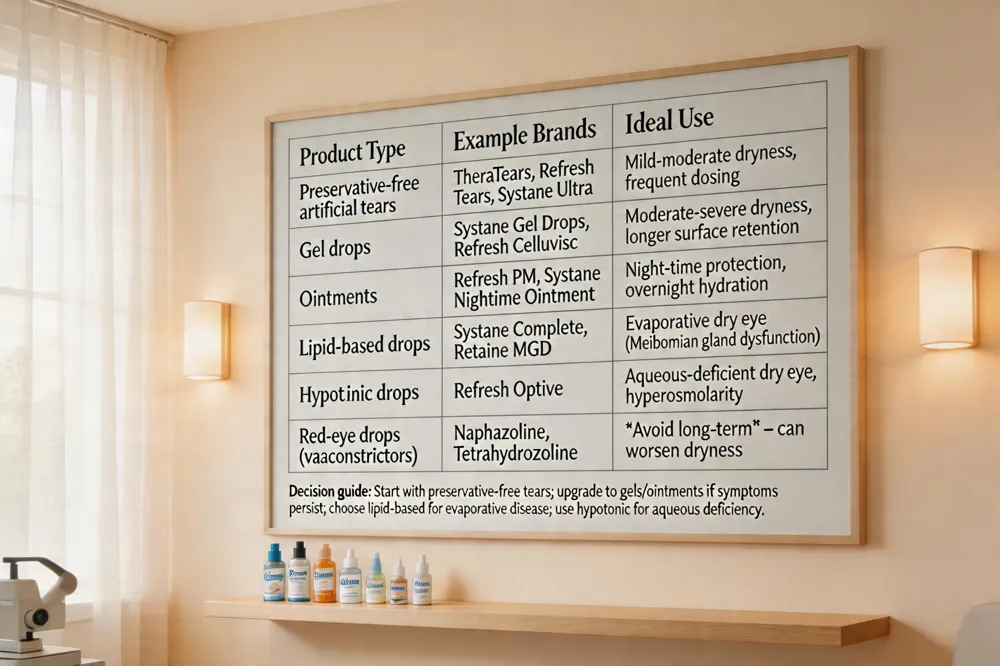 Over‑the‑counter (OTC) artificial tears are the first line for mild to moderate dry eye. Preservative‑free formulations (e.g., TheraTears, Refresh Tears, Systane Ultra) are ideal for frequent use because they avoid preservative toxicity and are safe for sensitive eyes. For longer‑lasting relief, gel drops such as Systane Gel Drops or Refresh Celluvisc, and ointments like Refresh PM or Systane Nighttime Ointment, provide a thicker barrier that stays on the ocular surface overnight, though they may cause temporary blur. Choose lipid‑based drops (Systane Complete, Retaine MGD) when evaporative dry eye due to Meibomian gland dysfunction is present, as they replenish the oily tear layer; select hypotonic solutions (Refresh Optive) for aqueous‑deficient dry eye to increase tear volume and reduce hyperosmolarity. Red‑eye drops that contain vasoconstrictors (tetrahydrozoline, naphazoline) should be avoided long‑term because they can worsen dryness.
Best over‑the‑counter eye drops for dry eyes – Preservative‑free artificial tears (TheraTears, Refresh Tears, Systane Ultra) for mild‑moderate symptoms; gel drops (Systane Gel, Refresh Celluvisc) for moderate‑severe dryness; ointments (Refresh PM, Systane Nighttime) for nighttime protection. Lipid‑based drops (Systane Complete, Retaine MGD) address evaporative disease, while hypotonic drops (Refresh Optive) help aqueous deficiency.
Artificial tears vs prescription drops – choosing the right option – Artificial tears lubricate the surface and suit mild cases or occasional use. When symptoms require dosing more than four times daily, are persistent, or involve inflammation, preservative‑free or lipid/hypotonic formulations are preferred. Prescription drops (cyclosporine, lifitegrast, Miebo, etc.) target underlying inflammation, tear‑film instability, or Meibomian gland dysfunction and are reserved for moderate‑to‑severe disease confirmed by an eye exam at a practice such as Apple Eye Care.
Allergic Dry Eye and Long‑Term Management
| Intervention | Purpose | Notes |
|---|---|---|
| Preservative‑free artificial tears | Hydration & allergen rinsing | Safe for frequent use |
| OTC antihistamine drops (Ketotifen, Olopatadine) | Reduce itching & redness | Combine with tears for optimal comfort |
| Optase Allegro (preservative‑free antihistamine) | Fast relief of allergy‑related dry eye | Suitable for sensitive eyes |
| Prescription cyclosporine / lifitegrast | Control chronic ocular inflammation | Useful when OTC antihistamines insufficient |
| Short‑term corticosteroids | Acute flare‑up control | Under professional supervision, limited duration |
| Lifestyle measures (hydration, screen breaks, humidifier, sunglasses) | Reduce environmental triggers | Essential adjunct to pharmacologic therapy |
| Omega‑3 rich diet or supplements | Improve tear‑film quality | 1,200 mg daily commonly recommended |
| Punctal plugs / scleral lenses (Apple Eye Care) | Long‑term moisture retention | Consider for refractory cases |
Bottom line: Combine allergy‑specific drops with preservative‑free lubricants, address inflammation with prescription agents when needed, and adopt lifestyle changes for sustained relief.
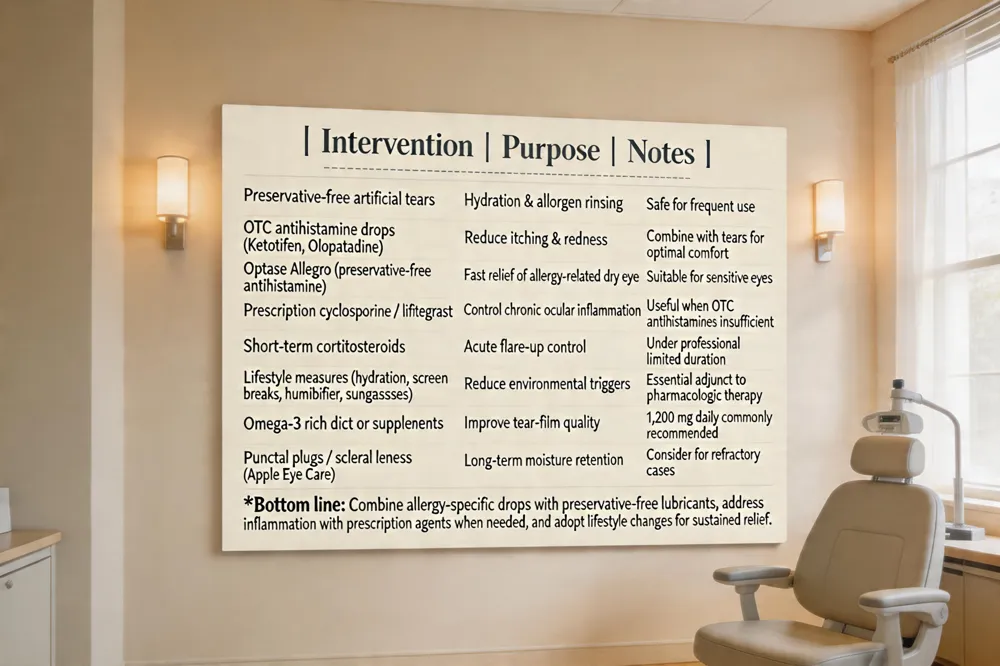 Allergy‑focused OTC artificial tears
[Preservative‑free artificial tears] are the cornerstone for allergic dry eye. They hydrate the ocular surface while rinsing away allergens without causing irritation. Brands such as [Systane Complete PF], [Refresh Optive PF], and [TheraTears] provide gentle, long‑lasting lubrication for frequent use.
Antihistamine eye drops safe for dry eye
OTC antihistamine drops like ketotifen (Zaditor) or olopatadine (Pataday) target itching and redness without drying the tear film. When combined with preservative‑free tears, they keep both dryness and allergy inflammation under control. Optase Allegro, a preservative‑free formulation designed for allergy‑related dry‑eye symptoms, offers fast, lasting relief.
Prescription options for allergy‑related inflammation
If OTC measures fail, prescription anti‑inflammatory drops such as cyclosporine (Restasis, Cequa) or lifitegrast (Xiidra) address chronic ocular surface inflammation while allowing continued allergy management. Short‑term corticosteroids can be used for flare‑ups under professional supervision.
Lifestyle and dietary measures
Hydration, regular screen breaks, humidifiers, and protective sunglasses reduce environmental triggers. Omega‑3‑rich foods (salmon, walnuts, flaxseed) or supplements improve tear‑film quality and lessen inflammation.
Permanent relief strategies
Long‑term comfort often requires a blend of lifestyle changes and targeted professional care. [Apple Eye Care] offers comprehensive exams, DRI OCT Triton imaging, and personalized therapies such as punctal plugs or scleral lenses. Consistent follow‑up ensures the treatment plan remains effective for lasting relief.
Finding the Right Path to Comfort
Over‑the‑counter (OTC) artificial tears are the first‑line option for occasional, mild dryness caused by screen use, wind, or low humidity. They provide temporary lubrication, come in preservative‑free formulations for frequent dosing, and are inexpensive, but they do not treat inflammation, poor tear quality, or meibomian gland dysfunction that drive chronic disease. Prescription drops such as cyclosporine (Restasis, Cequa, Vevye), lifitegrast (Xiidra), Miebo, or the nasal spray Tyrvaya target ocular surface inflammation, stimulate tear production, or reduce evaporation, making them essential for moderate‑to‑severe or persistent symptoms. Apple Eye Care in El Paso, TX, conducts a comprehensive dry‑eye evaluation using DRI OCT Triton and other diagnostic tests to pinpoint the underlying mechanism and then tailors a plan that may combine OTC lubricants, prescription medication, punctal plugs, or in‑office therapies like IPL or LipiFlow. Alongside medical treatment, proactive lifestyle changes—regular screen‑breaks, humidifier use, warm eyelid compresses, and omega‑3 supplementation—enhance comfort and long‑term ocular health.