Understanding Dry Eye and Modern Care
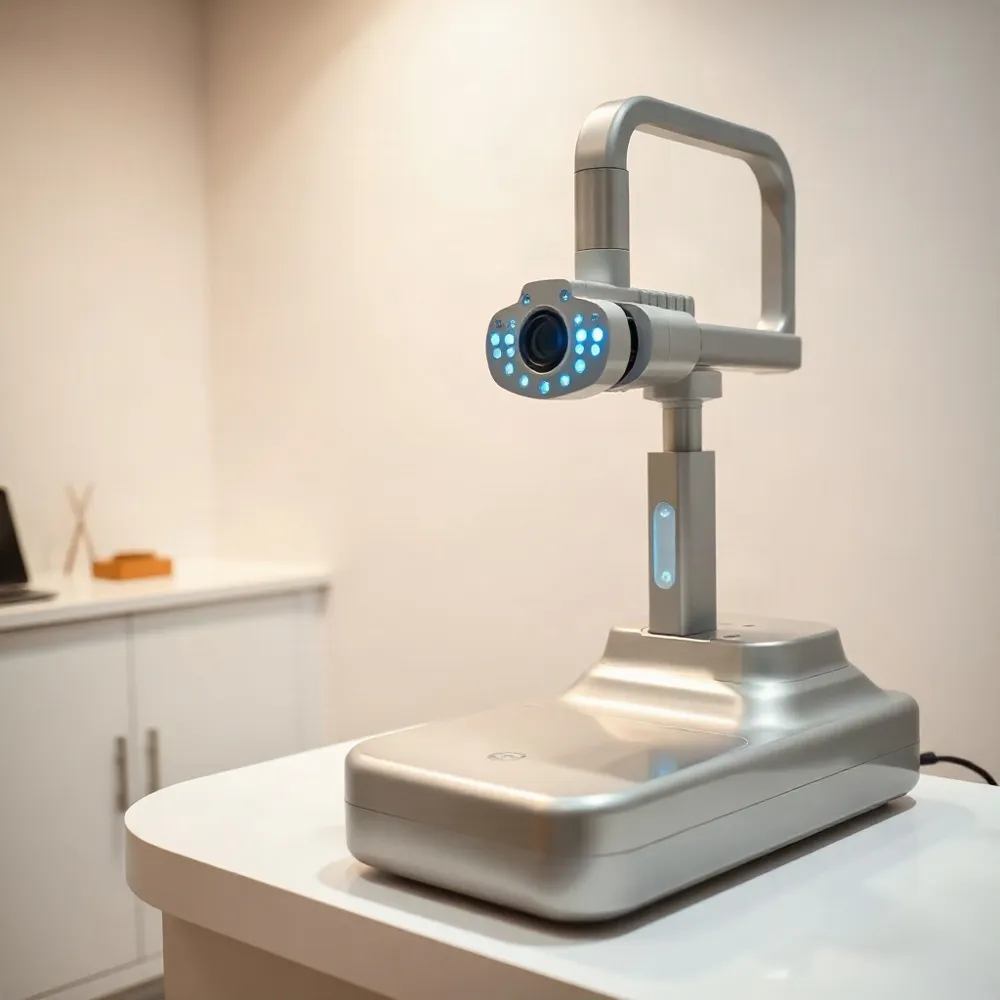
Dry eye disease affects a substantial portion of the U.S. population—estimates range from 16 million to 30 % of adults over 50, with higher rates among screen‑heavy users and contact‑lens wearers. Clinically, DED is divided into three primary subtypes: aqueous‑deficient dry eye, where tear‑producing glands fail to generate enough fluid; evaporative dry eye, most often caused by Meibomian gland dysfunction that disrupts the lipid layer and accelerates tear loss; and mixed dry eye, a combination of both mechanisms. Because symptoms overlap and underlying causes differ, a comprehensive eye exam is essential. Modern practices such as Apple Eye Care employ advanced diagnostics like the DRI OCT Triton, which provides high‑resolution imaging of the cornea, tear‑film thickness, and Meibomian gland morphology. This objective data, combined with patient questionnaires and tests (Schirmer, TBUT, osmolarity), enables clinicians to pinpoint the dominant subtype and tailor a personalized treatment plan that may include artificial tears, anti‑inflammatory drops, punctal plugs, or in‑office therapies such as IPL or thermal pulsation.
Emerging Prescription Treatments and Their Impact
 Latest treatment for dry eye syndrome
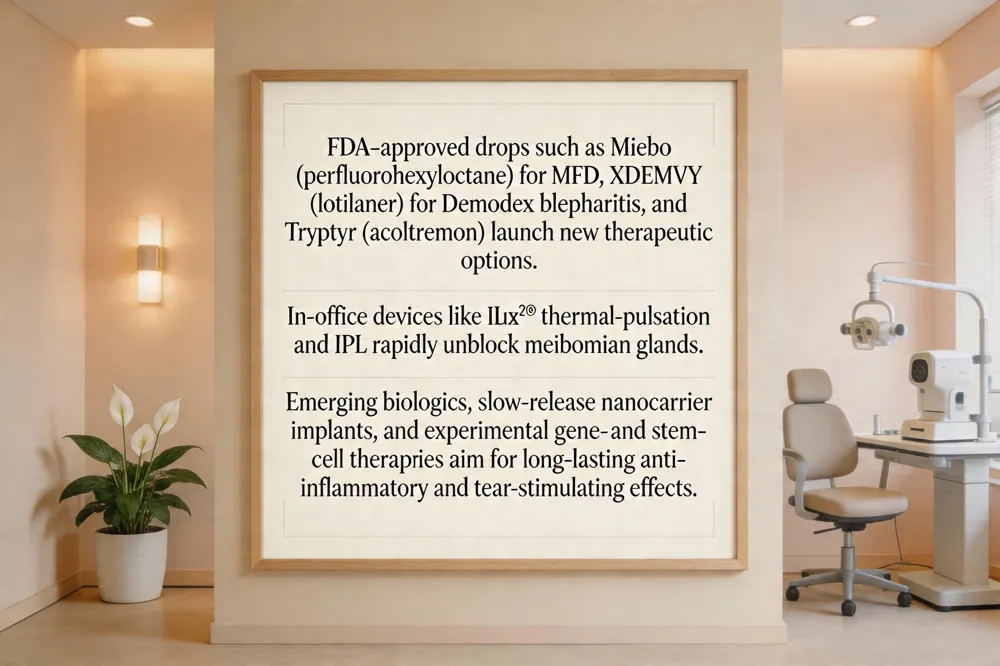
The newest FDA‑approved options include Miebo (perfluorohexyloctane) for meibomian‑gland dysfunction and XDEMVY (lotilaner) for Demodex‑related blepharitis. In‑office technologies such as iLux²® thermal‑pulsation and intense‑pulsed‑light (IPL) therapy rapidly unblock meibomian glands and reduce inflammation. Emerging biologics, slow‑release nanocarrier implants, and experimental gene‑ and stem‑cell approaches aim for long‑lasting anti‑inflammatory and tear‑stimulating effects, allowing clinicians to tailor therapy to each patient’s underlying cause.
Latest treatment for dry eye syndrome
The newest FDA‑approved options include Miebo (perfluorohexyloctane) for meibomian‑gland dysfunction and XDEMVY (lotilaner) for Demodex‑related blepharitis. In‑office technologies such as iLux²® thermal‑pulsation and intense‑pulsed‑light (IPL) therapy rapidly unblock meibomian glands and reduce inflammation. Emerging biologics, slow‑release nanocarrier implants, and experimental gene‑ and stem‑cell approaches aim for long‑lasting anti‑inflammatory and tear‑stimulating effects, allowing clinicians to tailor therapy to each patient’s underlying cause.
New prescription eye drops for dry eyes Apple Eye Care now offers MIEBO® (preservative‑free perfluorohexyloctane) administered twice daily to curb tear evaporation from MGD, and TRYPTYR® (acoltremon 0.003 %) a TRPM8 agonist that stimulates natural tear production within days. Both are prescribed after a comprehensive exam, can be combined with advanced diagnostics (DRI OCT Triton), and require discussion of side effects such as transient blurred vision.
New dry eye treatment 2025 In 2025 Alcon’s TRYPTYR (TRPM8 agonist), Bausch & Lomb’s Miebo (perfluorohexyloctane), and Tarsus’s XDEMVY (lotilaner) expanded the therapeutic arsenal. Office‑based iLux²® and BlephEx® provide rapid relief for evaporative dry eye, complementing these drops.
What is the newest treatment for severe dry eyes Miebo™ eye drops, the first FDA‑approved prescription for MGD, target the oily layer of the tear film and have shown rapid symptom relief. The iLux²® system, delivering heat and pulsating pressure in an 8‑minute session, dramatically improves tear‑film stability. When paired with IPL or BlephEx®, they represent a cutting‑edge approach for severe cases.
Best prescription eye drops for dry eyes Xiidra (lifitegrast 5 %) remains widely used for general dry eye, reducing symptoms within weeks. For evaporative disease, Miebo is the preferred preservative‑free option; for blepharitis/Demodex, XDEMVY is indicated. Selection depends on the underlying subtype, and eye doctors may combine drops with lifestyle modifications and in‑office procedures for optimal outcomes.
In‑Office Procedures and Device‑Based Therapies
 IPL dry eye treatment Intense pulsed light (IPL) therapy is a non‑invasive office procedure targeting Meibomian gland dysfunction, a major cause of evaporative dry eye. Controlled light pulses coagulate abnormal vessels, reduce inflammation, and melt thickened meibum. Apple Eye Care typically delivers four 10‑15‑minute sessions spaced 2‑4 weeks apart, with 80‑90 % of patients reporting meaningful symptom reduction and improved gland function.
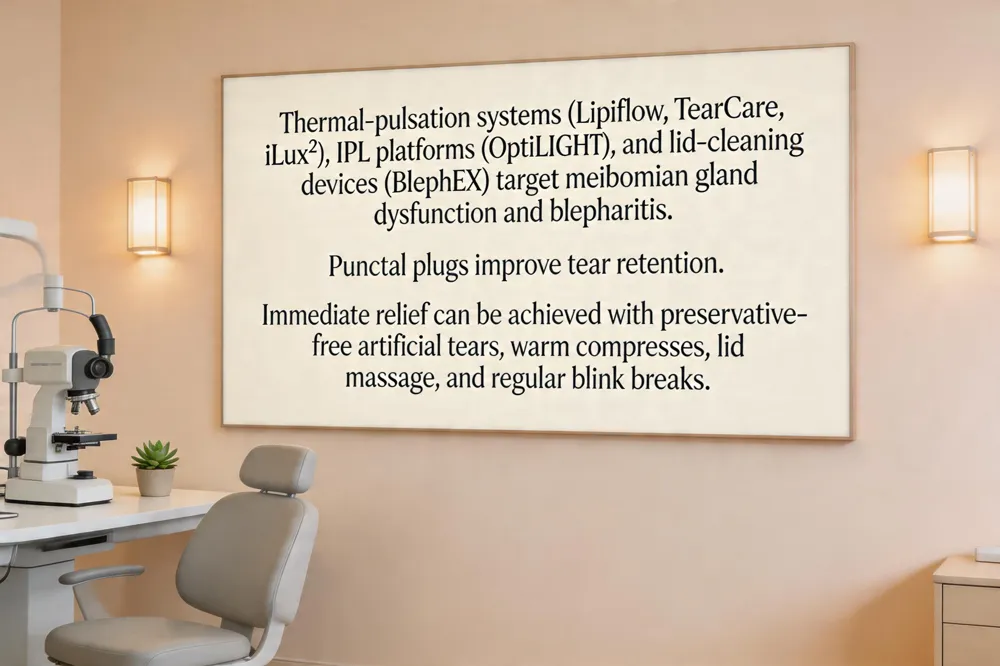
Dry eye treatment devices Thermal‑pulsation systems such as Lipiflow, TearCare, and iLux² apply heat and gentle pressure to express clogged oils; Lipiflow uses numbing drops, while TearCare allows natural blinking. IPL platforms like OptiLIGHT (Lumenis) use Optimal Pulse Technology for rapid 15‑minute treatments. Lid‑cleaning devices (BlephEx, iLux²) remove biofilm and debris, enhancing gland health. For rapid tear retention, punctal plugs are inserted into the tear ducts.
How to immediately relieve dry eyes Instill preservative‑free artificial tears, apply a warm, moist compress, and massage the lids. Take a blink break every 15–20 minutes and use a humidifier to maintain ambient moisture.
Best treatment for severe dry eyes Combine prescription anti‑inflammatory drops (cyclosporine or lifitegrast) with punctal plugs, aggressive lid hygiene, and, when needed, autologous serum or short‑term low‑dose steroids. Tailored evaluation by Dr. Stephen Applebaum’s team ensures optimal therapy.
Dry eye symptoms Patients experience stinging, burning, gritty sensations, redness, watery or stringy discharge, light sensitivity, blurred vision, and eye fatigue, especially in dry or windy environments.
Insurance, Access, and Practical Considerations
 Does Medicare cover CEQUA?
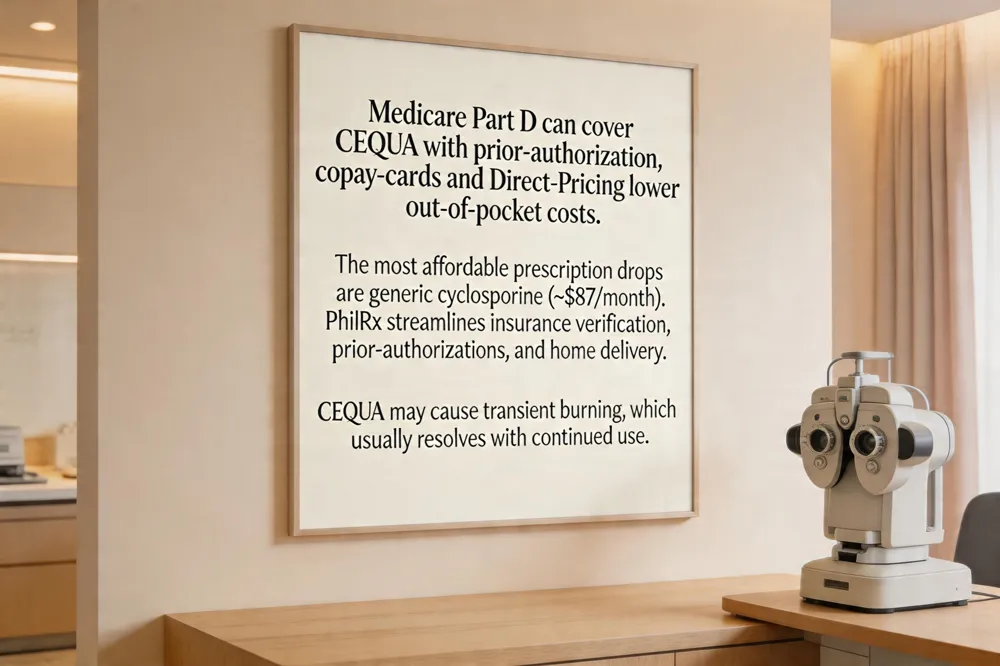
Yes. Medicare, typically through Part D prescription drug coverage, can cover CEQUA. Coverage varies by plan and usually requires a prior‑authorization (PA) from the prescriber. When approved, the pharmacy may apply a CEQUA copay‑card or Direct‑Pricing card, lowering out‑of‑pocket costs. If a PA is denied, patients can still use the Direct‑Pricing program if eligible. Beneficiaries should check their formulary, submit the PA with office help, and verify any discount card options before filling the prescription.
Does Medicare cover CEQUA?
Yes. Medicare, typically through Part D prescription drug coverage, can cover CEQUA. Coverage varies by plan and usually requires a prior‑authorization (PA) from the prescriber. When approved, the pharmacy may apply a CEQUA copay‑card or Direct‑Pricing card, lowering out‑of‑pocket costs. If a PA is denied, patients can still use the Direct‑Pricing program if eligible. Beneficiaries should check their formulary, submit the PA with office help, and verify any discount card options before filling the prescription.
Cheapest prescription dry‑eye drops The most affordable prescription option is the generic cyclosporine formulation, costing roughly $87 for a month’s supply. Brand‑name Restasis is about $380, and Xiidra falls in a similar high‑price range. Savings can be found through reputable online pharmacies (up to 74 % off retail) and by using manufacturer coupons or insurance benefits.
PhilRx eye drops PhilRx is a digital platform that verifies insurance, completes prior‑authorizations, and delivers prescription eye drops (e.g., CEQUA) directly to patients’ doors. CEQUA can be obtained for as little as $0 cop‑ or $89 per month, depending on the patient’s coverage and the use of a copay card.
Cequa burning eyes CEQUA often causes a transient burning or stinging sensation when first used. The irritation usually diminishes as the eye adjusts. To reduce discomfort, apply drops on a relaxed eye, avoid rapid blinking, and consider a warm compress before dosing. Persistent or worsening pain warrants a call to the eye‑care provider.
Cequa after LASIK CEQUA (0.09 % cyclosporine) is frequently prescribed for post‑LASIK dry eye because it reduces inflammation and stimulates tear production. Many patients experience symptom improvement within two weeks and increased tear output after several months. Initiation should be supervised by an eye‑care professional, such as Dr. Stephen Applebaum at Apple Eye Care, who can monitor response and adjust therapy as needed.
Lifestyle, Home Care, and Natural Approaches
 Eyelid hygiene and warm compresses
Gently wash eyelid margins daily with a mild baby‑shampoo solution, rinse with a warm, damp cloth, and apply a warm compresses for 5‑10 minutes. Massage the lids to melt clogged meibomian oil, improving tear‑film stability.
Eyelid hygiene and warm compresses
Gently wash eyelid margins daily with a mild baby‑shampoo solution, rinse with a warm, damp cloth, and apply a warm compresses for 5‑10 minutes. Massage the lids to melt clogged meibomian oil, improving tear‑film stability.
Omega‑3 supplementation and diet Increase intake of Omega‑3 rich foods such as salmon, sardines, or a high‑quality supplement. These fats support healthier meibomian gland function and reduce ocular inflammation.
Screen‑time habits and the 20‑20‑20 rule Take a 20‑second break every 20 minutes by looking at something 20 feet away. This encourages blinking and distributes tears evenly, lessening screen‑related dryness.
Long‑term strategies for lasting relief Maintain a humidified environment, stay well‑hydrated, and use preservative‑free artificial tears only as needed. Regular follow‑up with a dry‑eye specialist ensures personalized adjustments (e.g., punctal plugs, anti‑inflammatory drops) for sustained comfort.
How to cure dry eyes naturally Keep lids clean, use warm compresses, boost Omega‑3s, follow the 20‑20‑20 rule, and humidify your space.
How to cure dry eyes permanently Identify the underlying subtype (aqueous‑deficient, evaporative, or mixed) via a comprehensive exam, then combine targeted in‑office therapies (punctal plugs, cyclosporine, thermal‑massage devices) with daily lid hygiene and environmental control.
How to cure dry eyes fast Apply preservative‑free artificial tears frequently, follow with a warm compresses and lid cleanse, and consider prescription anti‑inflammatory drops or punctal plugs for quicker symptom resolution.
Can dry eyes cause blindness? Untreated chronic dry eye disease can damage the cornea, leading to ulcers or scarring that threaten vision. Early treatment prevents these complications.
Eye doctor El Paso Apple Eye Care, led by Dr. Stephen Applebaum, offers comprehensive exams, DRI OCT Triton imaging, and personalized dry‑eye management in El Paso, TX. Call or book online for an appointment.
Patient Stories and Real‑World Outcomes at Apple Eye Care
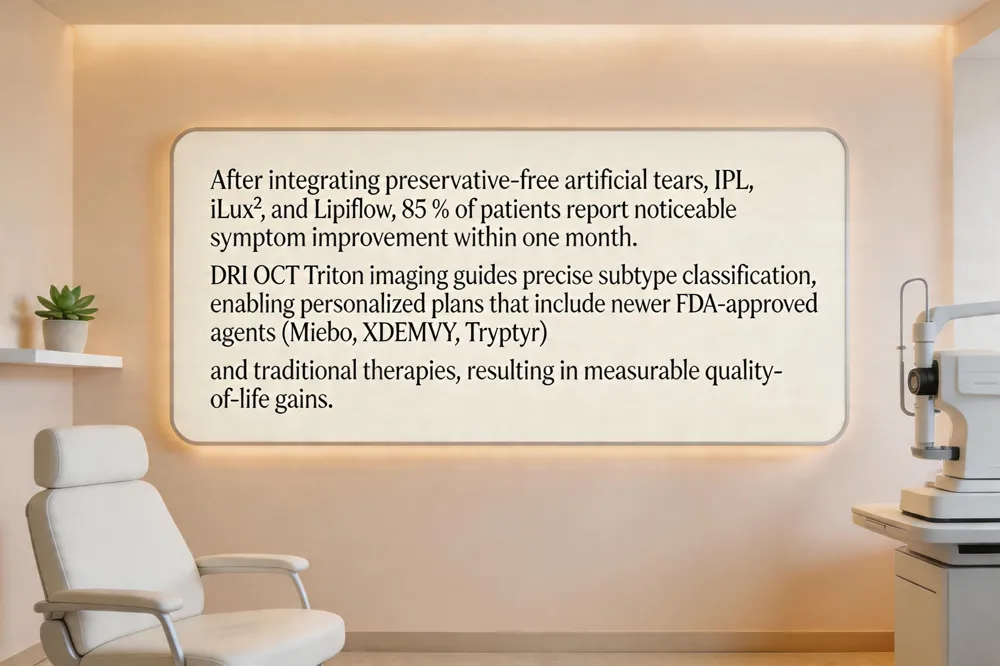 Patients at Apple Eye Care in El Paso consistently report high satisfaction. Real‑world outcomes show that after combining preservative‑free artificial tears with advanced in‑office therapies such as IPL, iLux, and Lipiflow, 85 % experience noticeable symptom relief within the first month, and many describe a dramatic reduction in burning, stinging, and visual fluctuations. The practice relies on cutting‑edge diagnostics—most notably the DRI OCT Triton—to capture detailed ocular‑surface images, assess meibomian‑gland morphology, and quantify tear‑film thickness, enabling precise subtype classification (aqueous‑deficient, evaporative, or mixed). This data drives personalized treatment plans that integrate newer FDA‑approved agents (Miebo, VEVYE, Tryptyr) and traditional options (cyclosporine, punctal plugs) while setting realistic expectations and monitoring adherence. The resulting improvements in comfort and visual function translate into a measurable boost in quality of life, allowing patients to resume screen work, outdoor activities, and daily routines without constant eye‑drop reliance.
Apple Eye Care el Paso – Apple Eye Care is a family‑focused optometry practice serving the El Paso, TX community. Led by Dr. Stephen Applebaum, the compassionate team offers personalized eye exams, vision‑correction options, and modern eyewear solutions. Advanced diagnostics such as the DRI OCT Triton allow for early detection and precise monitoring of eye conditions. Specialized services include dry‑eye treatment, cataract care, and glaucoma management, ensuring comprehensive care for all ages. With a commitment to cutting‑edge technology and individualized attention, Apple Eye Care delivers high‑quality, affordable eye health services to El Paso residents.
Dr Applebaum optometrist – Dr. Stephen Applebaum is the lead optometrist at Apple Eye Care in El Paso, TX, where he heads a family‑focused practice that emphasizes personalized attention and compassionate care. He provides comprehensive eye exams, vision‑correction services, and advanced diagnostics such as the DRI OCT Triton to detect and monitor eye disease. Dr. Applebaum also manages specialized treatments for dry eye, cataract, and glaucoma, tailoring each plan to the patient’s unique needs. His practice integrates modern technology with a team‑oriented approach, ensuring efficient, high‑quality care for patients of all ages. Under his leadership, Apple Eye Care has become a trusted destination for comprehensive optometric services in the community.
List of prescription eye drops for dry eyes – Prescription eye drops commonly used to treat dry eye disease include Restasis (cyclosporine ophthalmic solution) and its newer formulations such as Cequa and VEVYE, which reduce ocular inflammation and increase tear production. Xiidra (lifitegrast ophthalmic solution) is another FDA‑approved anti‑inflammatory drop that targets the T‑cell mediated component of dry eye. Miebo (perfluorohexyloctane ophthalmic solution) is the first prescription drop approved for meibomian gland dysfunction, helping to stabilize the tear film and reduce evaporation. XDEMVY (lotilaner ophthalmic solution) is a newer drop designed to treat blepharitis‑related dry eye by eradicating Demodex mites on the eyelids. Recent additions such as Tryptyr (acoltremon ophthalmic solution) and Eysuvis (loteprednol‑based ophthalmic suspension) further expand the options for clinicians managing moderate to severe dry eye.
Putting It All Together for Lasting Dry Eye Relief
Effective dry‑eye care hinges on a personalized treatment plan that matches the patient’s subtype—aqueous‑deficient, evaporative, or mixed. At Apple Eye Care in El Paso, Dr. Stephen Applebaum uses the DRI OCT Triton to image tear film thickness and meibomian gland morphology, then combines therapies such as preservative‑free artificial tears, anti‑inflammatory drops (Vevye, Restasis, Xiidra), Miebo for Meibomian‑gland dysfunction, punctal plugs, and in‑office procedures like IPL or LipiFlow. Follow‑up appointments every 3–6 months allow objective monitoring (Schirmer, tear break‑up time, OSDI) and adjustment of regimens, ensuring sustained improvement and early detection of side‑effects. Empowering patients with education—explaining the role of lid hygiene, warm compresses, the 20‑20‑20 screen rule, omega‑3 diet, and at‑home devices such as iTear100—turns them into active participants, maximizes adherence, and ultimately delivers lasting relief.