What Is Sports Vision Therapy?
Sports vision therapy (SVT) is a structured, optometrist‑directed program that trains the eyes and brain to work together more efficiently for athletic tasks. Its purpose is not to correct refractive error but to boost visual‑motor integration, reaction speed, and accuracy. Core visual skills targeted include eye‑tracking (saccades and smooth pursuit), depth perception (stereopsis), peripheral awareness, dynamic visual acuity, visual processing speed, and hand‑eye‑body coordination. These abilities are crucial because roughly 80 % of the information athletes use during play is visual; faster, more precise visual processing translates into quicker decision‑making, better timing, and reduced injury risk on the field, court, or track.
Improving Reaction Time with Targeted Eye Exercises
 Neuroscience of visual‑motor processing shows that visual cues travel from the retina through the optic nerve to the brain, where they are interpreted before a motor command is issued. Strengthening the eye‑brain connection speeds this pathway, reducing visual reaction time and helping athletes make split‑second decisions.
Five proven drills used by optometrists (e.g., Dr. Katie Dugan, Gregg Family Eye Care, Blacksburg Eye Associates) are:
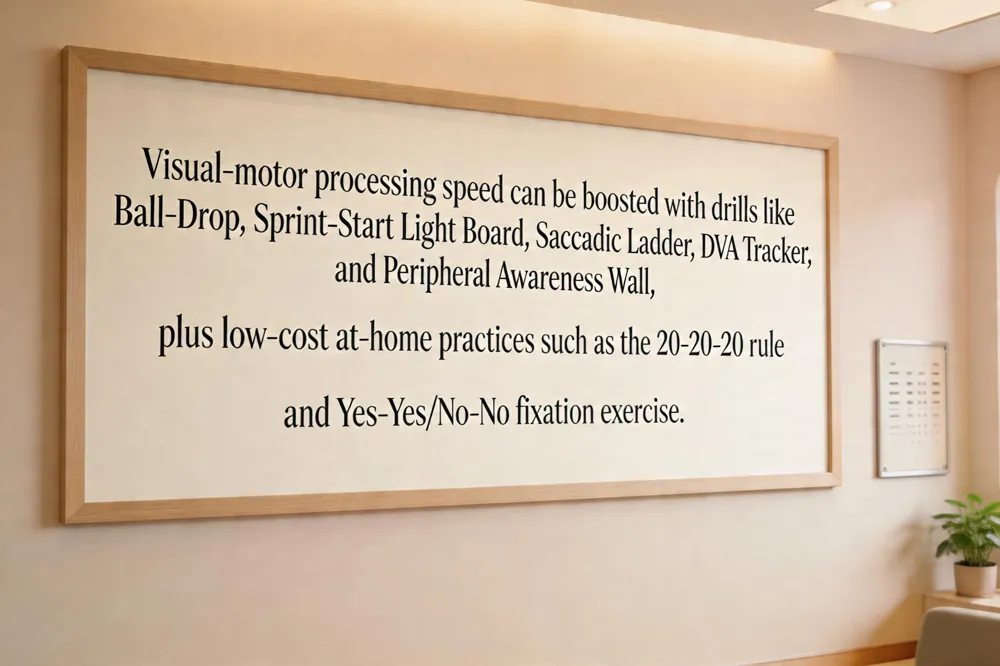
1️⃣ Ball‑Drop: Partner drops a tennis ball from shoulder height; the athlete catches it as quickly as possible.
2️⃣ Sprint‑Start Light Board: A strobe or light‑board flashes a cue that triggers an explosive start.
3️⃣ Saccadic Ladder: Quick head‑free gaze shifts between two targets 10‑15 ft apart for 30 seconds.
4️⃣ Dynamic Visual Acuity (DVA) Tracker: Follow a moving target on a screen while maintaining focus.
5️⃣ Peripheral Awareness Wall: Toss a ball against a wall and catch it while scanning the periphery for a secondary object.
Free at‑home alternatives include the 20‑20‑20 focus‑flexibility rule, near‑far focus drills, and the "Yes‑Yes/No‑No" fixation exercise. Saccadic drills can be done with two colored cards, and peripheral scans can be practiced while walking outdoors, noting objects at the edge of vision without turning the head. These low‑cost activities reinforce eye‑brain speed, improve hand‑eye coordination, and sharpen visual reaction time for sport and gaming alike.
Finding Personalized Sports‑Vision Training Near You
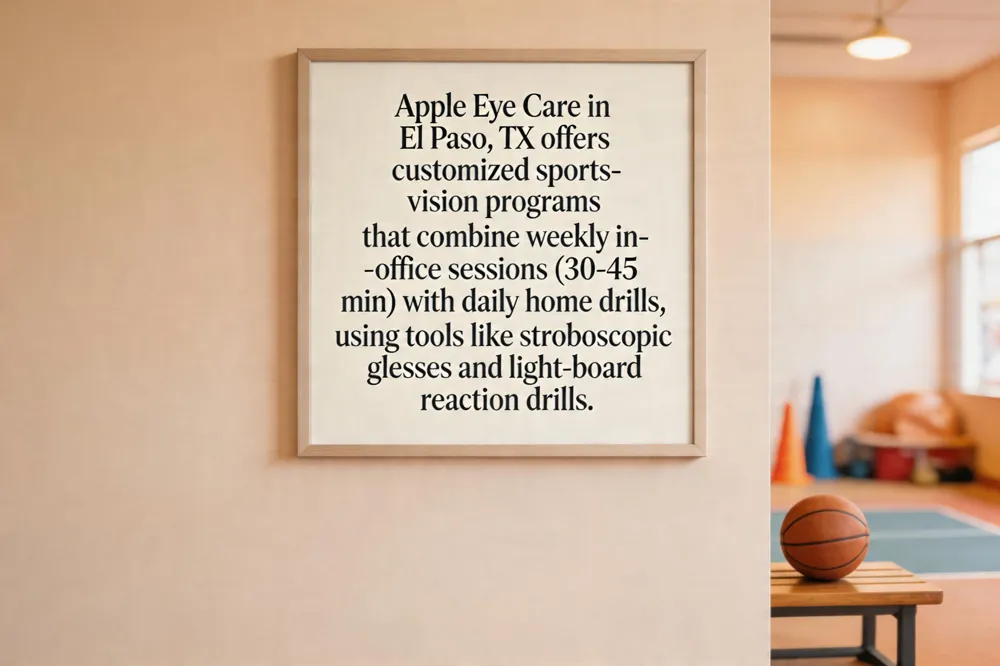 Athletes looking for a local provider in El Paso, TX can turn to Apple Eye Care, a family‑focused optometry practice led by Dr. Stephen Applebaum. The clinic combines comprehensive eye exams, advanced diagnostics such as the DRI OCT Triton, and evidence‑based vision‑therapy exercises to target visual skills essential for sport—eye‑tracking, depth perception, peripheral awareness, hand‑eye coordination, and reaction time.
A typical program blends weekly in‑office sessions (30‑45 minutes) with daily at‑home drills, using tools like stroboscopic glasses, light‑board reaction drills, and saccadic eye‑movement exercises. Each plan is customized after a detailed athletic‑vision assessment that evaluates binocular function, eye dominance, and visual‑processing speed, ensuring the training matches the specific demands of the athlete’s sport.
Scheduling is straightforward: call Apple Eye Care at (915) 555‑1234 or book online through the clinic’s website. Appointments are flexible, and the team emphasizes engaging, fun sessions that keep athletes motivated.
Sports vision training near me: Apple Eye Care offers personalized sports‑vision training that improves hand‑eye coordination, depth perception, and visual tracking for better performance on the field or court.
Eye doctor near me: Apple Eye Care provides comprehensive eye care, including exams, vision correction, dry‑eye treatment, and advanced diagnostics, all delivered by Dr. Stephen Applebaum and his compassionate staff.
Evidence Base: Research, Standards, and Tools
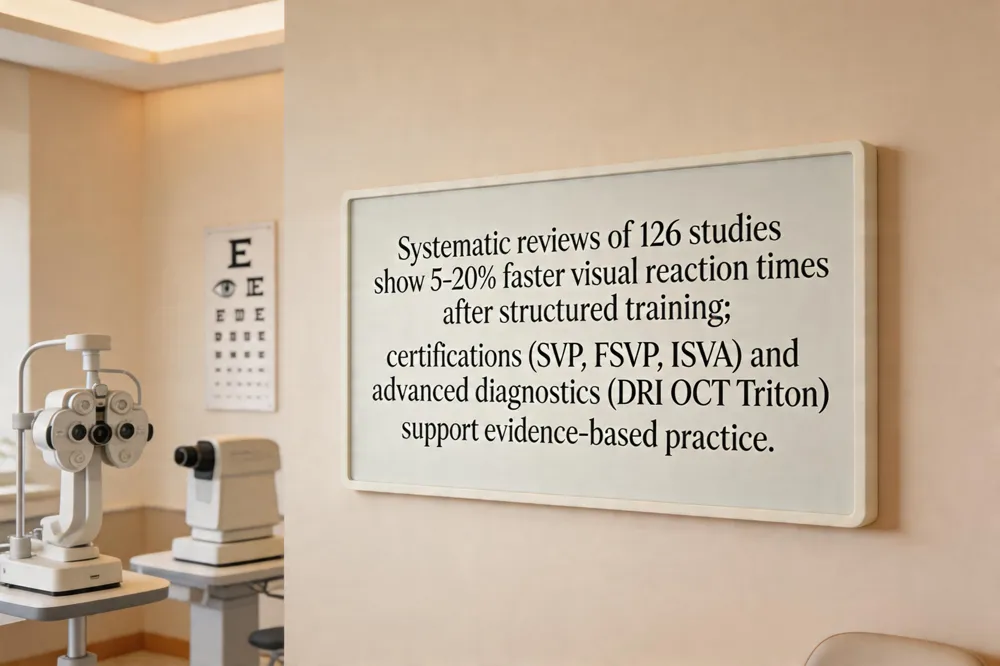 Sports vision research shows that structured visual‑skill training can measurably boost athletic performance. Systematic reviews of 126 studies report improvements in reaction time, depth perception, eye‑hand coordination, and peripheral awareness, especially when drills mimic sport‑specific demands. Randomized trials have documented 5‑20% faster visual reaction times and up to 15% higher accuracy in tasks such as batting, sprint starts, and target acquisition.
Certification pathways for clinicians include the Sports Vision Professionals Academy (SVP) program, which requires three online modules and a passing score, followed by the Fellowship of Sports Vision Professionals (FSVP) after a 4‑hour practicum and scholarly project. The International Sports Vision Association (ISVA) also offers recognition for proficiency in dynamic visual‑skill assessment. Certified practitioners can leverage advanced diagnostics—such as DRI OCT Triton—to identify deficits and tailor training.
Equipment used in sports vision training ranges from simple strobe lights, reaction‑time balls, and balance boards to high‑tech systems like VTS4 HoloLens and Swivel Vision goggles that deliver immersive, game‑like scenarios. Portable kits with pitch‑recognition balls and eye‑tracking patches allow sport‑specific drills. Apple Eye Care in El Paso, TX, integrates these tools with personalized programs, tracking progress through objective measures and ensuring evidence‑based improvements in reaction time and accuracy.
Practical Drills, Apps, and Home Programs
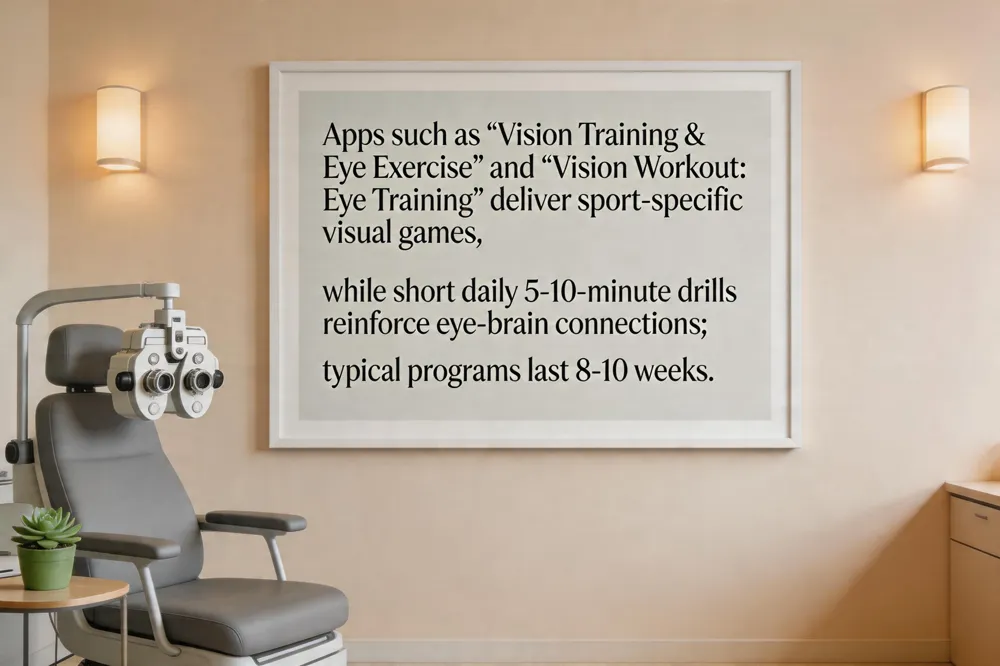 Successful athletes combine structured in‑office routines with portable digital tools and brief daily drills to keep visual skills sharp. Optometrist‑guided programs start with a comprehensive assessment, then prescribe a mix of eye‑tracking, focus‑flexibility, and peripheral‑awareness exercises that can be performed in 5‑10‑minute bursts at home.
Sports vision training apps Apps such as “Vision Training & Eye Exercise” (Optics Trainer LLC) and “Vision Workout: Eye Training” (THOMSON) deliver interactive games that target convergence, divergence, peripheral awareness, dynamic vision, and reaction speed. They adapt difficulty based on performance, offering sport‑specific modes for baseball, basketball, and e‑sports. While convenient for at‑home practice, a professional assessment (e.g., Apple Eye Care) ensures baseline measurements and monitors progress with diagnostics like DRI OCT Triton.
How often should you do sport vision training? Consistent, short sessions are more effective than occasional long workouts. Competitive athletes typically train 3‑5 times per week, while recreational players benefit from 1‑2 weekly sessions plus a few minutes of daily visual‑cognitive drills. Micro‑sessions reinforce gains and prevent eye fatigue.
How long does sports vision training take? Most programs run 8‑10 weeks, balancing weekly in‑office visits with home exercises. This period allows measurable improvements in depth perception, reaction time, and hand‑eye coordination. After the initial phase, a maintenance schedule preserves the gains.
Integrating these tools into regular training ensures lasting visual performance gains.
FAQs, Insurance, and Success Expectations
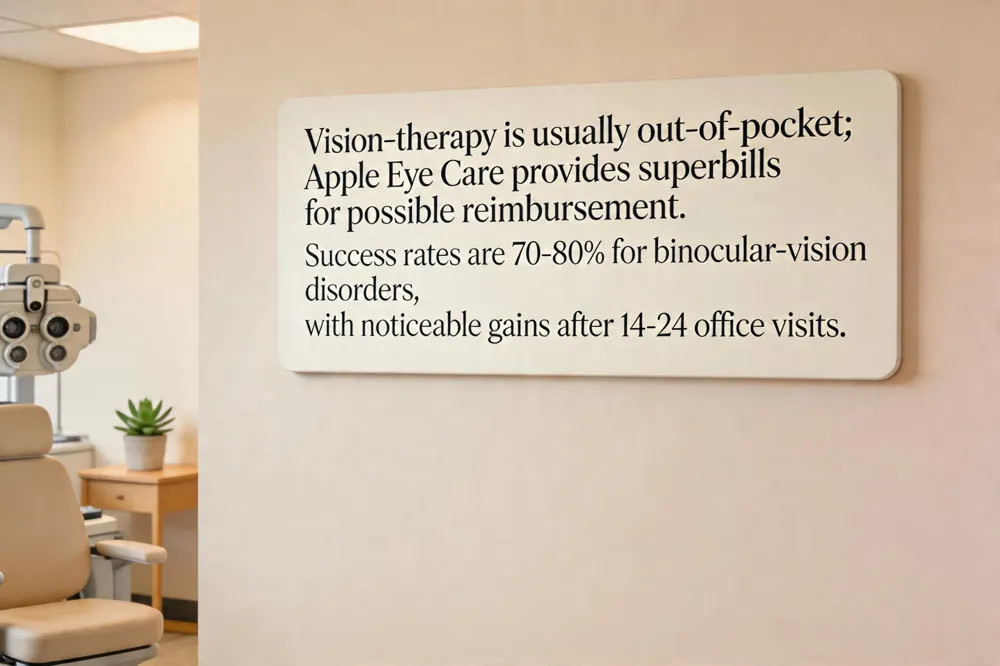 Financial considerations – Vision‑therapy services are generally considered a specialty, out‑of‑pocket benefit. Most medical plans do not cover them, though a few insurers may offer partial reimbursement after a traumatic brain injury. Apple Eye Care provides a detailed exam report and a superbill for out‑of‑network claims; patients with PPO or out‑of‑network benefits often receive some reimbursement, but you should expect to pay up‑front.
Typical treatment timeline – A standard program combines one or two 45‑minute in‑office sessions per week with 15‑minute home drills three to four times weekly. Most athletes notice measurable gains after 14‑24 office visits (approximately 4‑6 months). More complex visual‑processing issues may require 30+ sessions. Consistency of home exercises is essential for reinforcing eye‑brain connections.
Outcome rates – Research shows a 70‑80 % success rate for binocular‑vision disorders when therapy is completed as prescribed, with a National Eye Institute‑funded trial reporting 75 % improvement in convergence insufficiency. Success is defined as a return to normal or significantly improved functional vision, not just visual acuity. Individualized programs that blend office and home work yield the highest gains.
Will insurance pay for vision therapy? – Generally no; Apple Eye Care does not bill insurance directly but supplies a superbill for possible out‑of‑network reimbursement.
What is the success rate of vision therapy? – Approximately 75 % for convergence insufficiency and 70‑80 % for other disorders when adherence is high.
How often should you do vision therapy? – One‑to‑two weekly office sessions plus 3‑4 short home drills per week.
What sports benefit from sport vision? – Golf, archery, soccer, basketball, hockey, baseball, tennis, football, and rugby all see performance and safety gains from improved depth perception, peripheral awareness, and reaction time.
Sports vision training – A personalized, evidence‑based program that sharpens focus flexibility, depth perception, peripheral awareness, and visual reaction time, helping athletes react faster, track moving objects accurately, and maintain clear focus during rapid play.
Putting It All Together – The Competitive Edge of Vision Therapy
Vision therapy delivers an edge for athletes by sharpening reaction time, hand‑eye coordination, depth perception, peripheral awareness and visual endurance. Faster neural processing translates into quicker decisions, more accurate targeting and reduced injury risk on the field. The training also supports overall health: improved ocular muscle balance eases eye strain, while enhanced visual‑motor integration aids balance, posture and confidence during competition and daily life. Athletes of any level should schedule a sports‑vision assessment with a qualified optometrist, then follow a personalized program of in‑office drills and at‑home exercises. Integrating vision therapy with eye exams, nutrition, sleep and conditioning creates a holistic performance plan that maximizes both visual and physical potential.