Why the Perfect Lens Fit Matters
An accurately fitted contact lens eliminates the pinching sensation of a too‑tight lens and prevents the wandering blur of a loose fit, delivering consistent comfort throughout the day. Proper curvature and diameter align the optical center with the visual axis, preserving sharp, stable vision and reducing fluctuations after blinking. Over time, a well‑matched lens maintains adequate oxygen transmission and minimizes corneal deformation, protecting against hypoxia, dry‑eye irritation, and long‑term complications such as keratitis or corneal scarring for visual health daily.
Standard vs. Premium Contact Lens Fitting
Standard vs. Premium Fitting Comparison
| Aspect | Standard Fitting | Premium Fitting |
|---|---|---|
| Typical Lens Types | Single‑vision, daily‑wear soft lenses | Toric, multifocal, GP, ortho‑K, post‑surgical |
| Initial Measurements | Keratometry, pupil size, tear‑film assessment | Keratometry + corneal topography, An‑segment OCT, fringe‑topography, sagittal depth, diameter, landing‑zone angle, dry‑eye tests (TBUT/Schirmer) |
| Trial Lenses | One trial lens, movement & centration check | Multiple trial lenses, fine‑tuning of power, base curve, diameter, moisture management |
| Follow‑up Visits | 1 follow‑up (≈1 week later) | 2‑3 follow‑ups to assess stability, dry‑eye symptoms, long‑term ocular health |
| Technology Used | Basic keratometer, pupil meter | DRI OCT Triton, Paragon CRT, modern topographers, Eye Surface Profiler |
| Goal | Confirm centration & visual acuity | Optimize fit, reduce dry‑eye, ensure long‑term comfort and health |
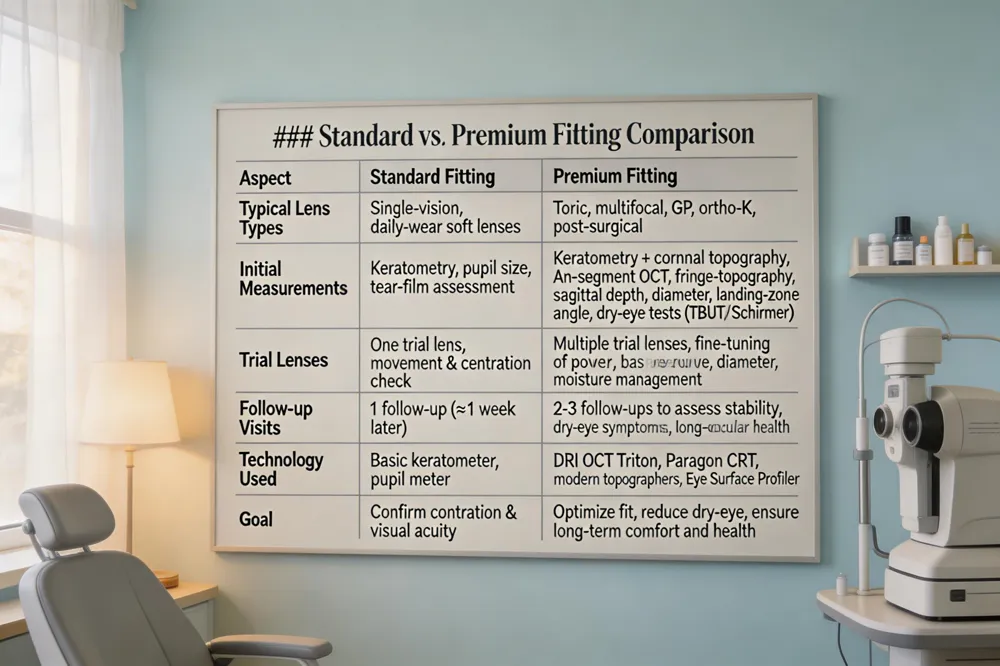 At Apple Eye Care the fitting process is tailored to the lens type. Standard fittings—typically for single‑vision, daily‑wear soft lenses—begin with a basic corneal‑curvature (keratometry reading, pupil size check, and tear‑film assessment. The optometrist selects a trial lens, evaluates movement and centration during the appointment, and schedules a single follow‑up a week later to confirm comfort and clear vision.
Premium fittings—required for toric, multifocal, gas‑permeable, orthokeratology, or post‑surgical lenses—use a more extensive protocol. In addition to keratometry, the practice captures detailed corneal topography, anterior‑segment OCT, and fringe‑topography data (e.g., Eye Surface Profiler). Sagittal depth, lens diameter, and landing‑zone angle are measured, and dry‑eye status is evaluated with TBUT or Schirmer testing. Multiple trial lenses may be ordered, and the patient often returns for two to three follow‑up visits to fine‑tune power, base curve, diameter, and moisture management.
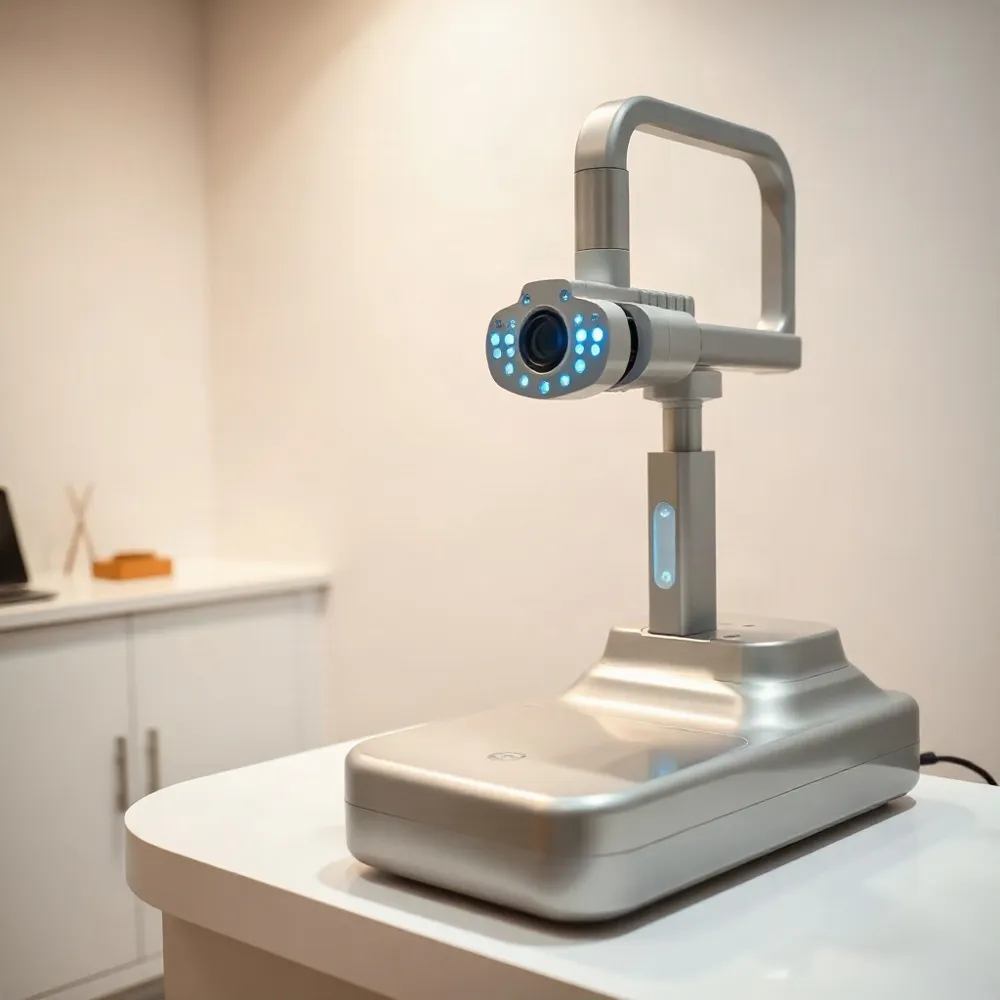
Technology: Apple Eye Care employs the DRI OCT Triton for high‑resolution corneal mapping, Paragon CRT software for initial parameter suggestions, and modern topographers to guide custom soft‑lens orders.
Follow‑up: Standard follow‑up confirms proper centration and visual acuity; premium follow‑up focuses on stability, reduction of dry‑eye symptoms, and long‑term ocular health. The practice’s family‑focused, compassionate approach ensures every patient receives the right lens and appropriate after‑care.
Lens Choices for Special Situations
Lens Recommendations for Special Situations
| Situation | Recommended Lens Type(s) | Key Features |
|---|---|---|
| Lupus (dry‑eye, inflammation) | Daily‑disposable silicone‑hydrogel; Custom scleral lenses (severe) | High oxygen permeability, fluid reservoir, can be combined with preservative‑free lubricants |
| Beginner‑friendly wearers | Daily‑disposable silicone‑hydrogel (e.g., 1‑Day Acuvue Moist, Acuvue Oasys 1‑Day, Alcon Precision1) | No cleaning required, UV protection, moisture‑retaining technology |
| Dry‑eye comfort | Silicone‑hydrogel daily disposables (Alcon Dailies Total1, ACUVUE OASYS 1‑DAY, Bausch + Lomb Ultra) ; Monthly lenses with moisture‑binding agents (Proclear, Infuse) ; Custom scleral lenses for severe cases | Water‑gradient surfaces, high Dk/t, fluid reservoir for severe dryness |
| Myopia control | Orthokeratology lenses; Soft multifocal lenses | Slows axial elongation in children, modest residual benefit after treatment |
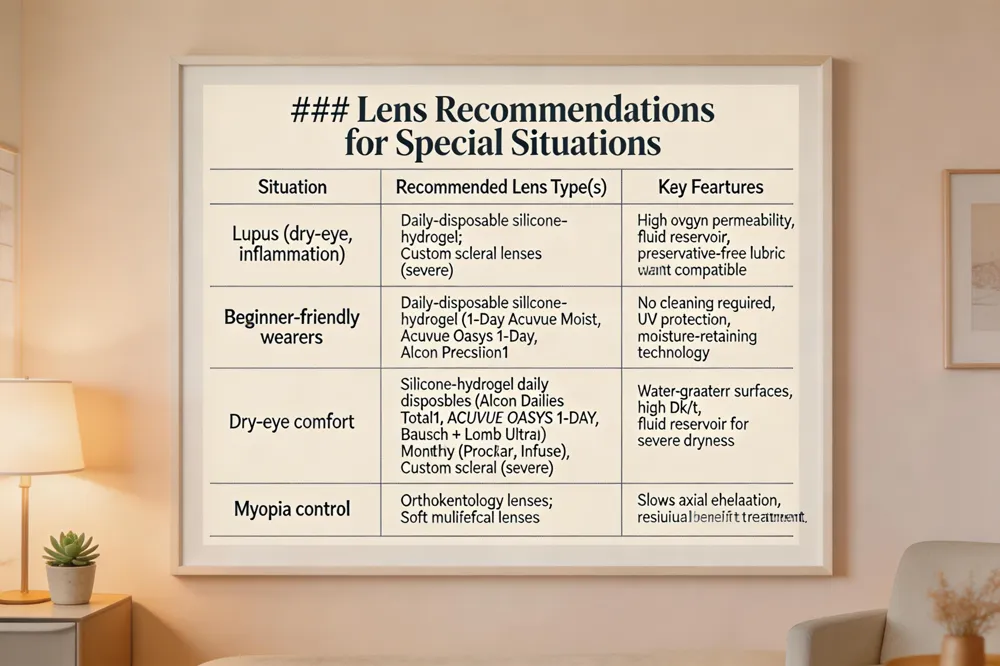 Lupus considerations. Most people with systemic lupus erythematosus can wear contact lenses, but the disease’s propensity for dry eye and ocular inflammation requires a thorough evaluation first. An eye‑care professional should assess tear production, look for active inflammation, and may prescribe artificial tears or anti‑inflammatory drops before fitting. Daily‑disposable silicone‑hydrogel lenses are often the most comfortable for mild‑to‑moderate dryness, while custom scleral lenses that vault over the cornea and maintain a fluid reservoir are ideal for severe cases. Apple Eye Care customizes lens type and any needed dry‑eye therapy to ensure safe, comfortable wear for lupus patients.
Beginner‑friendly lenses. For first‑time wearers, daily‑disposable silicone‑hydrogel lenses such as 1‑Day Acuvue Moist, Acuvue Oasys 1‑Day, or Alcon Precision1 combine moisture‑retaining technology with UV protection. They require no cleaning, reduce protein buildup, and minimize irritation. A comprehensive eye exam at Apple Eye Care confirms the prescription and eye health before selection, and follow‑up visits verify comfort and visual clarity.
Dry‑eye comfort. Silicone‑hydrogel daily disposables (Alcon Dailies Total1, ACUVUE OASYS 1‑DAY, Bausch + Lomb Ultra) provide high oxygen permeability and water‑gradient surfaces that create a near‑100 % water cushion, reducing tear evaporation. Monthly options like Proclear or Infuse use moisture‑binding agents for sustained hydration. In severe dry‑eye cases, custom scleral lenses vault the cornea and lock in tears, offering all‑day comfort. Pair lenses with preservative‑free lubricants and regular check‑ups.
Myopia control & visual improvement. Contact lenses correct refractive errors temporarily; they do not permanently improve baseline acuity. However, specialty designs such as orthokeratology and soft multifocal lenses have been shown to slow myopia progression in children, providing a modest residual benefit after treatment. These effects are limited to growth control, not vision restoration, and require diligent hygiene and follow‑up.
Optimizing Fit, Comfort, and Affordability
Fit, Comfort & Affordability Tips
| Tip / Rule | Description |
|---|---|
| Professional fitting | Verify corneal curvature, diameter, tear‑film health before ordering lenses |
| Lens orientation & movement | Lenses should move slightly with each blink and be centered |
| Rewetting drops & solution | Use practice‑recommended preservative‑free drops and compatible solution |
| Cleaning & case care | Strict soaking, cleaning, and case‑change routine (daily for disposables, weekly for reusable) |
| Re‑fit if discomfort persists | Ask for a different material (silicone‑hydrogel vs. daily disposable) or adjust parameters |
| 4‑to‑1 rule | After 4 hours of wear, remove lenses for a 1‑hour break to re‑hydrate ocular surface |
| 20‑20‑20 rule | Every 20 minutes of screen time, look 20 feet away for 20 seconds |
| Lens price ranges (USD) | Daily disposables $17‑$50/30‑lens box; Weekly/Monthly $25‑$88/box; Toric/Multifocal $30‑$60/box; RGP $100‑$200/pair; Specialty/Colored $80‑$150/box |
| Insurance & Medicaid | Vision plans often cover exam & part of lens cost; Medical/Medicare may cover medically‑necessary lenses; Medicaid reimburses when lenses are deemed essential |
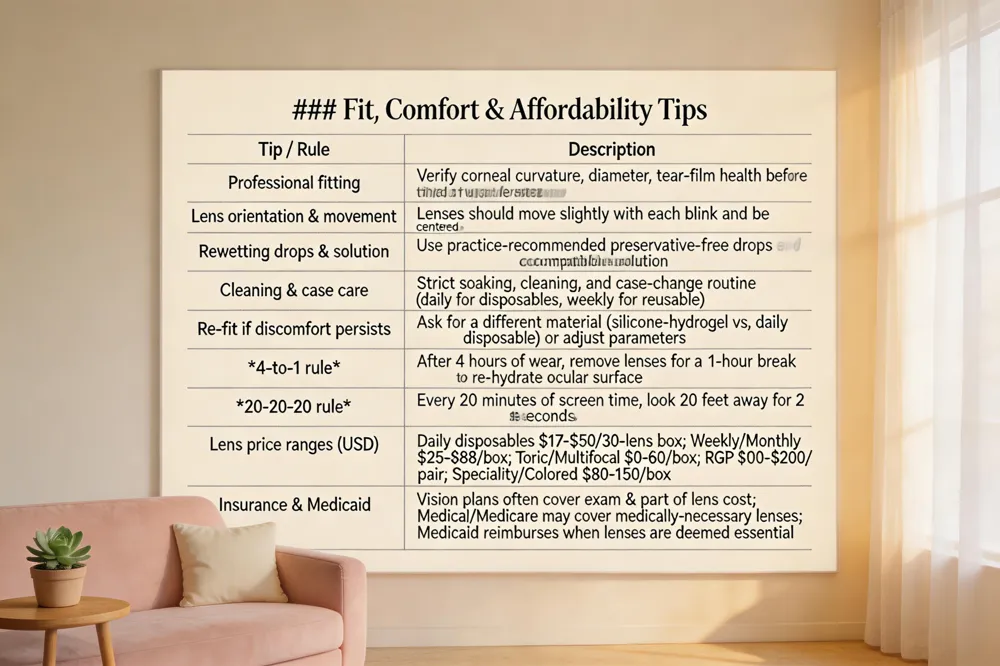 A well‑fitted contact lens starts with a thorough exam that measures corneal curvature, diameter, and tear‑film health. At Apple Eye Care in El Paso, TX, Dr. Stephen Applebaum uses the DRI OCT Triton and corneal topography to generate a precise base‑curve and diameter prescription.
How to make contacts fit better? 1️⃣ Schedule a professional fitting to verify measurements. 2️⃣ Ensure lenses are oriented correctly and move slightly with each blink. 3️⃣ Use compatible rewetting drops and the practice’s recommended solution. 4️⃣ Follow strict cleaning, soaking, and case‑change routines. 5️⃣ If discomfort persists, ask for a refit or try a different material (silicone‑hydrogel or daily disposables).
4‑to‑1 rule – after every four hours of wear, remove lenses for a one‑hour break; clean or replace them and let the ocular surface re‑hydrate.
20‑20‑20 rule – every 20 minutes of screen time, look 20 feet away for 20 seconds to ease visual strain.
Local fitting services – Apple Eye Care offers comprehensive fittings, trial lenses, and personalized training. Appointments can be booked by calling 833‑0633.
Insurance and Medicaid coverage – Most vision‑insurance plans cover the fitting exam and part of the lens cost; health or Medicare plans may add coverage for medically‑necessary lenses (keratoconus, post‑surgery). Medicaid reimburses only when lenses are deemed medically essential, varying by state. Apple Eye Care can verify benefits and submit claims.
Lens price ranges – Daily disposables: $17‑$50 per 30‑lens box; weekly/monthly lenses: $25‑$88 per box; toric/multifocal: $30‑$60 per box; RGP lenses: $100‑$200 per pair; specialty or colored lenses: $80‑$150 per box. Many plans offer rebates or FSA/HSA eligibility.
Meet Dr. Stephen Applebaum and Our Advanced Care
Dr. Stephen Applebaum & Apple Eye Care Services
| Category | Details |
|---|---|
| Credentials | B.S. – UTEP (1988); O.D. – University of Houston (1993) |
| Experience | Serving El Paso community since 1999 |
| Technology | DRI OCT Triton (high‑resolution retinal & corneal imaging), Paragon CRT, modern topographers |
| Core Services | Comprehensive eye exams; Vision‑correction fittings (daily, bi‑weekly, monthly soft lenses, toric, multifocal, custom soft); Medical treatments (dry‑eye management, orthokeratology, post‑refractive‑surgery care) |
| Patient‑First Approach | Detailed case history, lifestyle discussion, personalized lens parameters, scheduled follow‑ups to fine‑tune fit and comfort |
| Contact | Phone: 833‑0633 |
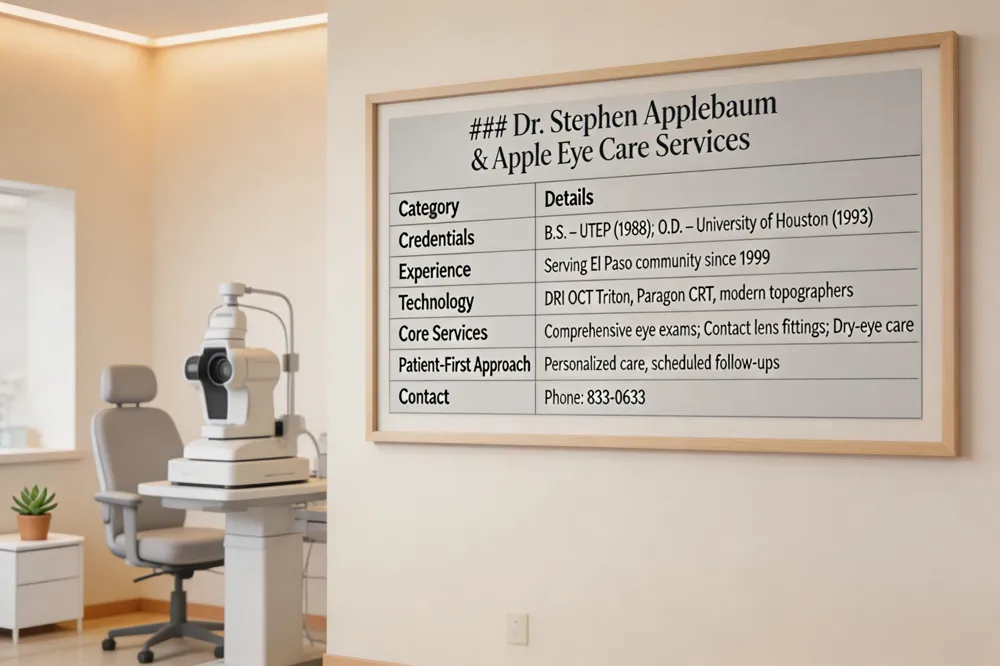 Dr. Stephen Applebaum, O.D., is the lead optometrist and owner of Apple Eye Care in El Paso, Texas. He earned his B.S. at UTEP in 1988 and his Doctor of Optometry from the University of Houston in 1993, and has been serving the community since 1999. Dr. Applebaum combines a family‑focused philosophy with cutting‑edge diagnostics, most notably the DRI OCT Triton, which provides high‑resolution retinal imaging and precise corneal mapping for early detection of cataract, glaucoma, dry‑eye disease, and other ocular conditions.
Apple Eye Care offers a full spectrum of services: comprehensive eye exams, vision‑correction fittings (including daily, bi‑weekly, and monthly soft lenses, toric, multifocal, and custom soft lenses, and specialized medical treatments such as dry‑eye management, orthokeratology, and post‑refractive‑surgery care. The practice emphasizes personalized attention—each patient receives a detailed case history, lifestyle discussion, and tailored lens parameters based on corneal curvature, diameter, and tear‑film quality. Follow‑up appointments are scheduled to fine‑tune fit and ensure comfort, reducing the high dropout rates seen when lenses are poorly fitted. This patient‑first approach, backed by advanced technology, aims to deliver optimal visual outcomes and long‑term eye health for every member of the community.
Final Thoughts on Finding Your Perfect Fit
Key takeaways: Proper contact lens fitting requires a comprehensive exam, precise measurements of corneal curvature, pupil size and tear film, and trial lenses to assess movement and comfort. Customized lenses can address curvature variations, presbyopia and dry‑eye needs, reducing dropout rates.\n\nNext steps for patients: Schedule a dedicated contact lens fitting at a practice like Apple Eye Care in El Paso, TX, discuss lifestyle and vision goals, follow the prescribed wear and care regimen, and return for the follow‑up visit to fine‑tune the fit and ensure long‑term comfort.