Why Early Vision Matters
Visual development begins at birth and continues through the teenage years, with roughly 80% of learning occurring through the eyes. When a child’s visual system is impaired—whether by uncorrected refractive error, amblyopia, or strabismus—the brain may suppress input from the weaker eye, leading to permanent loss of acuity and depth perception. Early detection, ideally before age 7, allows interventions such as corrective lenses, patching, atropine drops, or vision therapy to be started while the visual cortex is still plastic, resulting in success rates exceeding 80 % for amblyopia treatment. Routine screenings at newborn visits, 6‑12 months, 12‑36 months, and before school entry catch refractive errors, misalignment, and retinal abnormalities that would otherwise go unnoticed. Studies from the American Academy of Ophthalmology, Lurie Children’s, and CDC show that children who receive timely eye exams demonstrate better academic performance, fewer behavioral issues, and higher self‑esteem. Advanced imaging tools like the DRI OCT Triton further enhance early diagnosis of retinal and optic‑nerve disorders, ensuring that treatment can begin before visual loss becomes irreversible. In short, early vision care safeguards a child’s learning, development, and lifelong eye health.
Screening Standards and Scheduling
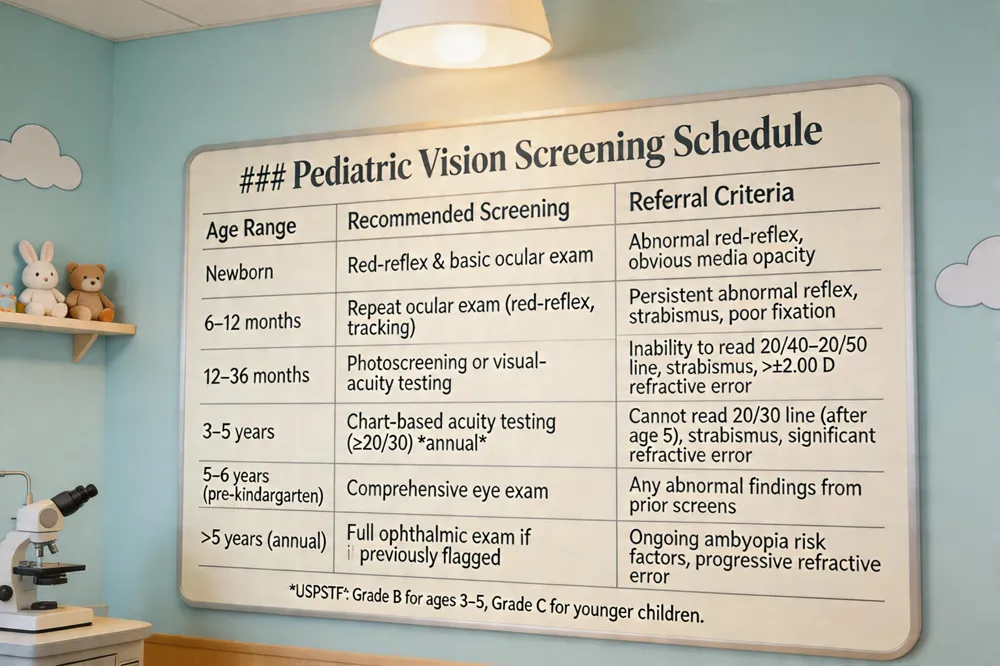
Pediatric Vision Screening Schedule
| Age Range | Recommended Screening | Referral Criteria |
|---|---|---|
| Newborn | Red‑reflex & basic ocular exam | Abnormal red‑reflex, obvious media opacity |
| 6–12 months | Repeat ocular exam (red‑reflex, tracking) | Persistent abnormal reflex, strabismus, poor fixation |
| 12–36 months | Photoscreening or visual‑acuity testing | Inability to read 20/40–20/50 line, strabismus, >±2.00 D refractive error |
| 3–5 years | Chart‑based acuity testing (≥20/30) annual | Cannot read 20/30 line (after age 5), strabismus, significant refractive error |
| 5–6 years (pre‑kindergarten) | Comprehensive eye exam | Any abnormal findings from prior screens |
| >5 years (annual) | Full ophthalmic exam if previously flagged | Ongoing amblyopia risk factors, progressive refractive error |
USPSTF: Grade B for ages 3–5, Grade C for younger children.
 Pediatric Vision Screening Guidelines
The American Academy of Ophthalmology and the American Association for Pediatric Ophthalmology and Strabismus recommend a series of screenings at key developmental milestones: a red‑reflex and ocular exam at birth, a repeat exam between 6–12 months, photoscreening or visual‑acuity testing at 12–36 months, and chart‑based acuity testing by ages 3–5 years. Children aged 3–5 years should be screened at least annually for amblyopia risk factors; any child who cannot read the 20/40–20/50 line (or the 20/30 line after age 5) or shows strabismus, abnormal red reflex, or significant refractive error should be referred to an ophthalmologist. The USPSTF gives a grade B recommendation for screening all children 3–5 years old and a grade C for younger children, recognizing the benefit of early detection of lazy eye and related disorders.
Pediatric Vision Screening Guidelines
The American Academy of Ophthalmology and the American Association for Pediatric Ophthalmology and Strabismus recommend a series of screenings at key developmental milestones: a red‑reflex and ocular exam at birth, a repeat exam between 6–12 months, photoscreening or visual‑acuity testing at 12–36 months, and chart‑based acuity testing by ages 3–5 years. Children aged 3–5 years should be screened at least annually for amblyopia risk factors; any child who cannot read the 20/40–20/50 line (or the 20/30 line after age 5) or shows strabismus, abnormal red reflex, or significant refractive error should be referred to an ophthalmologist. The USPSTF gives a grade B recommendation for screening all children 3–5 years old and a grade C for younger children, recognizing the benefit of early detection of lazy eye and related disorders.
What Age Should a Child Get Their Eyes Checked? A comprehensive eye exam can begin as early as six to twelve months of age, establishing a baseline for ocular development. The next recommended check‑up is between ages 3 and 5, when crossed or lazy eyes often become apparent. A third exam should be completed before first grade, around five to six years old, to ensure vision is ready for school learning. After the first grade, the American Optometric Association advises annual exams through adolescence.
Infant Vision Screening Infant vision screening is a quick, non‑invasive assessment that checks an infant’s ability to focus, track, and respond to visual stimuli. At Apple Eye Care we begin screening as early as six months, using light‑response, pupil reflex, and object‑following checks, plus cover‑uncover and electrophysiologic studies when needed. Early detection of refractive errors, strabismus, or retinal problems allows prompt treatment, preventing developmental delays.
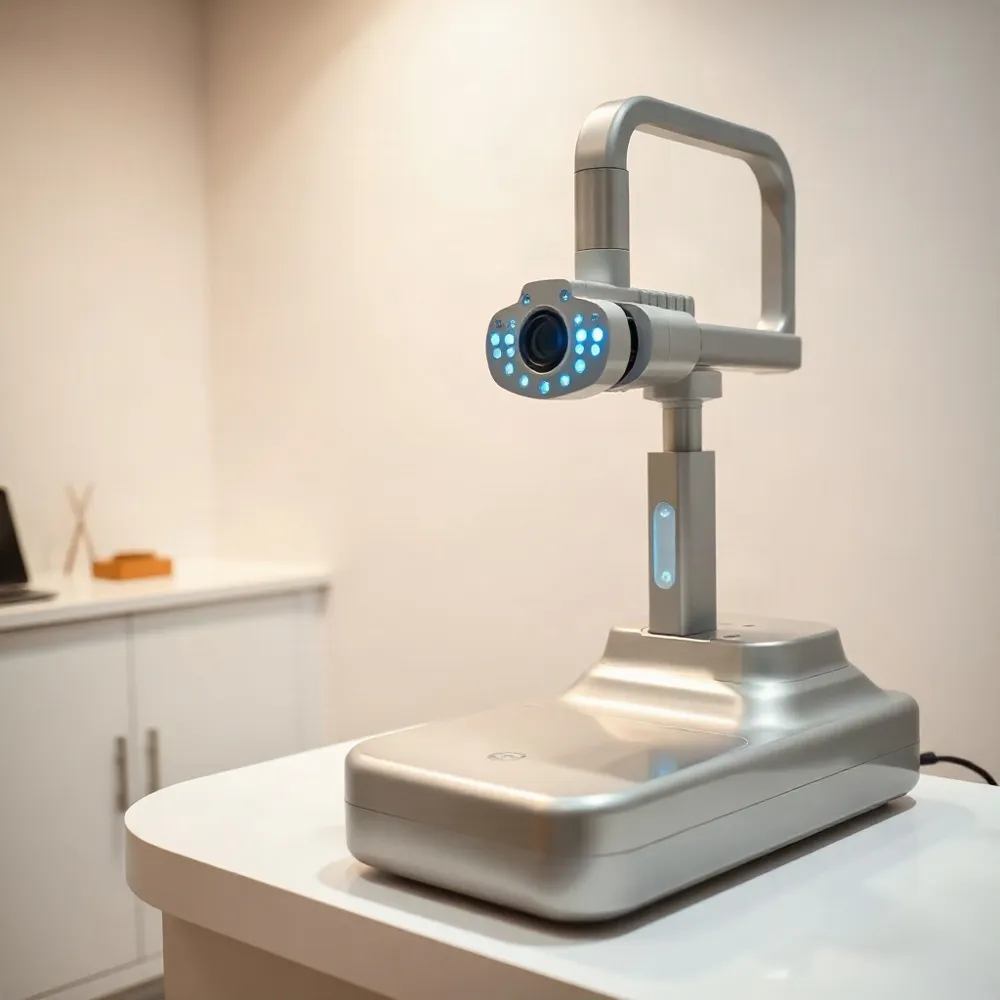
Pediatric Vision Screening Machine A pediatric vision screening machine is a portable, non‑invasive device that quickly assesses a child's visual health without requiring an eye chart. It uses photoscreening or infrared technology to detect amblyopia, strabismus, refractive errors, and other conditions in children as young as two years old. Examples include the Welch Allyn Spot Vision Screener and the smartphone‑based GoCheck Kids platform, both providing rapid results and flagging patients who need a full eye exam.
Pediatric Vision Screener Apple Eye Care provides a comprehensive pediatric vision‑screening program using a camera‑based photoscreener. The quick test detects amblyopia risk factors, refractive errors, strabismus, cataract, and other conditions in seconds. Positive findings are followed by detailed imaging with the DRI OCT Triton, and families receive immediate results and a clear plan of care, with referrals to specialist Dr. Stephen Applebaum when needed.
Common Childhood Eye Conditions
Frequently Encountered Pediatric Eye Conditions
| Condition | Approx. Prevalence | Typical Signs | Referral / Management |
|---|---|---|---|
| Refractive errors (myopia, hyperopia, astigmatism) | ~20 % of children | Squinting, difficulty reading, head tilting | Optometric exam; glasses or vision therapy |
| Amblyopia (lazy eye) | 2–5 % | Poor visual acuity in one eye, eye turning | Full ophthalmic evaluation; patching or atropine therapy |
| Strabismus (misaligned eyes) | ~4 % | Eye turn, double vision, facial asymmetry | Ophthalmology referral; prisms, surgery, vision therapy |
| Tear‑duct obstruction (nasolacrimal) | ~20 % of newborns | Excessive tearing, discharge | Gentle massage; probing if persists >12 months |
| Pediatric cataract | <1 % | White‑eye reflex, cloudy lens, reduced vision | Surgical removal; postoperative amblyopia management |
Key takeaway: Early detection prevents amblyopia and supports academic success.
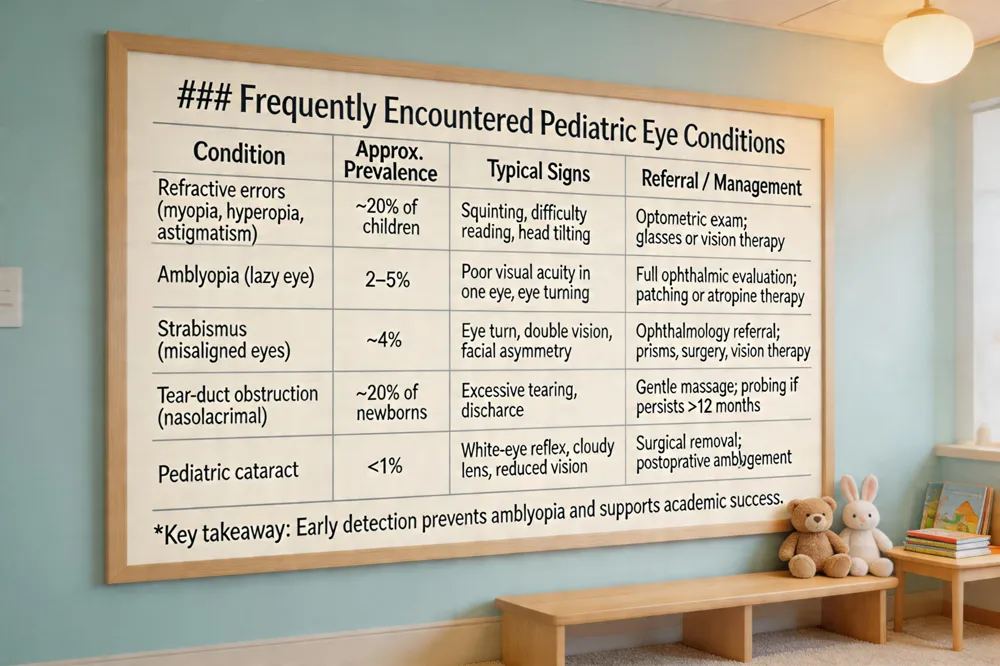 Early detection of pediatric eye problems is essential for normal visual development and academic success. The most frequent conditions include refractive errors—myopia, hyperopia, and astigmatism—which affect roughly 20 % of children and can lead to amblyopia if untreated. Amblyopia, or “lazy eye,” often arises when one eye receives clear input, frequently associated with strabismus (misaligned or crossed eyes). Strabismus itself occurs in about 4 % of children and requires prompt treatment to prevent the brain from suppressing the misaligned eye. Tear‑duct obstructions are common in newborns (≈20 %); gentle massage usually resolves them, but persistent blockage may need probing. Pediatric cataracts appear as a cloudy lens and demand surgical removal to restore vision and avoid amblyopia. Parents should watch for signs such as squinting, head tilting, frequent eye rubbing, excessive tearing, or a white‑eye reflex, and seek a comprehensive eye exam promptly. The American Optometric Association recommends a first exam at 6–12 months, a follow‑up at age 3–5, and another before kindergarten, with regular exams thereafter. Modern clinics, such as Apple Eye Care in El Paso, use advanced diagnostics like the DRI OCT Triton to detect retinal and optic‑nerve abnormalities early, enabling personalized treatment plans that may include glasses, patching, vision therapy, or myopia‑control interventions.
Rare and Complex Disorders
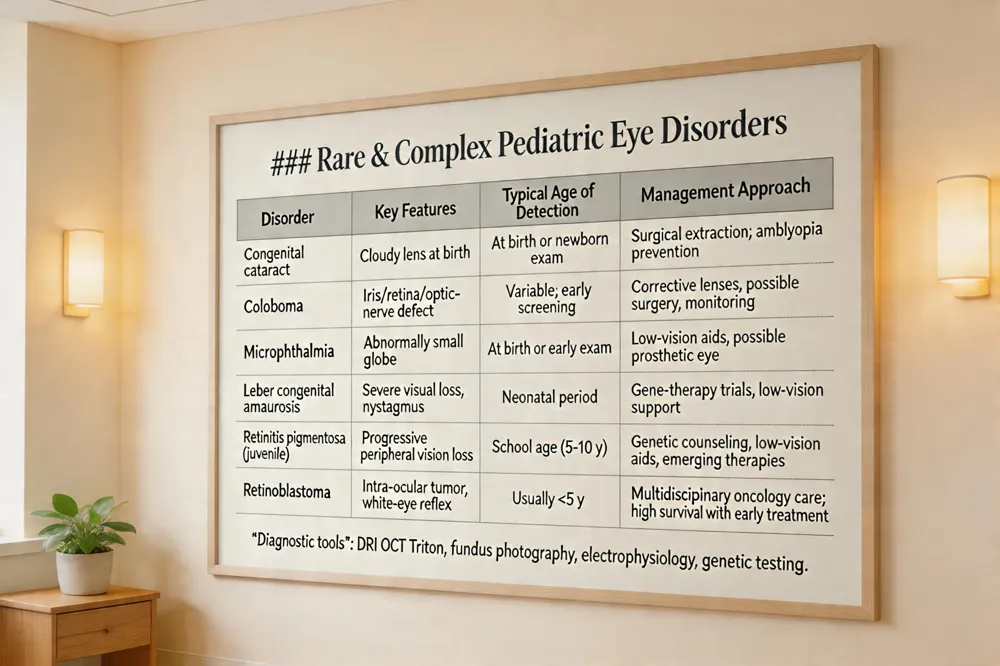
Rare & Complex Pediatric Eye Disorders
| Disorder | Key Features | Typical Age of Detection | Management Approach |
|---|---|---|---|
| Congenital cataract | Cloudy lens at birth | At birth or newborn exam | Surgical extraction; amblyopia prevention |
| Coloboma | Iris/retina/optic‑nerve defect | Variable; often identified in early screening | Corrective lenses, possible surgery, monitoring |
| Microphthalmia | Abnormally small globe | At birth or early exam | Low‑vision aids, possible prosthetic eye |
| Leber congenital amaurosis | Severe visual loss, nystagmus | Neonatal period | Gene‑therapy trials, low‑vision support |
| Retinitis pigmentosa (juvenile) | Progressive peripheral vision loss | School age (often 5‑10 y) | Genetic counseling, low‑vision aids, emerging therapies |
| Retinoblastoma | Intra‑ocular tumor, white‑eye reflex | Usually <5 y | Multidisciplinary oncology care; high survival with early treatment |
Diagnostic tools: DRI OCT Triton, fundus photography, electrophysiology, genetic testing.
 Rare eye conditions in children
Rare pediatric eye disorders, though uncommon, can dramatically affect visual development and quality of life. Congenital cataracts appear at birth and require prompt surgical removal to prevent amblyopia. Coloboma, a developmental defect of the iris, retina, or optic nerve, often needs corrective lenses or surgery, while microphthalmia—abnormally small eyes—may require vision‑enhancing devices or reconstructive procedures. Genetic conditions such as Leber congenital amaurosis, retinitis pigmentosa, and other retinal dystrophies cause progressive degeneration; emerging gene‑therapy trials and low‑vision aids help preserve function. Early detection with high‑resolution imaging (e.g., DRI OCT Triton) and a multidisciplinary team are essential.
Rare eye conditions in children
Rare pediatric eye disorders, though uncommon, can dramatically affect visual development and quality of life. Congenital cataracts appear at birth and require prompt surgical removal to prevent amblyopia. Coloboma, a developmental defect of the iris, retina, or optic nerve, often needs corrective lenses or surgery, while microphthalmia—abnormally small eyes—may require vision‑enhancing devices or reconstructive procedures. Genetic conditions such as Leber congenital amaurosis, retinitis pigmentosa, and other retinal dystrophies cause progressive degeneration; emerging gene‑therapy trials and low‑vision aids help preserve function. Early detection with high‑resolution imaging (e.g., DRI OCT Triton) and a multidisciplinary team are essential.
Genetic eye diseases in children Inherited eye disorders include congenital nystagmus, cataracts, glaucoma, high myopia, ectopia lentis, albinism, and retinal dystrophies. Prompt recognition prevents permanent loss, and many cases qualify for targeted therapies or surveillance. Comprehensive evaluation combines clinical exam, OCT, fundus imaging, electrophysiology, and molecular genetic testing. Families benefit from counseling on prognosis, recurrence risk, and treatment options, including FDA‑approved gene therapies for specific retinal diseases.
Can a child survive retinoblastoma? Yes. With early detection and treatment, especially when disease remains intraocular, 5‑year survival exceeds 95 % in the United States.
Eye exam for kids with no insurance Apple Eye Care offers low‑cost comprehensive exams, sliding‑scale fees, and payment plans. Community programs such as Vision To Learn, local health centers, and nonprofit initiatives also provide free or reduced‑cost screenings and glasses.
Pediatric ophthalmologist A pediatric ophthalmologist is a medical doctor specializing in childhood eye health, diagnosing and treating conditions from amblyopia to congenital cataracts. At Apple Eye Care in El Paso, Dr. Stephen Applebaum leads a family‑focused team that uses DRI OCT Triton imaging and personalized care to ensure optimal visual outcomes.
Practical Tips for Parents
Practical Parenting Tips for Healthy Vision
| Tip | Description | Why It Matters |
|---|---|---|
| Schedule regular eye exams | First at 6‑12 mo, then 3‑5 y, before kindergarten, then annually | Detect amblyopia, refractive errors early |
| 20‑20‑20 screen rule | Every 20 min, look 20 ft away for 20 sec | Reduces eye strain & myopia risk |
| Limit screen time | Set age‑appropriate limits (e.g., <1 h for <2 y, 2 h for older) | Prevents digital eye strain and myopia progression |
| Nutrition rich in lutein & omega‑3 | Include mango, papaya, fish oil, olive oil | Supports retinal health |
| Outdoor play | ≥2 h daily outdoors | Natural light reduces myopia development |
| Protective eyewear | ASTM‑certified polycarbonate lenses for sports | Prevents traumatic injuries |
| Watch for warning signs | Squinting, head tilt, persistent rubbing, white eye reflex | Prompt referral can avert amblyopia |
Goal: Combine exams, habits, diet, and protection for optimal visual development.
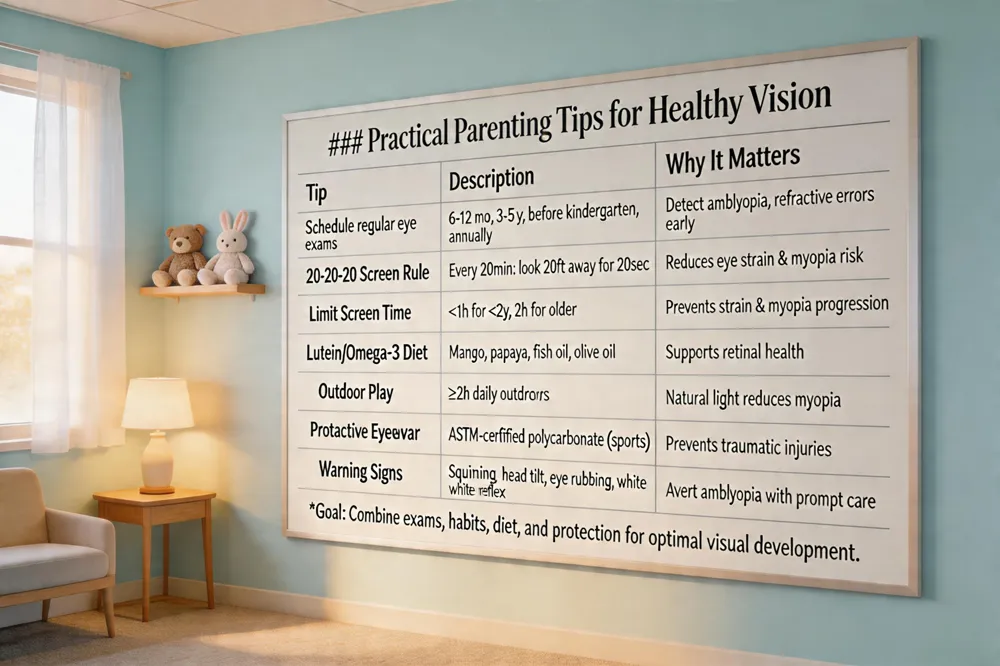 Early, exams are essential—schedule a visit with a pediatric eye specialist like Dr. Stephen Applebaum at Apple Eye Care to catch amblyopia, strabismus, or refractive errors before age 7. Model healthy habits: limit screen time and apply the 20‑20‑20 rule—every 20 minutes of close work, look at something 20 feet away for 20 seconds while blinking to reduce eye strain. Excessive mobile use can cause headaches, blurry vision, dry eyes, and increase myopia risk. Support eye nutrition with fruits rich in lutein and zeaxanthin (mango, papaya) and omega‑3‑rich oils (fish oil, extra‑virgin olive oil) to protect the retina. Encourage outdoor play and activities that develop hand‑eye coordination, and protect eyes during sports with ASTM‑certified polycarbonate lenses or UV‑blocking sunglasses. Watch for signs like squinting, head tilting, or persistent rubbing, and schedule regular follow‑ups. By combining timely exams, balanced diet, screen breaks, outdoor time, and protective eyewear, parents can safeguard their child’s visual development and academic success.
Finding Care and Managing Costs
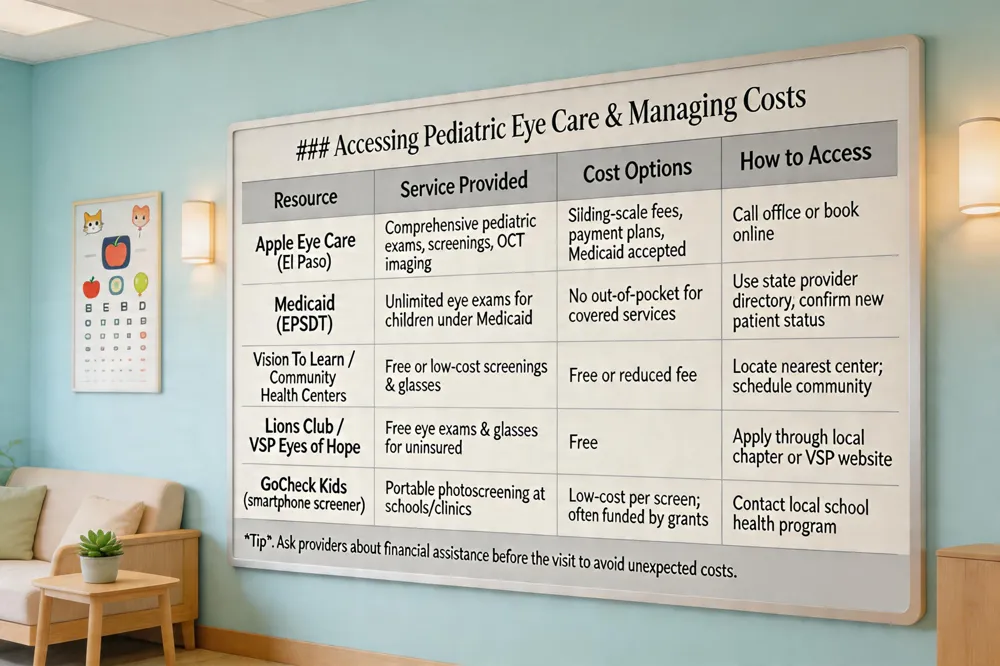
Accessing Pediatric Eye Care & Managing Costs
| Resource | Service Provided | Cost Options | How to Access |
|---|---|---|---|
| Apple Eye Care (El Paso) | Comprehensive pediatric exams, screenings, OCT imaging | Sliding‑scale fees, payment plans, Medicaid accepted | Call office or book online |
| Medicaid (EPSDT) | Unlimited eye exams for children under Medicaid | No out‑of‑pocket for covered services | Use state provider directory; confirm new patient status |
| Vision To Learn / Community Health Centers | Free or low‑cost screenings & glasses | Free or reduced fee | Locate nearest center; schedule community event |
| Lions Club / VSP Eyes of Hope | Free eye exams & glasses for uninsured | Free | Apply through local chapter or VSP website |
| GoCheck Kids (smartphone screener) | Portable photoscreening at schools/clinics | Low‑cost per screen; often funded by grants | Contact local school health program |
Tip: Ask providers about financial assistance before the visit to avoid unexpected costs.
 Pediatric eye doctor that accepts Medicaid
Many pediatric eye specialists accept Medicaid. Use your state’s Medicaid provider directory or health‑plan network to filter for “ophometrist” or “ophthalmology” and select your plan. Programs such as EPSDT cover unlimited eye exams for children, making Medicaid‑accepting providers a practical, for families. Call the office to confirm they are still taking new Medicaid patients before scheduling.
Pediatric eye doctor that accepts Medicaid
Many pediatric eye specialists accept Medicaid. Use your state’s Medicaid provider directory or health‑plan network to filter for “ophometrist” or “ophthalmology” and select your plan. Programs such as EPSDT cover unlimited eye exams for children, making Medicaid‑accepting providers a practical, for families. Call the office to confirm they are still taking new Medicaid patients before scheduling.
Pediatric eye exam near me Apple Eye Care in El Paso, TX offers comprehensive pediatric exams at key milestones (6‑12 months, age 3, then every 2 years). Board‑certified optometrists use the DRI OCT Triton for high‑resolution retinal imaging, detecting amblyopia, strabismus, and refractive errors early. The family‑focused team provides a child‑friendly environment and personalized care.
Pediatric eye doctor near me Apple Eye Care, led by Dr. Stephen Applebaum, specializes in pediatric eye health. Advanced diagnostics (DRI OCT Triton) enable early detection of common conditions. The compassionate staff keeps exams comfortable and accurate, ensuring a positive experience for kids.
Pediatric vision screening near me Apple Eye Care conducts age‑appropriate vision screenings using handheld scanners (e.g., Spot Vision Screener) and OCT imaging. Screenings align with recommended schedules—newborn, 6 months, 1‑2 years, 3‑4 years, and annually after age 5—to support learning and development.
Eye exam for kids no insurance If uninsured, Apple Eye Care offers low‑cost exams, sliding‑scale fees, and payment plans. Families can also explore free or low‑cost programs such as Vision To Learn, community health centers, university clinics, and nonprofit initiatives (Lions Clubs, VSP Eyes of Hope) for complimentary exams and glasses.
Looking Ahead
Early detection of pediatric eye problems is a cornerstone of healthy visual development. When conditions such as amblyopia, strabismus, or refractive errors are identified before age 7, treatment success exceeds 80 % and can prevent permanent vision loss, learning delays, and behavioral challenges. Routine screenings at newborn visits, well‑child appointments, and schools catch hidden disorders early, allowing timely interventions—glasses, patching, vision therapy, or surgery—that preserve binocular function and support academic performance.
Future advancements promise to sharpen this preventive model. High‑resolution imaging platforms like the DRI OCT Triton already reveal retinal and optic‑nerve abnormalities in children before clinical signs appear. Emerging artificial‑intelligence algorithms can analyze photoscreener and OCT data to flag subtle risk factors for amblyopia or retinopathy of prematurity, reducing false‑negative rates. Tele‑screening tools, such as smartphone‑based platforms that combine photoscreening, visual‑acuity testing, and audiometry, are expanding access in underserved communities and streamlining referrals. As these technologies mature, they will integrate with electronic‑health records, enabling longitudinal tracking of visual development and personalized, data‑driven treatment plans—ensuring that every child receives the right care at the right time.