Why Vision Screening Matters for Your Child
The Foundation for Learning and Confidence
A child's eyes are their primary tool for exploring and understanding the world. An estimated 80% of the information a child processes in a classroom comes through their eyes, directly impacting their ability to read, participate in board work, and follow visual cues from their teacher. Early detection of vision problems is not just about seeing clearly; it's about building academic success and confidence.
Undiagnosed vision issues can lead to difficulties in reading, poor concentration, and a child avoiding schoolwork. When a child can see well, they are more likely to participate confidently in class, sports, and social activities. Addressing these issues early can prevent more serious, permanent problems later in life and supports a child's overall development, including fine motor skills and hand-eye coordination.
The Gap in School Screenings
It is a common misconception that a school vision screening provides a clean bill of eye health. Standard school screenings often focus only on basic distance vision using a simple chart. They typically do not assess for a range of common issues such as astigmatism, binocular vision disorders (how well the eyes work together), convergence insufficiency (eye teaming), or depth perception.
This means that a child could pass a school screening but still have a significant vision problem that impacts their learning. Relying solely on these screenings can lead to missed opportunities for early intervention, especially for conditions like amblyopia (lazy eye) which are most effectively treated during early childhood.
The Role of Comprehensive Eye Care
Pediatric optometrists, such as those at Apple Eye Care, provide a much more thorough evaluation than a basic screening. A comprehensive eye exam goes beyond visual acuity, including assessments of eye alignment, focusing skills, eye coordination, and overall eye health through a dilated exam.
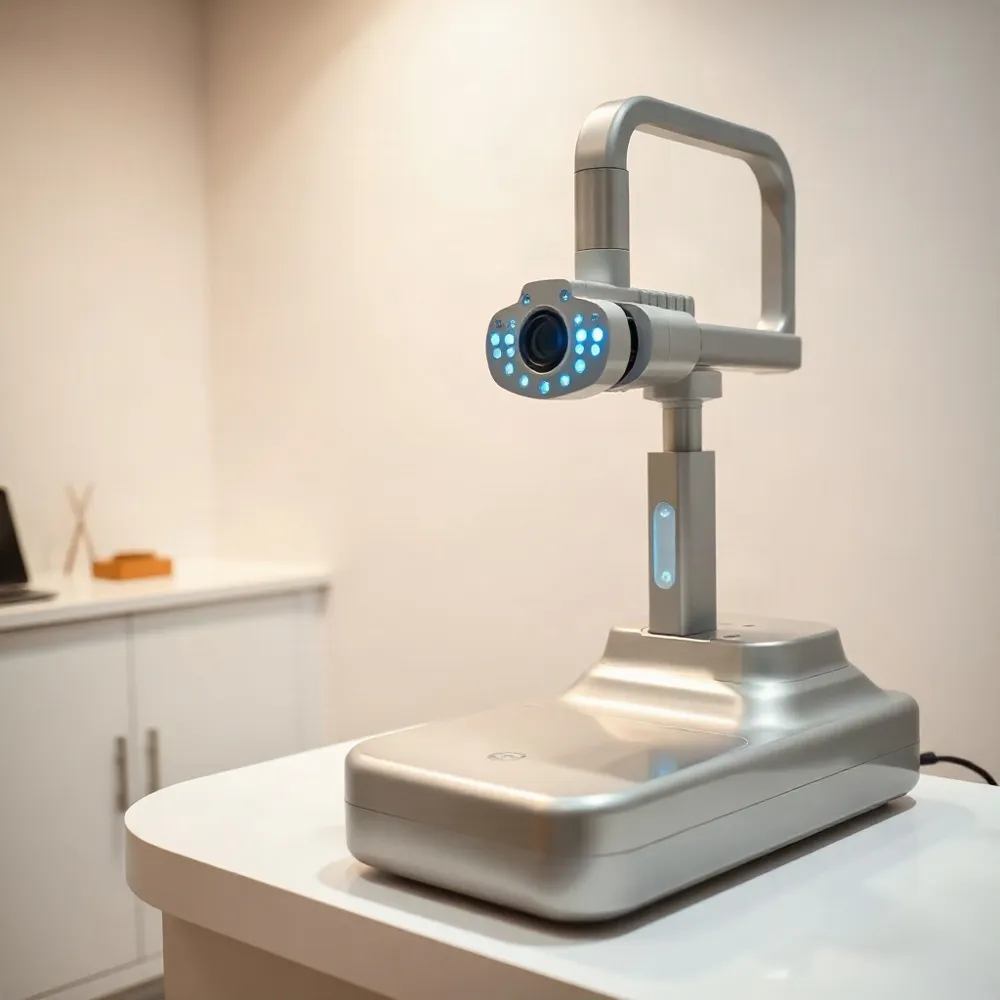
These professionals use specialized instruments and techniques designed for children, making the process comfortable and effective. They can identify risk factors for amblyopia and other conditions that are invisible to simple screening tests. By scheduling a comprehensive exam with a pediatric specialist, parents ensure they are getting a complete picture of their child's visual health, which is essential for supporting their learning and success in school and beyond.
| Aspect | School Vision Screening | Comprehensive Eye Exam |
|---|---|---|
| Primary Purpose | Identify basic distance vision problems | Detect all vision problems and eye diseases |
| Tests Performed | Visual acuity (eye chart) only | Tests for acuity, alignment, depth perception, peripheral vision, color vision, and eye health |
| Conditions Detected | Myopia (nearsightedness) | Amblyopia, strabismus, refractive errors, binocular vision disorders, and early signs of disease |
| Provider | School nurse or trained technician | Optometrist or ophthalmologist |
Amblyopia Explained: How a ‘Lazy Eye’ Disrupts Visual Development
What Is Amblyopia and How Does It Affect Visual Development?
Amblyopia, commonly known as
The Most Common Vision Problem: Refractive Errors
What is the most common eye problem in kids?
Refractive errors are the most common eye problems in children. Nearsightedness (myopia), farsightedness (hyperopia), and astigmatism cause blurred vision because the eye cannot focus light directly onto the retina. Nearly 20% of children under 18 have a refractive error, and approximately 25% of school-age children need glasses. Without correction, these vision impairments can interfere with learning, confidence, and daily activities.
How uncorrected refractive errors lead to amblyopia
If a significant refractive error remains uncorrected, it can lead to amblyopia (lazy eye). This occurs when the brain begins to ignore the blurry image from one eye, preventing normal visual development. Amblyopia affects 1% to 6% of children and can become permanent if not treated before age 7–10. Early detection through vision screening is critical because treatment after the visual system matures is far less effective.
Signs parents can observe
Children often do not complain about vision problems. Parents should watch for squinting, holding books or screens unusually close, sitting too near the television, frequent eye rubbing, closing one eye, tilting the head, or avoiding reading. Headaches or difficulty concentrating after near work are also common. Regular eye exams are essential to detect these issues before they affect a child's development and school performance.
| Condition | Prevalence in Children | Key Signs for Parents | Risk if Untreated |
|---|---|---|---|
| Myopia (nearsightedness) | Up to 4% of preschoolers, increases in school-age | Squinting at distance, sitting close to TV, holding books close | Blurred distance vision, increased risk of eye disease later in life |
| Hyperopia (farsightedness) | Over 20% of children under 5 | Eye strain, headaches after reading, may avoid near work | Can lead to strabismus (eye turn) and amblyopia |
| Astigmatism | 30%–50% of infants, stabilizes by age 3 | Squinting, blurred or distorted vision at all distances, head tilting | Causes blurred vision, can contribute to amblyopia |
| Anisometropia | 4%–6% of children | No obvious signs; child may rub one eye, or avoid tasks | High risk of amblyopia due to unequal focus between eyes |
Spotting Lazy Eye in the Early Years
What are the common symptoms of lazy eye (amblyopia) in toddlers?
Toddlers with amblyopia may not complain, so parents need to watch for behavioral clues. Frequent squinting, rubbing, or covering one eye are key signs. A toddler who consistently bumps into objects on one side or appears clumsy may be struggling with poor depth perception. You might also notice a head tilt, as the child relies on the stronger eye to see clearly. A wandering eye that turns inward or outward is a major red flag. However, symptoms can be subtle, making a comprehensive eye exam crucial.
How can parents tell if a 1‑year‑old has a lazy eye?
In a one-year-old, look for an eye that persistently turns in, out, up, or down—a sign of strabismus. The child might tilt their head to focus, squint, or rub one eye more than the other. Difficulty tracking a moving toy, holding objects very close, or frequent bumping into furniture also signal a problem. Other warning signs include a droopy eyelid, involuntary eye movements (nystagmus), or a tendency to close one eye in bright light.
Why early referral matters
Early detection before age 4 is critical because the visual system is still developing. Untreated amblyopia can lead to permanent vision loss, as the brain learns to ignore signals from the weaker eye. Early treatment—such as patching, atropine drops, or glasses—can correct the condition and preserve normal vision. Regular vision screenings are essential, even if no symptoms are apparent.
| Sign | Toddler (1-3 Years) | 1-Year-Old Clues | Action Required |
|---|---|---|---|
| Eye rubbing or squinting | Frequent, especially when focusing | May rub one eye or squint in bright light | Schedule an eye exam |
| Head tilt or turn | Leans head to one side while playing or watching TV | Turns head to focus on objects | Evaluate for strabismus or refractive error |
| Eye misalignment (strabismus) | Eye turns in, out, up, or down intermittently or constantly | Persistent wander of one eye | Immediate referral to a pediatric ophthalmologist |
| Depth perception issues | Bumps into objects, seems clumsy, misses when reaching | Holds toys very close, avoids crawling or walking | Comprehensive eye exam needed |
| Covering or closing one eye | Covers an eye while reading or watching | Prefers looking with one eye, winks frequently | Rule out amblyopia or anisometropia |
When Does Treatment Lose Its Edge?
When Is It Too Late to Treat Lazy Eye? It is never truly too late to treat amblyopia, though treatment is most effective during early childhood when the brain's visual pathways are still developing. The optimal window for significant improvement is before age 7 to 9, as the visual system is most plastic during this period. After this age, treatment can become more challenging but not impossible. Recent research shows that even adults may benefit from treatment, depending on the cause and severity.
Possibility of Improvement in Older Children and Adults While results may be slower and less dramatic later in life, options like corrective glasses, patching, or vision therapy can still help improve vision. The brain retains some degree of plasticity throughout life, meaning meaningful gains are possible even in older children and adults. However, the primary goal shifts from achieving normal vision to maximizing the visual potential of the weaker eye.
Balancing Expectations Early intervention offers the best chance for full recovery, making routine screening crucial. For older individuals, treatment focuses on reducing symptoms and improving binocular function. While complete cure is less likely, seeking treatment at any age can still offer meaningful benefits, such as better depth perception and reduced eye strain. Therefore, while early detection is ideal, it is never too late to seek help. | Age Group | Optimal Intervention Window | Treatment Potential |
|---|---|---| | Birth to 7 years | Critical period for brain development | Highest chance of significant improvement | | 8 to 18 years | Still advantageous | Good potential, but slower than in early childhood | | Adulthood (18+) | Possible but less effective | Can reduce symptoms and improve binocular function |
Treatment Toolbox for Lazy Eye in Children
What treatment options are available for lazy eye in children?
Treatment for lazy eye focuses on training the brain to use the weaker eye. The most common and effective first-line treatments are eye patching and atropine eye drops.
Patching: An eye patch is worn over the stronger eye for several hours a day. This forces the brain to rely on signals from the amblyopic (lazy) eye, strengthening its visual connections. Patching is a mainstay of therapy.
Atropine Drops: A drop of atropine is placed in the stronger eye once a day. This temporarily blurs vision in that eye, achieving a similar effect to patching without the need for a physical cover. It can be an excellent option for children who resist wearing a patch.
Corrective lenses and Bangerter filters
Corrective Lenses: Prescription glasses or contact lenses are the first step for many children, correcting underlying refractive errors like nearsightedness, farsightedness, or astigmatism that can cause lazy eye. Sometimes, this correction alone is enough to resolve the condition.
Bangerter Filters: A Bangerter filter is a special semi-transparent film placed on the eyeglass lens over the stronger eye. It blurs the vision in that eye, similar to an atropine drop but without medication. This is often used as a step-down therapy after patching or atropine.
Surgical options for strabismus or cataract
When structural or alignment problems are present, surgery may be required.
- Strabismus Surgery: This involves adjusting the eye muscles to realign the eyes. While this fixes the cosmetic turn, it does not always cure the accompanying lazy eye. Vision therapy is often needed afterward to train the eyes to work together.
- Cataract Surgery: A cloudy lens (cataract) can block vision, depriving the eye of clear images and causing lazy eye. Removing the cataract surgically restores a clear visual pathway, often followed by extended patching of the stronger eye to wake up the weaker one.
Vision therapy and its role
Vision therapy is a doctor-supervised program of eye exercises. It aims to retrain the eye-brain connection to improve binocular vision, depth perception, and eye coordination. It is most effective when used alongside patching or atropine, especially for residual issues after initial treatment.
| Option | Method | Purpose | Best For |
|---|---|---|---|
| Eye Patching | Physical cover over stronger eye | Force weaker eye to work | Primary treatment |
| Atropine Drops | Blurs stronger eye temporarily | Same effect as patching | Children resisting patch |
| Bangerter Filter | Film blurring stronger lens | Step-down maintenance therapy | Transitioning off treatment |
| Strabismus Surgery | Adjust eye muscles | Realign eyes | Constant misalignment |
| Vision Therapy | Supervised eye exercises | Improve eye coordination & depth | After initial treatments |
Treatment typically lasts months to two years. The window for maximum effectiveness is before age seven, as the visual system matures around ages 8-10.
Early Red Flags and Screening Schedules for Young Children
What are the recommended vision screening guidelines for children? The American Academy of Pediatrics (AAP) recommends that vision screening start at birth with a red-reflex test to check for serious conditions like cataracts. A visual-behavior assessment should occur at every well-child visit, with instrument-based screening (e.g., photoscreening) recommended for children ages 1–3. The U.S. Preventive Services Task Force (USPSTF) gives a Grade B recommendation that all children aged 3–5 be screened at least once for amblyopia. After age 5, routine screening for visual acuity and alignment should continue every 1–2 years.
Comprehensive exams versus basic screenings School vision screenings are helpful but miss conditions like astigmatism, convergence insufficiency, and binocular vision disorders. A comprehensive dilated eye exam by an optometrist or ophthalmologist is necessary for a full diagnosis. Without it, up to 25% of school-age children may have undetected vision problems that affect learning and development.
| Age | Recommended Screening | What It Detects |
|---|---|---|
| Newborn | Red-reflex test | Cataracts, retinoblastoma |
| 6–12 months | Visual inspection, red-reflex, alignment | Strabismus, refractive errors |
| 1–3 years | Instrument-based screening (photoscreening) | Amblyopia risk factors |
| 3–5 years | Visual acuity chart (LEA, HOTV) | Amblyopia, refractive errors |
| School age | Visual acuity, alignment, stereopsis | Myopia, astigmatism, binocular issues |
Digital Eye Strain and Sudden Eye Pain: When to Act
How can excessive screen time affect children’s eyes and what symptoms indicate digital eye strain?
Excessive screen time reduces a child’s blink rate, which disrupts the tear film and leads to dry, irritated, and fatigued eyes. This digital eye strain can present as blurred vision, headaches, difficulty focusing, light sensitivity, and frequent eye rubbing. Children may also hold devices very close or complain of sore, itchy eyes. Over time, unaddressed screen strain can contribute to chronic dry eye and even accelerate the onset and progression of myopia (nearsightedness).
What should parents do if their child experiences sudden eye pain without redness?
Sudden eye pain without redness can signal a foreign body, corneal abrasion, or increased intraocular pressure. Avoid rubbing the eye and apply a clean lubricating drop if available. The RSVP rule (Redness, Sensitivity to light, Vision change, Pain) reminds parents that any one symptom, including pain alone, warrants a prompt appointment with an ophthalmologist. Seek immediate medical attention if the pain is severe or accompanied by vision changes, light sensitivity, or swelling. A professional exam is essential to rule out serious conditions and protect your child’s vision. | Symptom | Possible Cause | Recommended Action | |---|---|---| | Blurred vision, headaches, eye fatigue | Digital eye strain, dry eye | Reduce screen time, apply 20-20-20 rule, schedule eye exam | | Sudden eye pain (without redness) | Foreign body, corneal abrasion, elevated eye pressure | Apply lubricating drop; seek ophthalmologist per RSVP rule | | Eye rubbing, light sensitivity, holding devices close | Uncorrected refractive error, myopia progression | Comprehensive eye exam to assess vision and prescribe correction |
Take Action Today for Clearer Tomorrow
Recap of Key Signs and Screening Milestones
From squinting and head tilting to holding books too close, many signs can point to your child needing a vision check. The American Academy of Pediatrics recommends vision screening at birth, by 6 months, at 3-4 years, at 5 years, and annually thereafter. Think of these as guardrails protecting your child’s visual development.
Schedule a Comprehensive Exam at Apple Eye Care
If you spot any warning signs, don't wait. A school screening is only a start; it misses many issues. A comprehensive exam at Apple Eye Care can diagnose the problem accurately and create a personalized treatment plan, whether that's glasses, patching, or therapy. Early intervention is the most effective step you can take.
The Long‑Term Rewards of Early Detection
Addressing vision problems early does more than improve eyesight. It boosts academic performance, builds confidence in sports and social settings, and prevents future vision loss. By acting now, you can help your child reach their full potential and enjoy a lifetime of clear, comfortable vision. The best time to act is today.
| Sign or Milestone | What to Watch For | Recommended Action |
|---|---|---|
| Newborn – 6 Months | Abnormal red reflex, poor tracking, family history | Red‑reflex test at well‑child visit |
| 1 – 3 Years | Frequent eye rubbing, squinting, or head tilting | Instrument‑based screening (photoscreening) |
| 3 – 5 Years | Failed eye chart (e.g., 20/50 or worse at age 3), misaligned eyes | Comprehensive exam by optometrist or ophthalmologist |
| 5+ Years | Reading difficulties, sitting close to TV, frequent headaches | Annual vision screening and comprehensive exam if needed |