Why Early Glaucoma Detection Matters for Seniors
Glaucoma is the second leading cause of irreversible blindness and disproportionately affects adults over 60. In seniors the disease first attacks peripheral vision, reducing side‑view awareness and increasing the risk of falls, difficulty navigating stairs, and compromised night driving. Because early‑stage glaucoma usually presents no symptoms, many older adults remain unaware until significant nerve loss has already occurred—a silent progression that can leave a tunnel‑vision field. Detecting the condition early through regular comprehensive exams, tonometry, OCT imaging and visual‑field testing allows clinicians to lower intra‑ocular pressure with drops, laser or surgery before damage becomes permanent. Early intervention preserves central vision, maintains independence, and significantly reduces health‑care costs of advanced disease.
Understanding Glaucoma: Symptoms, Early Signs, and Causes
 Glaucoma is often called the “sneaky thief of sight” because most people have no noticeable symptoms in the early stages. When vision changes do appear, the first detectable sign is usually a subtle loss of peripheral or "tunnel" vision that can be uncovered during visual‑field testing; many patients do not notice this narrowing until it becomes pronounced. Typical early and late signs that clinicians watch for include (1) gradual peripheral vision loss with patchy blind spots, (2) blurred or hazy vision in low light, (3) halos or colored rings around lights, (4) eye pain or pressure with severe headache, (5) nausea or vomiting—often with an acute angle‑closure attack, (6) red or inflamed eyes, (7) difficulty seeing objects directly in front as the disease advances, and (8) frequent changes in prescription glasses or contacts. The underlying cause is an abnormal buildup of fluid that raises intra‑ocular pressure, damaging the optic nerve. In open‑angle glaucoma the drainage meshwork is partially blocked; in angle‑closure glaucoma the iris blocks the drainage angle, causing a rapid pressure spike. Secondary glaucoma can follow inflammation, injury, cataract surgery, or systemic factors such as severe diabetes or long‑term steroid use. Major risk factors are age over 60, family history, African, Hispanic, or Asian ancestry, high myopia, hypertension, and other systemic diseases, all of which increase the likelihood of pressure‑related optic‑nerve damage. Early detection can preserve vision.
How Glaucoma Is Detected: Tests and Accuracy
 Screening for glaucoma begins with tonometry to record intra‑ocular pressure (IOP), pachymetry to measure corneal thickness, and a dilated optic‑nerve exam. Visual‑field testing (perimetry) maps peripheral vision for early blind‑spot formation, while optical coherence tomography (OCT) delivers high‑resolution cross‑sectional images of the retinal nerve‑fiber layer (RNFL) and optic‑nerve head.
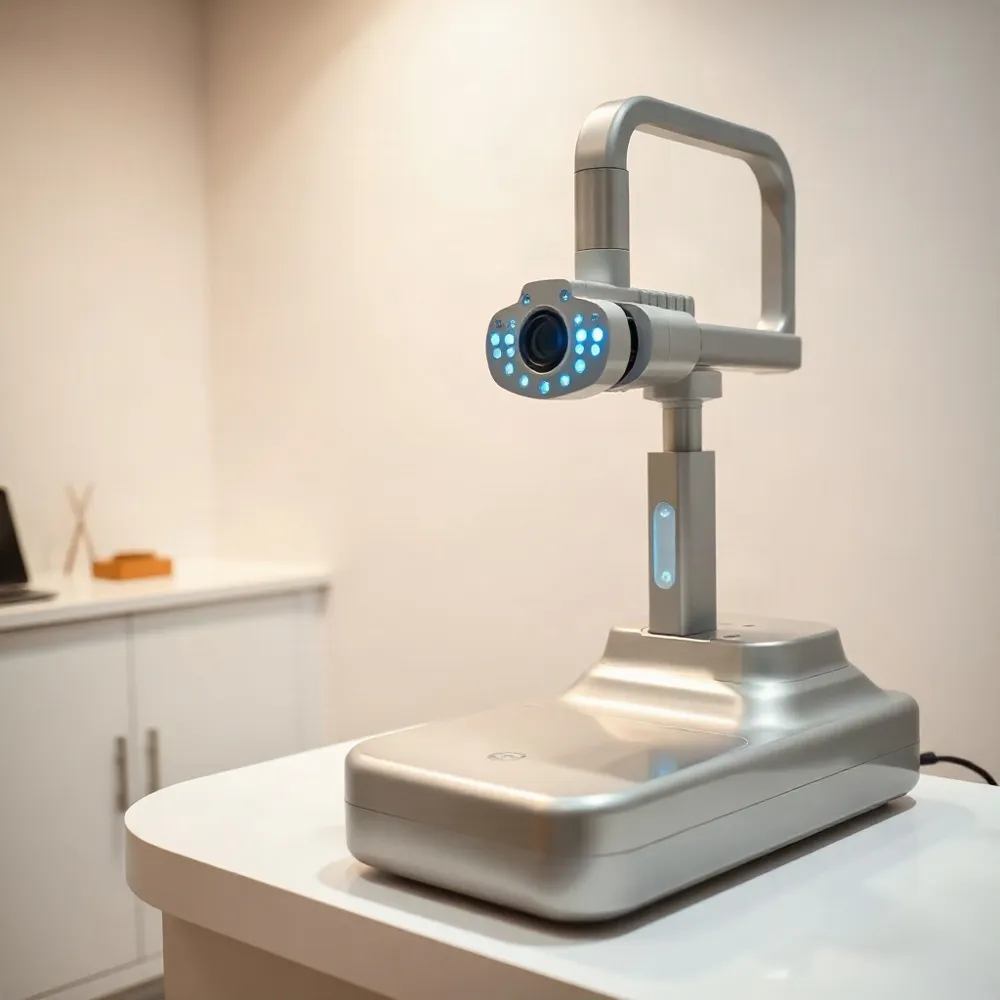
What is the most accurate test for glaucoma? The most accurate test is OCT of the optic nerve and RNFL. OCT detects minute structural thinning before visual‑field loss, making it the gold‑standard for early diagnosis. Apple Eye Care uses the DRI OCT Triton system, providing detailed maps that enable precise monitoring and timely treatment adjustments.
What is the rule of 5 for glaucoma? The “rule of 5” refers to an OCT‑based criterion where a change of ≥ 5 µm in global RNFL thickness between visits suggests progression. Although easy to measure, recent data show a high false‑positive rate; clinicians now corroborate OCT trends with visual‑field results and clinical judgment before altering therapy.
Where can I get a glaucoma test? Apple Eye Care, El Paso, TX (865 N Resler Dr., Suite F) offers comprehensive glaucoma evaluations, including tonometry, OCT, and visual‑field testing. Call 833‑0633 or book online.
How much does a glaucoma test cost? Typical cash‑pay rates in El Paso range from $85 to $255, averaging $127. With vision insurance the out‑of‑pocket cost usually falls between $8 and $42.
Glaucoma screening covered by Medicare? Yes. Medicare Part B covers one annual screening for high‑risk patients after the deductible, with a 20 % coinsurance and possible facility copays. Coverage requires a qualified eye doctor. Check your plan for specifics.
Screening Guidelines, Frequency, and Professional Care for Seniors
 Adults 40‑– should begin comprehensive eye exams; after age 60 the interval shortens to every 1‑2 years, and seniors 65 + need at least yearly checks. High‑risk groups—those with a family history, African, Hispanic, or Asian ancestry, diabetes, hypertension, ocular hypertension, prior eye injury, long‑term steroid use, or thin corneas—require more frequent testing (often every 6‑12 months). Early detection hinges on tonometry, optic‑nerve imaging (OCT), and visual‑field testing, which can reveal nerve‑fiber thinning before any visual symptoms appear. When glaucoma is caught early, eye‑pressure‑lowering drops, laser trabeculoplasty, or minimally invasive implants can be started promptly, preserving peripheral and central vision while delaying or avoiding invasive surgery. The most qualified provider is a board‑certified ophthalmologist with glaucoma expertise, though optometrists are essential for routine screening and monitoring. A collaborative model—optometrist for annual exams and referrals to an ophthalmologist for definitive treatment—ensures seniors receive timely, specialist‑level care.
Treatment Options and Lifestyle Support for Glaucoma
 Glaucoma management centers on lowering intra‑ocular pressure (IOP). First‑line treatment uses prescription eye drops—prostaglandin analogues, beta‑blockers, alpha agonists, and carbonic anhydrase inhibitors—to reduce fluid production or improve drainage. When drops are insufficient, laser therapy such as selective laser trabeculoplasty (SLT) for open‑angle disease or laser iridotomy for acute angle‑closure can safely lower IOP. For moderate to advanced cases, minimally invasive glaucoma surgery (MIGS) like the iStent, Hydrus micro‑bypass, or Kahook Dual Blade are often combined with cataract surgery to create new out‑flow pathways, while traditional procedures (trabeculectomy, tube‑shunt implantation) are reserved for higher‑risk eyes. Lifestyle factors that may slow progression include regular aerobic exercise, blood‑pressure and diabetes control, smoking cessation, and protecting eyes from trauma. Nutritional support—particularly a diet rich in antioxidants from blueberries, leafy greens, and omega‑3 fatty acids—has been linked to modest IOP reductions and reduced oxidative stress, complementing medical therapy but not replacing it.
Apple Eye Care’s Senior Vision Screening Services
 Apple Eye Care offers seniors a dilated eye exam using the DRI OCT Triton, which images the retinal nerve‑fiber layer and optic nerve to detect glaucoma before visual‑field loss. Scheduling—call 833‑0633 or book online—and Medicare Part B covers one glaucoma screening for high‑risk patients, leaving a 20 % coinsurance after the deductible. The visit also includes cataract monitoring and dry‑eye management, so age‑related conditions are addressed together. Dr. Stephen Applebaum’s team follows a personalized approach: they review history, create individualized treatment plans (eye drops, laser, or surgery), and educate relatives about risk and follow‑up.
Apple optometry services for eye health – Full exams, prescription lenses, contact‑lens fitting, dry‑eye care, cataract and glaucoma detection.
Where can I get a glaucoma test – Apple Eye Care, 865 N Resler Dr., Suite F, El Paso, TX 79912; call 833‑0633.
Glaucoma screening covered by Medicare? – Yes; Part B pays once yearly for high‑risk adults after deductible, with 20 % coinsurance and copay.
Take Action: Protect Your Vision Today
Schedule a comprehensive senior eye exam at least once every 1‑2 years, or more often if you have risk factors such as family history, diabetes, or African‑American ancestry. Adopt eye‑healthy habits: aerobic exercise, a diet rich in leafy greens and omega‑3s, maintain blood pressure and blood sugar, avoid smoking, and protect eyes from UV light and hazards. Stay informed about glaucoma risk, ask your eye‑care professional about intra‑ocular pressure, optic‑nerve imaging, and treatment options so you can act if changes appear.