Understanding Dry Eye: A Growing Concern
Dry eye disease (DED) is a multifactorial chronic condition in which the ocular surface lacks sufficient or stable tear film, leading to irritation, inflammation, and visual disturbance. The tear film is composed of three distinct layers: an oily lipid layer produced by the meibomian glands that slows evaporation, an aqueous watery layer from the lacrimal glands that hydrates the cornea, and a mucin layer that helps the film spread evenly across the ocular surface. In the United States, at least 16 million adults (≈5 % of the population) have a diagnosed DED, and studies suggest the true burden may be as high as 30‑50 million when undiagnosed cases are included. The economic toll is substantial: direct therapy costs exceed $3.8 billion annually and total societal costs—including lost productivity—surpass $55 billion per year. Early detection matters because untreated disease can progress to corneal abrasions, ulceration, infection, and permanent vision loss, and it also compromises outcomes of common ocular surgeries such as cataract and glaucoma procedures. Prompt diagnosis through symptom questionnaires, slit‑lamp examination, and simple tests (Schirmer, tear‑break‑up time) enables targeted treatment—artificial tears, anti‑inflammatory drops, punctal plugs, or in‑office thermal pulsation—helping preserve ocular health and quality of life.
Why Dry Eye Is More Common Than You Think
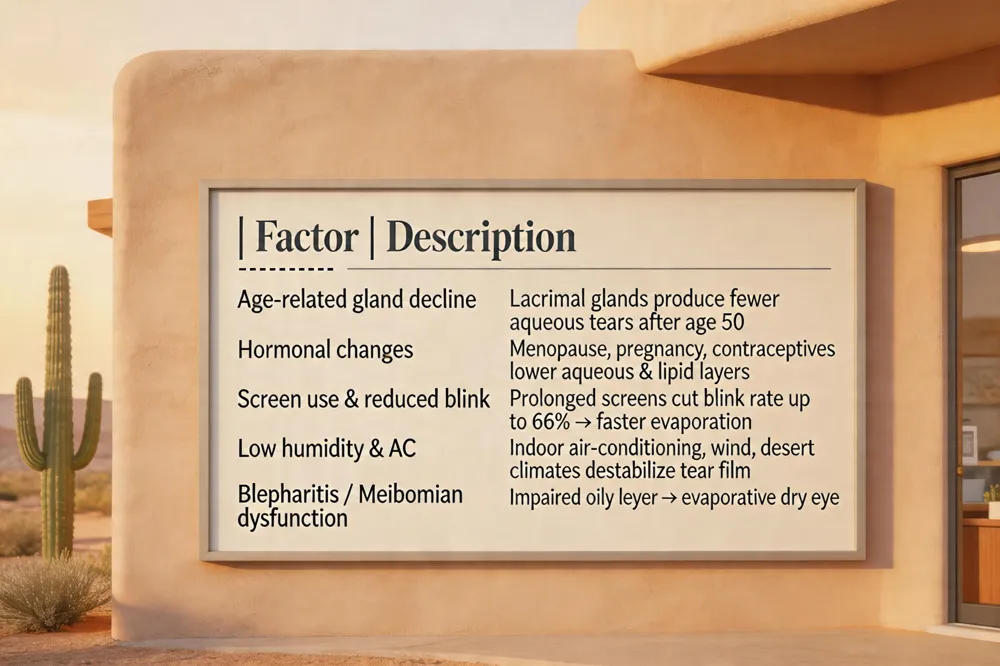
| Factor | Description |
|---|---|
| Age‑related gland decline | Lacrimal glands produce fewer aqueous tears after age 50 |
| Hormonal changes | Menopause, pregnancy, contraceptives lower aqueous & lipid layers |
| Screen use & reduced blink | Prolonged screens cut blink rate up to 66 % → faster evaporation |
| Low humidity & AC | Indoor air‑conditioning, wind, desert climates destabilize tear film |
| Blepharitis / Meibomian dysfunction | Impaired oily layer → evaporative dry eye |
 Why is dry eye so common now?
Dry eye disease affects at least 16 million people in the United States, and prevalence rises sharply with age—tear‑producing lacrimal glands produce fewer aqueous tears after age 50, and hormonal shifts in women, especially during menopause, lower both aqueous and lipid layers. The modern lifestyle adds another burden: prolonged screen use reduces blink rate by up to 66 %, accelerating tear evaporation. Low‑humidity indoor environments, wind, and air‑conditioning further destabilize the tear film, while chronic blepharitis or meibomian gland dysfunction impairs the oily layer.
Why is dry eye so common now?
Dry eye disease affects at least 16 million people in the United States, and prevalence rises sharply with age—tear‑producing lacrimal glands produce fewer aqueous tears after age 50, and hormonal shifts in women, especially during menopause, lower both aqueous and lipid layers. The modern lifestyle adds another burden: prolonged screen use reduces blink rate by up to 66 %, accelerating tear evaporation. Low‑humidity indoor environments, wind, and air‑conditioning further destabilize the tear film, while chronic blepharitis or meibomian gland dysfunction impairs the oily layer.
What causes dry eyes all of a sudden? An abrupt onset often follows a rapid change in environment or habit. Switching to a dry, air‑conditioned office, increased screen time, or starting a medication such as antihistamines, decongestants, or certain blood‑pressure drugs can instantly lower tear production or increase evaporation. Hormonal fluctuations, new systemic illnesses (e.g., diabetes or autoimmune disease), or neglecting lid hygiene can also trigger sudden worsening. In many cases, a comprehensive exam with advanced imaging (DRI OCT Triton) identifies meibomian gland blockage or tear‑film instability, allowing targeted therapy such as warm compresses, preservative‑free artificial tears, punctal plugs, or in‑office thermal pulsation. Addressing these factors early with personalized care can prevent progression, improve comfort, and protect visual health for millions of Americans in the United States.
Risk Factors and Populations at Higher Risk
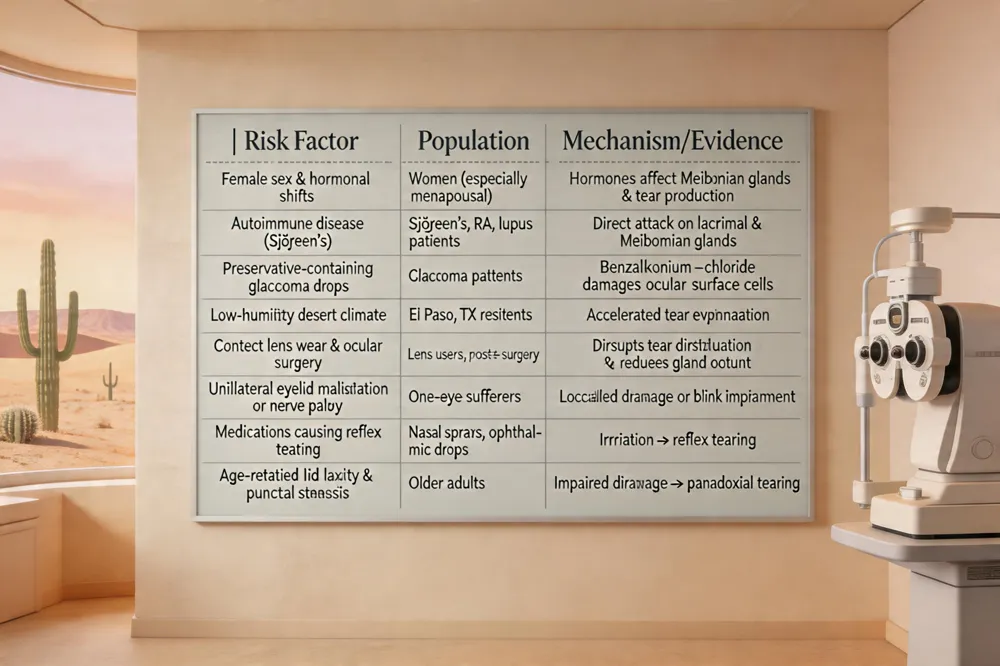
| Risk Factor | Population | Mechanism/Evidence |
|---|---|---|
| Female sex & hormonal shifts | Women (especially menopausal) | Hormones affect Meibomian glands & tear production |
| Autoimmune disease (Sjögren’s) | Patients with Sjögren’s, rheumatoid arthritis, lupus | Direct attack on lacrimal & Meibomian glands |
| Preservative‑containing glaucoma drops | Glaucoma patients | Benzalkonium‑chloride damages ocular surface cells |
| Low‑humidity desert climate | Residents of places like El Paso, TX | Accelerated tear evaporation |
| Contact lens wear & ocular surgery | Lens users, post‑refractive/cataract surgery | Disrupts tear distribution & reduces gland output |
| Unilateral eyelid malposition or nerve palsy | One‑eye sufferers | Localized drainage or blink impairment |
| Medications causing reflex tearing | Nasal sprays, certain ophthalmic drops | Irritation → reflex tearing |
| Age‑related lid laxity & punctal stenosis | Older adults | Impaired drainage → paradoxical tearing |
 Higher prevalence in women and hormonal links: Women are about twice as likely as men to develop dry eye, with risk spiking during menopause, pregnancy, and when using hormonal contraceptives. Hormonal fluctuations affect meibomian gland function and tear‑film stability.
Autoimmune diseases such as Sjögren’s syndrome: Autoimmune attacks on lacrimal and meibomian glands dramatically reduce tear production, making Sjögren’s a leading systemic cause of severe dry eye.
Glaucoma patients using benzalkonium‑chloride eye drops: Long‑term preservative‑containing glaucoma drops damage ocular surface cells, worsening tear‑film instability and dry eye symptoms.
Impact of Southern, low‑humidity climates (e.g., El Paso): Desert climates with low humidity and high wind accelerate tear evaporation, increasing the prevalence of evaporative dry eye in residents of places like El Paso, TX.
Contact lens wear and ocular surgery: Lens wear disrupts tear distribution, while refractive or cataract surgery can reduce lacrimal gland output, both contributing to dry eye.
Unilateral dry eye often stems from localized eyelid malposition, blocked puncta, or a prior surgery affecting one eye, leading to uneven tear‑film distribution. Bell’s palsy or other neurologic deficits can also impair blinking on one side, leaving that eye dry.
Medications that cause watery eyes include nasal sprays (e.g., varenicline, decongestants) that trigger reflex tearing, and certain ophthalmic drops with preservatives that irritate the ocular surface. Persistent tearing should be evaluated by an eye‑care professional.
Older adults frequently experience watery eyes because age‑related eyelid laxity (entropion/ectropion) and punctal stenosis impair drainage, while paradoxically dry‑eye irritation prompts reflex tearing. Meibomian gland dysfunction and blepharitis further destabilize the tear film, leading to both dryness and excess tearing.
Symptoms, Signs, and When to Seek Help
| Symptom/Sign | Typical Presentation | Red‑flag/When to Seek Help |
|---|---|---|
| Stinging, burning, gritty feeling | Persistent discomfort, foreign‑body sensation | |
| Light sensitivity, blurry vision | Light sensitivity, blurry vision in low light | |
| Excessive watery tearing (epiphora) | Over‑compensatory response to dryness | |
| Fluctuating vision during reading/computer use | Tear‑film instability affecting optics | |
| Stringy mucus discharge | Blepharitis or Meibomian gland blockage | |
| Difficulty wearing contacts | Discomfort or frequent drop‑outs | |
| Persistent or worsening symptoms | May indicate corneal abrasion, ulceration, infection, or systemic disease |
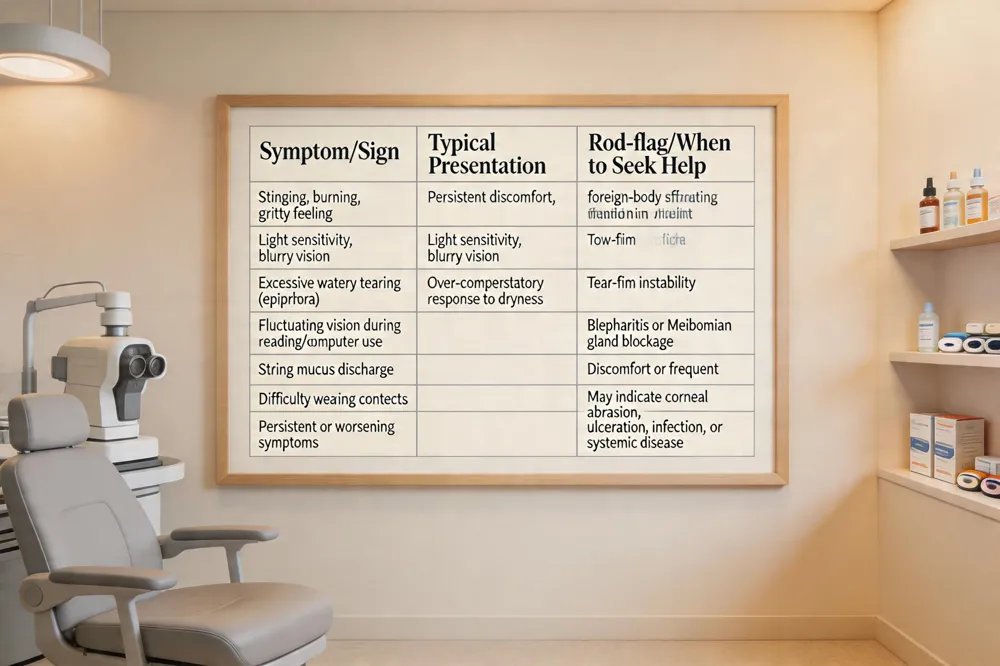 Dry eye disease commonly produces a stinging, burning or gritty sensation that feels as if a foreign body is in the eye. Redness, light sensitivity, and excessive watery tearing—an over‑compensatory response—are frequent, as are blurred or fluctuating vision during reading, computer use, or driving at night. Heavy‑eyed fatigue, stringy mucus discharge, and difficulty wearing contact lenses also occur, affecting both eyes and worsening in windy, low‑humidity or air‑conditioned environments.
A distinct complaint is the feeling of air blowing across the eye. This usually signals tear‑film insufficiency that lets the eyelid rub directly on the cornea, or a tiny foreign particle, eyelash, or blepharitis creating a breezy sensation. Artificial tears (preservative‑free), warm compresses, and lid hygiene often restore comfort; persistent or worsening symptoms merit a comprehensive exam to rule out corneal abrasions, early cataract changes, or glaucoma.
Untreated dry eye can lead to serious complications: chronic inflammation may cause corneal abrasions, scarring, ulceration, and secondary infection—each capable of impairing vision and, in rare cases, causing permanent vision loss. While the condition itself does not directly cause blindness, its complications can threaten sight.
Because chronic dryness can signal systemic diseases (e.g., Sjögren’s syndrome, diabetes) and significantly reduce quality of life, prompt evaluation and personalized treatment—such as those offered at Apple Eye Care with DRI OCT Triton imaging—are essential to restore tear stability and prevent dangerous outcomes.
Diagnostic Tools and Evaluations at Apple Eye Care
| Tool | Purpose | Key Metric/Outcome |
|---|---|---|
| DRI OCT Triton (meibography) | Visualize Meibomian gland structure | Gland dropout percentage |
| Tear‑film break‑up time (TBUT) | Assess tear stability | Seconds before breakup (<10 s = abnormal) |
| Schirmer test | Measure aqueous tear production | mm of wetting in 5 min |
| Ocular surface staining (fluorescein, lissamine) | Detect epithelial damage | Staining pattern grade |
| Blink rate analysis | Quantify blink frequency | Blinks per minute (reduced in screen users) |
| In‑office thermal pulsation (LipiFlow®, iLux) | Treat Meibomian gland obstruction | Post‑treatment TBUT improvement |
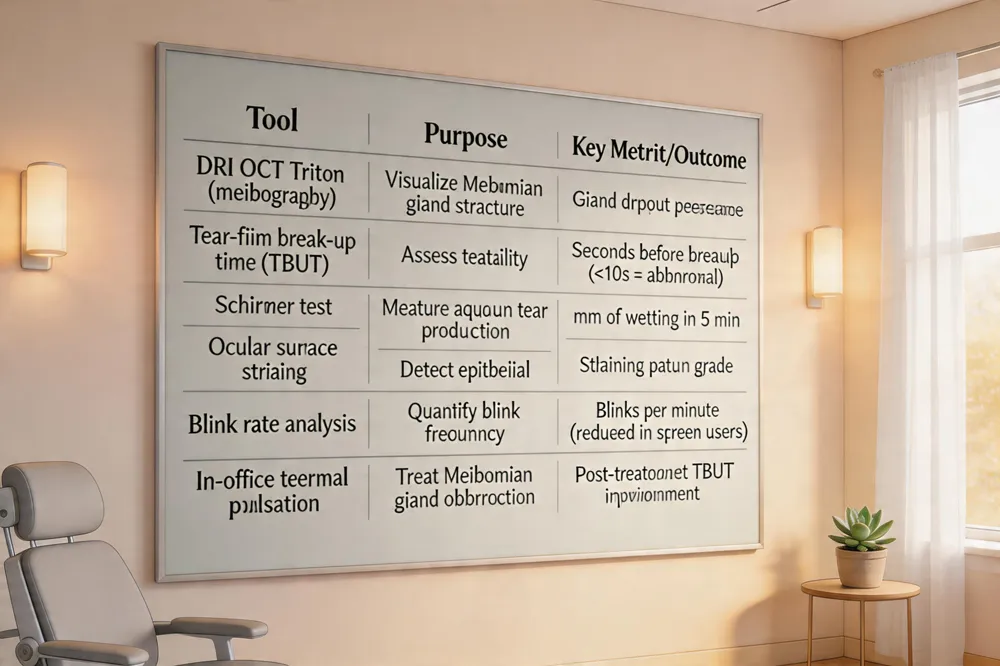 What causes dry eyes at night? Reduced tear production during sleep, incomplete eyelid closure (nocturnal lagophthalmos), medications, systemic diseases (Sjögren’s, thyroid, diabetes), and low‑humidity environments all contribute to nighttime dryness. Targeted lubricants, eyelid hygiene, and treating underlying causes alleviate symptoms.
Thermal pulsation treatment for dry eyes employs controlled heat and gentle pressure (e.g., LipiFlow® or iLux) to melt and express clogged Meibomian glands, restoring the lipid layer, improving TBUT and symptom scores, with benefits lasting months.
Dry eye treatment devices include thermal‑pulsation systems, intense‑pulsed‑light (IPL) platforms, and punctal plugs. These office‑based technologies address gland blockage, inflammation, and tear drainage to provide comprehensive, long‑lasting relief.
Treatment Options: From Drops to In‑Office Procedures
| Treatment | Category | Mechanism / Benefit |
|---|---|---|
| Preservative‑free artificial tears | Topical lubricants | Replenish aqueous layer, protect surface |
| Cyclosporine (Restasis) | Prescription anti‑inflammatory | Increases tear production, reduces inflammation |
| Lifitegrast (Xiidra) | Prescription anti‑inflammatory | Blocks T‑cell activation, improves symptoms |
| Miebo (perfluorohexyloctane) | Lipid‑layer enhancer | Restores oily layer, reduces evaporation |
| Punctal plugs | Drainage blockage | Conserves natural & artificial tears |
| Warm compresses & lid hygiene | At‑home therapy | Melt Meibomian wax, improve gland outflow |
| Thermal pulsation (LipiFlow®, iLux²®) | In‑office device | Heat & pressure to express glands |
| Intense pulsed light (IPL) | In‑office device | Reduces inflammation, clears debris |
| Omega‑3 supplementation | Dietary | Supports Meibomian gland function |
| MDEMVY (Demodex) | Targeted therapy | Eradicates Demodex mites causing blepharitis |
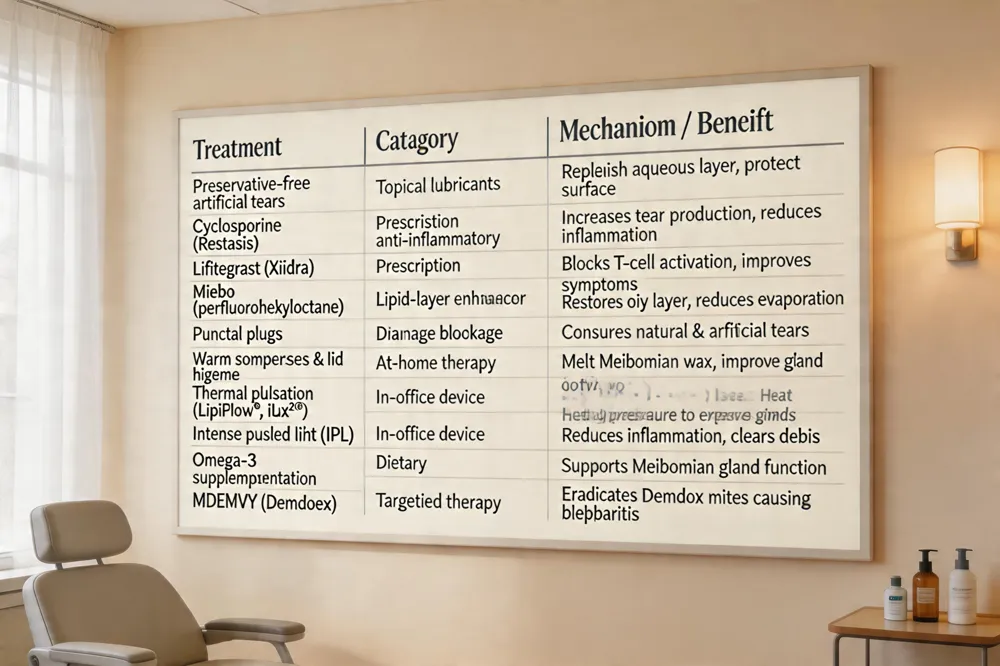 Dry eye management begins with preservative‑free artificial tears that replenish the aqueous layer and protect the ocular surface; single‑dose vials are preferred for frequent use. When inflammation drives symptoms, prescription anti‑inflammatory drops such as cyclosporine (Restasis), lifitegrast (Xiidra) and the newer FDA‑approved Miebo (perfluorohexyloctane) improve tear‑film stability and reduce evaporation. Punctal plugs mechanically block drainage, conserving both natural and artificial tears, while ocular surface protectors (lubricating gels, ointments) provide nighttime coverage. Dietary omega‑3 fatty acids from fish oil, flaxseed or walnuts, support meibomian gland function and can lessen evaporative loss. In‑office thermal pulsation devices (Lipiflow®, iLux²®) and intense pulsed light (IPL) heat and massage the meibomian glands, clearing blockages and restoring the lipid layer; studies report 50‑80 % improvement in tear‑film break‑up time within weeks. The newest interventions include Miebo for meibomian‑gland dysfunction and XDEMVY for Demodex‑related blepharitis, while emerging gene‑therapy and stem‑cell approaches aim for longer‑lasting relief. A personalized plan—grounded in a thorough exam, lid hygiene, warm compresses, and, when needed, advanced office procedures—offers the most comprehensive and sustained relief for dry‑eye syndrome.
Living With Dry Eye: Lifestyle, Home Care, and Special Cases
| Strategy | Details | Practical Tips |
|---|---|---|
| 20‑20‑20 rule | Every 20 min, look 20 ft away for 20 s | Reduces screen‑induced blink loss |
| Humidifier use | Increase indoor humidity to 40‑50 % | Lessens tear evaporation |
| Warm lid compresses (5‑10 min) | 2‑3× daily | Improves Meibomian gland flow |
| Omega‑3 rich diet (fish oil, flaxseed, walnuts) | Daily intake | Supports lipid layer quality |
| Proper contact lens hygiene | Replace lenses as scheduled, clean daily | Prevents lens‑related dryness |
| Protective eyewear in windy/dry environments | Wrap‑around glasses or goggles | Shields ocular surface |
| Managing systemic diseases (e.g., Sjögren’s, diabetes) | Coordinate with physician | Controls underlying tear production loss |
| Unilateral tearing evaluation | Check for punctal blockage, lid malposition | Seek specialist assessment |
| Pediatric eye care (e.g., 2‑yr‑old) | Monitor for infection, allergies | Consult pediatrician if redness persists |
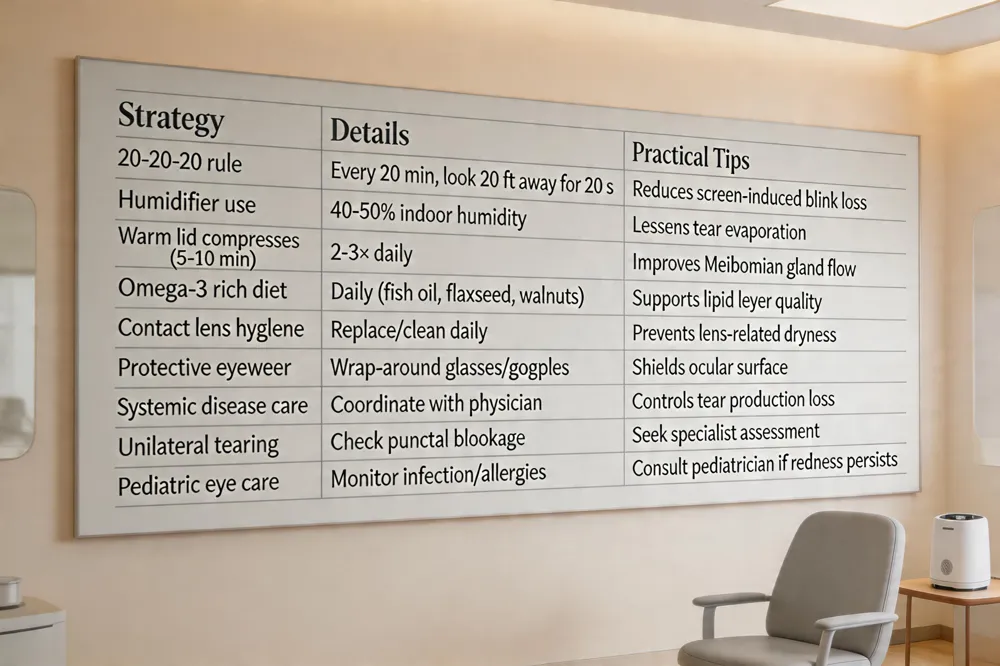 Dry eye disease affects at least 16 million U.S. adults and rises with age, screen use, and low humidity. Clean eyelids, use preservative‑free tears.
Reasons for runny eyes Runny eyes (epiphora) come from excess tears or blocked drainage—common causes include allergies, conjunctivitis, blepharitis, and a narrowed nasolacrimal duct.
Left eye tearing up Unilateral tearing can signal a blocked duct, foreign body, or infection. Persistent left‑eye watering should be evaluated; Apple Eye Care can test drainage and consider plugs.
What is the rule of 20 for dry eyes? 20‑20‑20 rule: every 20 minutes of screen work, look 20 feet away for 20 seconds.
2 year old baby eyes watering In toddlers, watery eyes often stem from a cold, allergies, or mild conjunctivitis. Keep eyes clean, monitor fever, and see a pediatrician if redness persists.
How to cure dry eyes naturally Warm lid compresses, lid hygiene, omega‑3 foods or supplements, hydration, and a humidifier improve tear quality. Pair with the 20‑20‑20 rule.
Reason for dry burning eyes Burning occurs when the tear film is unstable from reduced aqueous production, Meibomian gland dysfunction, humidity, or antihistamines. Lifestyle tweaks and anti‑inflammatory drops help.
At Apple Eye Care, follow‑up includes tear‑film testing, meibography, and adjustments to control symptoms.
Key Takeaways and Next Steps
Dry eye disease is a multifactorial, increasingly common condition that now affects at least 16 million Americans and likely many more undiagnosed cases. Age‑related tear‑gland decline, hormonal shifts (especially in women), environmental stressors such as low humidity and prolonged screen use, and medications—including glaucoma drops that contain benzalkonium chloride—each destabilize the three‑layer tear film (oil, aqueous, mucin). Early detection is crucial because untreated disease can progress to corneal abrasions, ulcers, infection, and permanent vision loss. A comprehensive eye exam that includes symptom questionnaires, slit‑lamp evaluation, and objective tests (Schirmer, tear‑break‑up time, fluorescein staining, and advanced imaging with DRI OCT Triton) enables clinicians to identify the underlying mechanism—aqueous deficiency, evaporative loss from meibomian gland dysfunction, or a mixed presentation—and to tailor therapy. Apple Eye Care in El Paso, TX, provides exactly this personalized approach: preservative‑free artificial tears, prescription anti‑inflammatory drops (e.g., cyclosporine, lifitegrast), punctal plugs, warm‑compress lid hygiene, and in‑office thermal pulsation or IPL to restore the lipid layer. Take action now—schedule a comprehensive dry‑eye evaluation, incorporate protective habits such as regular screen breaks, humidifier use, wrap‑around sunglasses, and adequate hydration, and stay informed about emerging therapies to preserve ocular health.