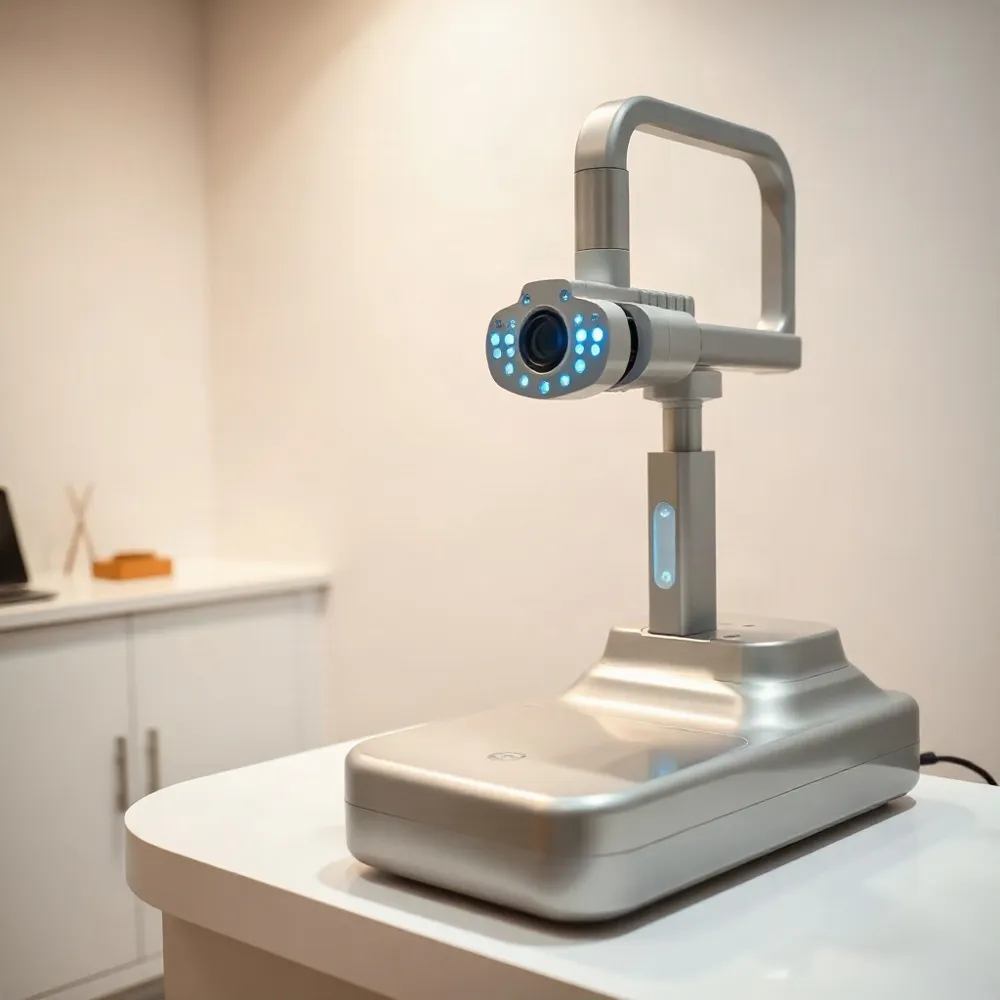
A Holistic Approach to Vision Preservation
Cataracts and glaucoma together affect millions of adults, especially after age 60, making them the two leading causes of age‑related vision loss worldwide. Studies show that roughly 20 % of patients undergoing cataract surgery also have glaucoma, and about half of the 4.22 million Americans with glaucoma are unaware of the disease. Early detection through comprehensive, dilated eye exams—recommended every 1–2 years for seniors and more frequently for high‑risk groups—allows clinicians to identify lens clouding and optic‑nerve changes before symptoms appear. Early intervention not only preserves visual acuity but also reduces the need for multiple surgeries, lowers intra‑ocular pressure, and can decrease reliance on daily eye‑drop medications. Apple Eye Care in El Paso, TX, embodies a family‑focused, personalized model that integrates state‑of‑the‑art diagnostics such as the DRI OCT Triton with individualized treatment plans. Under the leadership of Dr. Stephen Applebaum, the practice offers coordinated cataract and glaucoma management, from pre‑operative imaging to combined cataract‑MIGS procedures, ensuring that each patient receives comprehensive care that addresses both conditions in a single, streamlined pathway.
Understanding Cataract and Glaucoma Co‑Existence
 Common age‑related eye diseases
Cataracts and glaucoma are the two most prevalent age‑related ocular conditions. Cataracts cloud the natural lens, causing glare, halos, and reduced color perception, while glaucoma damages the optic nerve through elevated intra‑ocular pressure, leading to peripheral vision loss. Both often develop silently, making early detection vital.
Risk factors and systemic health links
Age over 60, African‑American or Hispanic heritage, diabetes, hypertension, and obesity increase the likelihood of cataract formation and glaucoma progression. Systemic diseases such as diabetes can cause retinal microvascular changes that exacerbate glaucoma, while high blood pressure may accelerate lens opacity. The strong overlap of these risk factors underscores the need for integrated eye‑care strategies.
Importance of routine comprehensive exams
Regular dilated eye exams—every 1‑2 years for adults over 60 and annually for high‑risk groups—allow clinicians to detect cataract density, optic‑nerve thinning, and retinal nerve‑fiber loss early. Advanced imaging like the DRI OCT Triton, used at Apple Eye Care, provides high‑resolution cross‑sectional views that guide personalized treatment plans, including combined cataract‑glaucoma surgery when appropriate.
Eye health problems
Eye health problems range from refractive errors to serious conditions such as cataracts, glaucoma, and macular degeneration. Systemic illnesses often manifest in the eye, making comprehensive exams essential for early intervention.
Importance of eye care
Regular eye care catches silent diseases early, preserving sight and revealing systemic health clues. Apple Eye Care’s family‑focused, technology‑driven approach ensures timely detection and compassionate treatment.
Signs of unhealthy eyes
Redness, persistent dryness, sudden blurry vision, floaters, flashes, halos, or a curtain‑like loss of peripheral vision are warning signs that require prompt professional evaluation.
When and How to Combine Surgeries
 Patient selection is the first step in deciding whether to combine cataract removal with a glaucoma‑lowering procedure. Ideal candidates are those with mild to moderate open‑angle glaucoma whose intra‑ocular pressure (IOP) can be controlled in the mid‑teens or higher, and whose cataract already impairs daily vision. A comprehensive dilated exam, OCT imaging (such as the DRI OCT Triton used at Apple Eye Care), gonioscopy and visual‑field testing help determine disease severity, medication burden and target IOP. Patients with well‑controlled glaucoma, narrow‑angle disease, or minimal cataract impact are often better served by staged or cataract‑only surgery.
The benefits of a single operative session are substantial: one anesthesia exposure, lower overall cost, and a single recovery period. Combined surgery can prevent the postoperative IOP spike that sometimes follows cataract extraction alone, and it frequently reduces or eliminates the need for daily glaucoma eye‑drops, improving ocular surface health and quality of life.
Potential risks and contraindications must be weighed. Post‑operative IOP spikes, inflammation, infection, and, in rare cases, retinal detachment can occur. Narrow‑angle or angle‑closure glaucoma, uveitic eyes, or eyes with prior filtering surgery may be poor candidates for a combined approach. For such patients, traditional trabeculectomy or staged procedures may be safer.
Combined cataract and glaucoma surgery together Yes—cataract removal can be paired with a minimally invasive glaucoma surgery (MIGS) or trabeculectomy in one outpatient procedure, offering vision restoration and IOP control.
Is it safe to have cataract surgery with glaucoma? Generally yes; cataract surgery often lowers IP, especially in eyes with higher pre‑operative pressures. Close monitoring is needed for low‑tension glaucoma or eyes with previous blebs.
Risks of cataract surgery with glaucoma: Higher chance of early IOP spikes, inflammation, and rare infection. MIGS can mitigate pressure spikes but adds procedural complexity.
Should I see an ophthalmologist for glaucoma? Absolutely. An ophthalmologist—preferably a glaucoma specialist—can perform detailed exams, imaging, and tailor treatment. Apple Eye Care’s Dr. Stephen Applebaum offers advanced diagnostics and coordinated care for cataract‑glaucoma patients.
What to Expect Before, During, and After Combined Surgery
 On the day of surgery the patient spends about 30 minutes in pre‑operative preparation, followed by 45–60 minutes of actual combined glaucoma‑cataract operating time (up to 90 minutes if a trabeculectomy or shunt is added). Including post‑operative monitoring, the total time in the surgical suite is roughly 2–3 hours.
Recovery is rapid: most patients resume light activities within 2–3 days, with vision stabilizing over 4–6 weeks and full acuity improvement up to six weeks. Mild irritation, redness, and temporary blur are normal and resolve quickly. Follow‑up visits are scheduled within the first week and then periodically for two months to check intra‑ocular pressure and visual outcomes.
Apple Eye Care provides an educational video on its website that walks patients through the combined procedure, pre‑operative preparations, and post‑operative care. The video includes downloadable medication lists, eye‑drop schedules, and links to cost estimates (out‑of‑pocket $1,500–$3,500 after insurance) and other patient resources.
Advanced Diagnostics, Treatment Options, and Technology
 Treatment for glaucoma and cataracts often begins with drops or laser therapy, but when both diseases coexist a combined surgical approach is preferred. During cataract removal the cloudy lens is replaced with an intra‑ocular lens, and a minimally invasive glaucoma surgery (MIGS) device—such as iStent, Hydrus, or XEN gel stent—is implanted through the same small incision to improve aqueous outflow and lower intra‑ocular pressure. For more advanced or uncontrolled glaucoma, a traditional filtration procedure like trabeculectomy or a tube‑shunt may be added to achieve lower target pressures.
Apple eye Care performs combined cataract‑glaucoma surgery using MIGS for mild‑to‑moderate open-angle glaucoma, and filtration techniques for severe disease. The single‑visit protocol shortens recovery, reduces anesthesia exposure, and often cuts the need for lifelong glaucoma drops.
Apple Ophthalmology led by Dr. Stephen Applebaum, offers a family‑focused practice in El Paso, TX, that blends comprehensive optometry with specialized ophthalmic care. State‑of‑the‑art DRI OCT Triton imaging provides high‑resolution retinal nerve‑fiber‑layer and optic‑nerve assessment, guiding precise timing for cataract and glaucoma interventions.
What is the rule of 5 for glaucoma? It is an OCT‑based guideline that flags a loss of 5 µm or more in global RNFL thickness between consecutive scans as significant progression, prompting closer monitoring and possible treatment adjustment.
Lifestyle, Nutrition, and Daily Habits for Sustained Eye Health
 A diet rich in lutein‑bearing leafy greens, omega‑3‑heavy fish, and antioxidant‑packed fruits supports eye‑pressure control and retinal health. Blueberries, high in anthocyanins, modestly lower intra‑ocular pressure by improving ocular blood flow, while citrus fruits—especially oranges—are a "miracle" for eyesight thanks to vitamin C’s protective antioxidant effect. Include colorful produce, nuts, and zinc‑rich legumes to safeguard against cataracts and macular degeneration.
Prevent daily visual strain by practicing the 20‑20‑20 rule, adjusting screen brightness, and keeping ambient lighting comfortable. Stay hydrated, limit smoking, and protect eyes from UV light with 100 % UV‑blocking sunglasses.
At home, keep the environment dust‑free, wear protective glasses during chores, and use warm compresses for dry‑eye relief. Green tea, rich in catechins, can gently reduce eye pressure by a few mm Hg. Regular comprehensive dilated exams at Apple Eye Care, led by Dr. Stephen Applebaum, ensure early detection and personalized guidance. Together, these habits and nutritional choices help maintain clear vision and reduce glaucoma and cataract risk.
Your Vision, Our Commitment
Apple Eye Care in El Paso, Texas, delivers an integrated approach to cataract and glaucoma management that treats both conditions in a single, streamlined encounter. Using the same small incision required for phacoemulsification, surgeons can place a minimally invasive glaucoma surgery (MIGS) device—such as an iStent or Hydrus micro‑stent—to bypass trabecular outflow resistance while the cloudy lens is removed and an intra‑ocular lens (IOL) is implanted. Advanced imaging with the DRI OCT Triton enables precise assessment of lens opacity, retinal nerve‑fiber layer thickness, and optic‑nerve health, ensuring the timing and choice of surgery are tailored to each patient’s disease severity and visual‑function goals.
Personalized treatment plans are crafted by Dr. Stephen Applebaum and his family‑focused team. They consider intra‑ocular pressure, medication burden, cataract impact on daily activities, and systemic health factors such as diabetes or hypertension. By combining cataract extraction with MIGS—or, when needed, traditional filtration procedures—Apple Eye Care reduces anesthesia exposure, lowers overall cost, and minimizes postoperative pressure spikes.
Ongoing support for lifelong eye health includes regular dilated exams, OCT monitoring, and visual‑field testing. Patients receive clear education on medication adjustments, UV protection, nutrition, and activity guidelines, while the clinic’s compassionate staff coordinates follow‑up visits to track intra‑ocular pressure and IOL stability. This continuous, evidence‑based care helps preserve vision, enhance quality of life, and keep patients confident that their eye health is in expert hands.