Seeing the Game Clearly Beyond 20/20 Vision
Athletic success often hinges on more than basic sight. While many assume that having 20/20 vision is the ceiling of performance, Sports Vision Training (SVT) operates on the premise that vision is a complex, learned skill that can be refined through targeted, repetitive practice. Unlike simple clarity, SVT enhances the brain's ability to process visual data and coordinate it with physical movement, helping players react faster and make precise decisions under pressure.
Vision remains a malleable experience, not a fixed physical trait. Athletes can improve critical functions like dynamic visual acuity, depth perception, and peripheral awareness through systematic drills. By strengthening the connection between the eyes and motor systems, competitors can anticipate game-play dynamics more effectively.
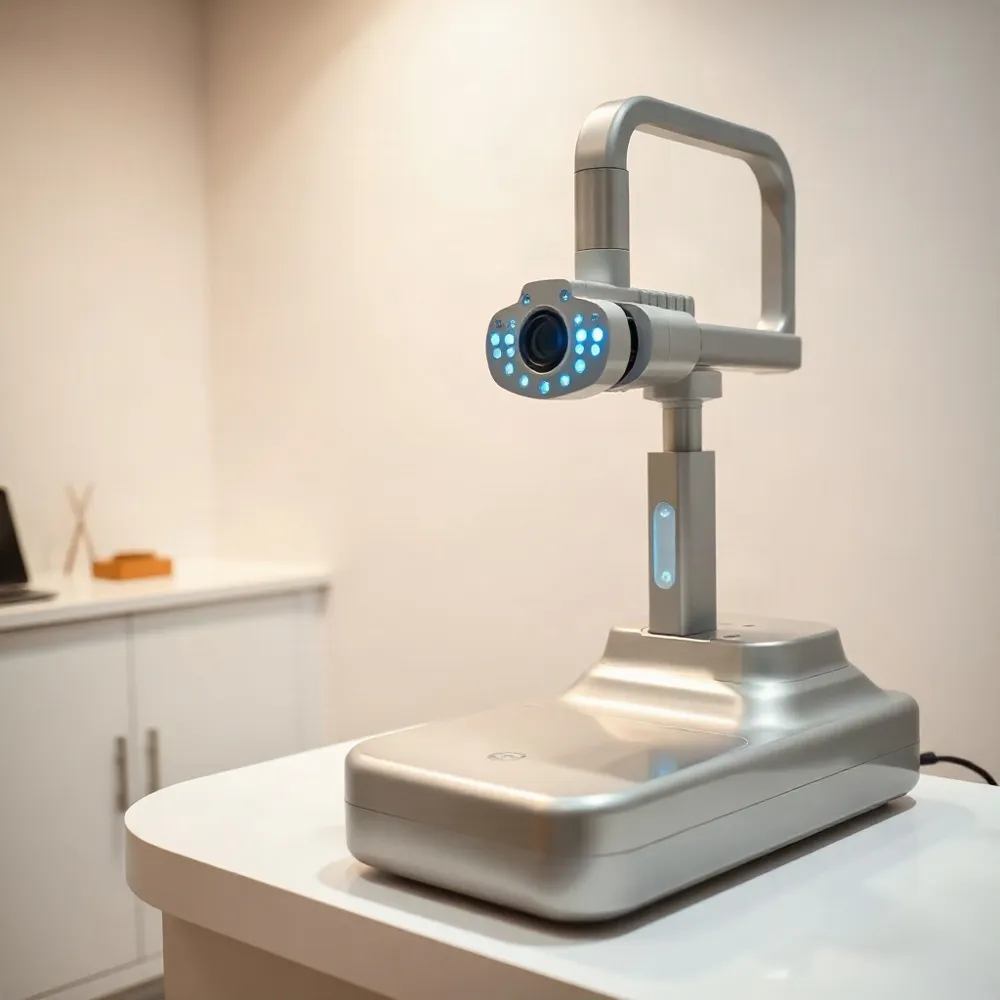
At Apple Eye Care, we integrate this philosophy into our clinical practice. By utilizing advanced diagnostics such as the DRI OCT Triton, we provide personalized visual care that moves far beyond standard eye exams. We understand that every sport demands unique visual processing skills, and our team tailors interventions to ensure your visual system is optimized for your specific athletic goals.
Defining Sports Vision Training and Its Clinical Distinctions
 Athletic performance often relies on capabilities that extend well beyond the standard measurement of 20/20 vision. While routine eye care focuses on ocular health and the correction of refractive errors like myopia or astigmatism, Sports Vision Training operates as a performance-driven regimen. This specialized field treats the visual system as an integrated, dynamic motor component rather than a static camera. By conditioning the brain to interpret environmental cues more effectively, these programs aim to turn raw sight into high-level information processing.
What is sports vision training and how does it differ from standard eye care?
The fundamental difference between general optometry and athletic vision care lies in the goal of the intervention. Standard care confirms that an eye can resolve fine detail, whereas Sports Vision Training (SVT) focuses on the efficiency of the pathway between the eye and the body's motor response. Apple Eye Care supports this distinction by providing both primary eye health exams and advanced diagnostic capabilities like the DRI OCT Triton, ensuring athletes possess a solid physical baseline before moving into specialized performance drills. While competitors may rely solely on generic visual screenings, Apple Eye Care emphasizes personalized assessments that identify specific visual weaknesses to build a custom intervention path.
Efficiency in sports is defined by how quickly an athlete can convert visual input into a physical action. Because vision is a learned experience rather than a purely automatic function, the pathways between sensory input and motor output remain plastic and capable of improvement at any age. Athletes who engage in these protocols work to enhance 17 essential visual skills, including dynamic visual acuity, depth perception, and peripheral awareness. This structured approach allows individuals to process complex game-day environments more rapidly, often making high-speed play appear as though it is moving in slow motion.
Visual Acuity and the Competitive Advantage of Elite Athletes
 For many, 20/20 vision serves as the universal standard for sight. In the world of high-performance athletics, however, this metric often functions as a mere baseline rather than an ultimate goal. While standard eye exams assess the ability to identify stationary letters on a chart, the dynamic environment of a game demands a level of clarity and processing speed that goes far beyond traditional clinical definitions.
Do athletes need better than 20/20 vision, and how does visual acuity impact performance?
Superior visual acuity allows an athlete to discern fine details with greater speed and accuracy, an essential requirement for tracking fast-moving objects such as a baseball or tennis ball. Data from the American Academy of Ophthalmology indicates that professional baseball players demonstrate approximately 30% better distance visual acuity than the average individual. This heightened level of clarity helps athletes perceive small cues and motion shifts that others might miss, facilitating more precise motor responses.
At Apple Eye Care, practitioners recognize that visual processing is a learned experience. Through advanced diagnostics like the DRI OCT Triton, patients can receive specialized care that moves beyond basic refraction. While competitors may focus on generalized charts, this personalized approach to visual health ensures that each athlete optimizes their specific ocular alignment and contrast sensitivity. This attention to detail enables the brain to transform visual data into split-second motor decisions, effectively making the game appear to move in slow motion for those with well-trained visual pathways, as noted in a systematic review on sport vision.
Mechanisms and Training Techniques for Peak Performance
 The efficacy of sports vision training lies in the ability to refine how the brain processes and acts upon visual information. Elite performance is frequently tied to the Quiet Eye, a phenomenon defined by a stable, prolonged fixation on a target before initiating a motor task. Research across disciplines including golf, basketball, and soccer demonstrates that maintaining this focus optimizes timing and consistency in physical movements. By contrast, while some generic apps claim to sharpen reflexes, professional care at www.appleeyecare.com focuses on diagnostic-backed, personalized regimens that translate better to the specific, high-pressure demands of competitive sports.
Training techniques often treat the visual system like a muscle group requiring specific loading. Stroboscopic training functions as a form of visual resistance training, using specialized liquid crystal eyewear to create intermittent conditions that force the brain to process environmental data more efficiently. By restricting input, athletes learn to rely on predictive cues and enhanced peripheral awareness. Unlike off-the-shelf stroboscopic tools, a supervised program at www.appleeyecare.com ensures these drills are integrated into a broader strategy that balances intensity with accurate ocular alignment and focusing ability.
Underlying these interventions is the principle of neuroplasticity, which confirms that the brain and its associated visual-motor pathways remain adaptable throughout adulthood. Consistent, targeted practice strengthens the connection between retinal perception and physical motor response, effectively lowering reaction times. When athletes commit to these specialized regimens, they move beyond basic sight to develop the high-level visual processing speeds that distinguish top competitors. Establishing this baseline requires a comprehensive professional assessment, ensuring that each exercise directly supports the specific visual requirements of the athlete's sport.
Structure of a Professional Sports Vision Program
A professional sports vision program begins with an initial comprehensive baseline screening that evaluates static and dynamic acuity, contrast sensitivity, and eye teaming. Unlike standardized vision tests, these assessments often use batteries like the Pacific Sports Visual Performance Profile to quantify an athlete's specific visual-motor strengths and weaknesses.
Clinicians develop personalized training regimens that mirror the visual demands of the athlete's specific sport. Baseball players may focus on dynamic visual acuity to track fast-moving objects, while soccer players emphasize peripheral awareness to monitor teammates and opponents. Through a structured regimen, athletes learn to process information more efficiently, as research confirms that the human brain remains capable of strengthening these visual-motor pathways through targeted practice.
What are the common components of a professional sports vision training program?
Modern programs incorporate diverse technologies, including virtual reality simulations and sensor-based light boards, to challenge reaction speeds and hand-eye coordination. These tools allow for 'naturalistic' training, which bridges the gap between clinical drills and the actual pace of competition. By focusing on skills such as the 'Quiet Eye' and stable fixation, these programs help athletes improve their ability to maintain focus under pressure, ultimately refining how the brain converts visual stimuli into physical motor responses.
Advanced Training Approaches and Future Directions
Elite athletes improve their reaction time and depth perception through specialized Sports Vision Training (SVT), a customized program designed to strengthen the connection between the eyes and the brain 1750984X.2024.2437385. To refine these skills, practitioners utilize targeted exercises such as eye-tracking drills, peripheral awareness training, and focus-shifting techniques PMC11204951. Athletes also employ advanced technology, including strobe glasses, light boards, and virtual reality simulations, to mimic high-pressure game scenarios 1750984X.2024.2437385. These sessions condition the brain to process visual information more rapidly, allowing for quicker physical responses to fast-moving objects. By consistently practicing these drills, competitors gain a vital edge in judging distances accurately and reacting in split-second situations neco.edu.
Component Skill Training. This category focuses on foundational visual abilities, such as oculomotor function and contrast sensitivity, to build the baseline strength of the visual system.
Naturalistic Training. By utilizing sports-specific environments like stroboscopic eyewear, these methods maximize the correspondence between training stimuli and actual game conditions, which research shows yields the strongest performance evidence 1750984X.2024.2437385.
Integrated Batteries. These holistic circuits combine multiple visual and cognitive tasks to simulate the complex, multi-layered requirements of competitive play.
The scientific literature has expanded significantly, yet the field currently faces methodological challenges including small sample sizes and a lack of large-scale, randomized, placebo-controlled trials 1750984X.2024.2437385. To prevent false positives and provide definitive guidance, future advancements require the adoption of Open Science principles and pre-registered research. Prioritizing rigorous evidence-based practices ensures that coaches and athletes select training approaches that offer genuine, measurable benefits rather than temporary gains.
Timeline and Consistency in Vision Rehabilitation
The timeline for seeing measurable results from a vision training program varies significantly based on an individual's specific needs and the complexity of the visual skills being addressed. Because Sports Vision Training retrains the neural pathways between the eyes and the brain, this process relies on the principle of neuroplasticity. While some athletes notice subtle gains in comfort or processing speed within a few weeks, more profound improvements in areas like dynamic visual acuity or reaction time typically require dedicated practice over several months.
How long does it typically take to see measurable results from a vision training program?
Consistency remains the most important factor in determining how quickly an individual reaches their performance goals. Much like physical conditioning, vision exercises require regular weekly sessions to reinforce the visual-motor pathways and maintain momentum. At Apple Eye Care, we emphasize that sporadic practice hinders the brain's ability to automate these new visual responses, whereas scheduled, repetitive training sessions yield the most reliable results.
Monitoring progress through regular follow-up appointments is essential for long-term success. These check-ins allow specialists to adjust the intensity of exercises as visual capabilities improve, ensuring the regimen remains aligned with the unique demands of an athlete's sport. By utilizing advanced diagnostics, your eye care provider can quantitatively track your progress and make data-driven decisions to help you meet your peak performance objectives.
Integrating Vision Training into Your Athletic Regimen
Viewing athletic performance as a learned skill set rather than a fixed trait allows competitors to unlock new potential through Sports Vision Training. By refining visual reaction time and depth perception, athletes transition from basic physical exertion to efficient, high-speed cognitive processing. This specialized multidisciplinary field acts as both a performance enhancer and a critical component of injury prevention.
Professional supervision ensures these drills remain effective and safe. At www.appleeyecare.com, athletes benefit from personalized evaluations that distinguish between simple sight and complex visual-motor integration. Unlike generic home routines, clinical assessment allows for the identification of specific weaknesses in ocular alignment or vergence facility. Commencing your journey with a comprehensive evaluation ensures that your regimen matches the specific visual demands of your sport. Integrating these precise insights into your existing athletic program transforms how you perceive the game and respond to every play on the field.