Understanding the Scope of Low Vision Challenges
Low vision represents a permanent visual impairment, characterized by acuity of 20/70 or worse that cannot be fully corrected through standard spectacles, contact lenses, medications, or surgical procedures, per Cleveland Clinic.
Distinguishing this from common refractive errors is vital. While standard vision correction fixes nearsightedness or astigmatism, low vision requires a specialized, functional approach to daily living. Apple Eye Care supports patients by emphasizing this distinction, using advanced diagnostics like the DRI OCT Triton to evaluate retinal health, a depth of precision that differentiates them from clinics offering only routine refractive services.
Although low vision cannot be cured, it is highly manageable. Optometrists specializing in low vision focus on maximizing remaining sight to improve quality of life. At Apple Eye Care, Dr. Stephen Applebaum and his team utilize this care model to provide personalized attention and management strategies for conditions like cataracts and glaucoma, which are frequent causes of impairment. Seeking professional guidance ensures patients access the specific tools and training necessary to maintain independence.
Clinical Definitions and Causes of Impairment
 Low vision describes a permanent visual impairment that cannot be fully corrected through standard glasses, contact lenses, or surgical procedures, per the Cleveland Clinic. Clinically, this is often categorized by a visual acuity of 20/70 for moderate impairment, while 20/200 or worse on a Snellen eye chart is commonly classified as severe, according to the American Optometric Association. Legal blindness in the United States is generally defined as having a best-corrected visual acuity of 20/200 or less, or a visual field restricted to 20 degrees or less.
The primary causes of low vision frequently stem from chronic age-related conditions. Age-related macular degeneration stands as the leading cause of blindness in populations over age 50. Other frequent contributors identified by the Mayo Clinic include glaucoma, which impacts peripheral health, and cataracts, which lead to significant blurring. Diabetic retinopathy and physical ocular trauma also frequently result in permanent visual loss.
Early detection and precise monitoring remain essential for patients at risk of these progressive conditions. At Apple Eye Care, Dr. Stephen Applebaum and his team prioritize this by utilizing the DRI OCT Triton. This advanced diagnostic tool enables detailed imaging of the retina and optic nerve, providing the high-precision data necessary to manage health in a way standard screenings may miss. By integrating such technology, Apple Eye Care delivers a proactive approach to monitoring the changes that often precede permanent impairment.
| Classification | Clinical Criteria | Functional Impact |
|---|---|---|
| Moderate | 20/70 Acuity | Difficulty with standard text |
| Severe | 20/200 Acuity | Significant navigation challenges |
| Legal Blindness | 20/200 or 20° Field | Loss of independence in mobility |
Differentiating Functional Needs from Refractive Corrections
 Refractive errors, such as nearsightedness or farsightedness, occur when the shape of the eye prevents light from focusing directly on the retina, but these can typically be corrected to normal vision using glasses, contact lenses, or surgery. In contrast, low vision refers to a significant, permanent impairment, defined as visual acuity of 20/70 or worse, that cannot be fully corrected by standard eyewear, medication, or medical procedures, per the Cleveland Clinic.
While refractive error describes a focusing issue, low vision is often the result of underlying eye diseases or injuries, such as age-related macular degeneration, glaucoma, or cataracts. Patients with low vision may experience a reduced field of view or central vision loss, which significantly impacts daily activities like reading, driving, or recognizing faces. Unlike standard optometry aimed at achieving 20/20 vision, vision rehabilitation shifts the priority from treating the underlying disease to managing quality of life and functionality, as noted by the Macular Society.
At Apple Eye Care in El Paso, patients benefit from a transition between standard refractive care and specialized functional support. While many clinics focus solely on typical corrective procedures, Apple Eye Care utilizes advanced diagnostics like the DRI OCT Triton to assess retinal health, allowing for a clearer understanding of how these conditions influence daily tasks. If you notice any changes in your sight that standard prescriptions cannot resolve, it is essential to consult with an eye care professional for a comprehensive evaluation and to explore specialized support.
Rehabilitation Tools and Assistive Technologies
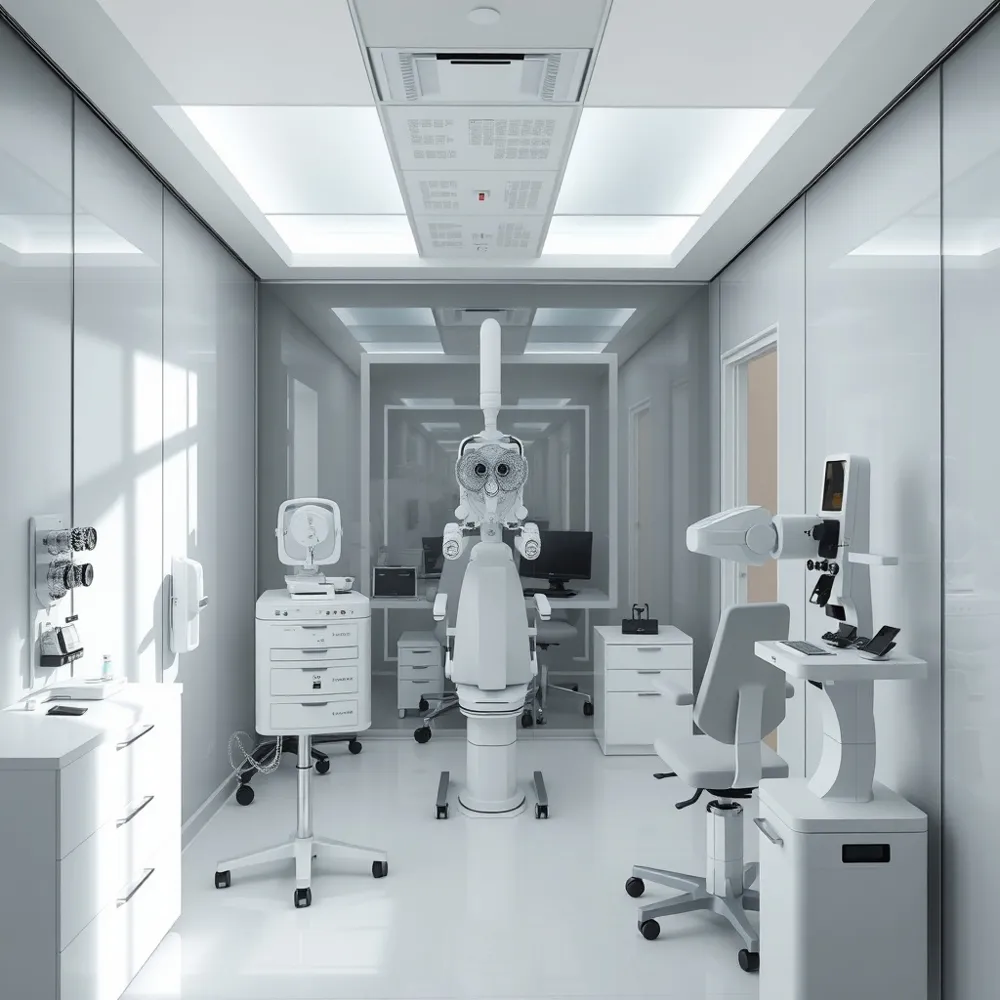 While low vision is often permanent, a specialized vision rehabilitation team can help patients learn new strategies to maintain their independence and quality of life, per the American Optometric Association. At Apple Eye Care, patients receive personalized guidance on integrating these supportive tools into their daily routines. By focusing on function rather than just the underlying pathology, the practice ensures that even those with significant impairment can manage daily tasks effectively.
Assistive devices range from classic optical aids to sophisticated digital solutions. Optical options include magnifying spectacles, handheld or stand magnifiers for near work, and telescopes designed for distance viewing, as detailed by the Mayo Clinic. Electronic alternatives often provide greater flexibility, such as video magnifiers that allow users to adjust contrast, brightness, and magnification levels up to 60 times.
Modern technology significantly bridges the gap for many patients. Accessibility features built into smartphones and tablets, alongside voice-to-text programs and screen magnification software like ZoomText, allow users to interact with digital information more independently, per the American Academy of Ophthalmology. Beyond hardware, simple environmental changes are highly effective, such as adjusting task lighting, increasing visual contrast with bold markers, and using tactile indicators on household appliances to improve safety.
| Category | Examples | Function |
|---|---|---|
| Optical | Telescopes | Distance viewing |
| Electronic | Video magnifiers | Adjustable contrast |
| Environmental | Task lighting | Contrast enhancement |
Patient Support and Insurance Considerations
When seeking support for visual impairment, finding a specialized provider is a vital first step for regaining independence. Patients should prioritize an optometrist or ophthalmologist who offers comprehensive, individualized assessments per the American Optometric Association. An ideal specialist provides a broad range of solutions, including electronic magnifiers, custom high-power eyeglasses, and training for daily living. At Apple Eye Care, the team combines compassionate, family-focused care with advanced diagnostics to help patients navigate both the functional and emotional challenges of vision loss.
Does insurance or Medicare cover eye care and low vision equipment?
Navigating coverage for low vision needs can be complex. While Medicare typically covers comprehensive rehabilitation evaluations and medical procedures for conditions like cataracts or glaucoma, it often excludes the cost of specific assistive devices. Most standard insurance plans view magnifiers as non-essential, leaving these costs as out-of-pocket expenses for many patients per the American Academy of Ophthalmology. Patients are encouraged to verify their specific policy benefits with their insurer or consult their provider regarding available coverage options.
What should I look for in a low vision specialist?
A qualified specialist should offer a multidisciplinary approach, connecting patients with occupational therapists and orientation experts to improve safety and mobility [per the National Eye Institute](https://www.nei.nih.gov/about/education-and-outreach/vision-rehabilitation-resources). Unlike general practices, a dedicated low vision expert focuses on quality of life metrics, such as facial recognition and reading stability. Apple Eye Care supports this by integrating DRI OCT Triton diagnostic imaging to tailor treatment, ensuring patients receive the personalized attention needed to monitor eye health and optimize remaining visual function over time.
Personalized Care at Apple Eye Care
For residents in El Paso, finding a practice that balances clinical precision with genuine compassion is essential when managing vision loss. Dr. Stephen Applebaum and his team at Apple Eye Care provide a family-focused environment where each patient receives a tailored approach to eye health. By integrating advanced diagnostics like the DRI OCT Triton, the clinic ensures that every patient gains a clear understanding of their ocular condition, whether they are managing early-stage glaucoma or complex cataract complications.
The practice emphasizes consistent, personalized support to help individuals preserve their independence. Because low vision often requires specialized monitoring, the team coordinates care plans that address both medical needs and functional goals. Patients concerned about changes in their visual acuity or those seeking expert management can schedule a comprehensive evaluation at www.appleeyecare.com or by calling the office directly to discuss their specific circumstances.