Introduction
Apple Eye Care, located at 865 N. Resler Dr in El Paso, Texas, is a family‑focused optometry practice that blends comprehensive eye exams with a full suite of vision‑correction options. Led by Dr. Stephen Applebaum, the team prioritizes personalized attention, ensuring each patient—from children to seniors—receives a care plan tailored to lifestyle and visual needs. Modern technology is at the core of the practice: the FDA‑approved DRI OCT Triton provides high‑resolution retinal and corneal imaging, guiding accurate diagnoses and safe candidacy assessments for procedures such as LASIK, PRK, and cataract surgery. Advanced diagnostic tools also allow early detection of dry‑eye disease, glaucoma, and macular degeneration, supporting proactive management. By integrating cutting‑edge imaging with compassionate, family‑oriented service, Apple Eye Care delivers an environment where patients feel confident pursuing long‑term visual health solutions. The practice’s commitment to ongoing education and flexible financing further ensures that cutting‑edge care remains accessible to every family member.
Personalized Eye Care in El Paso
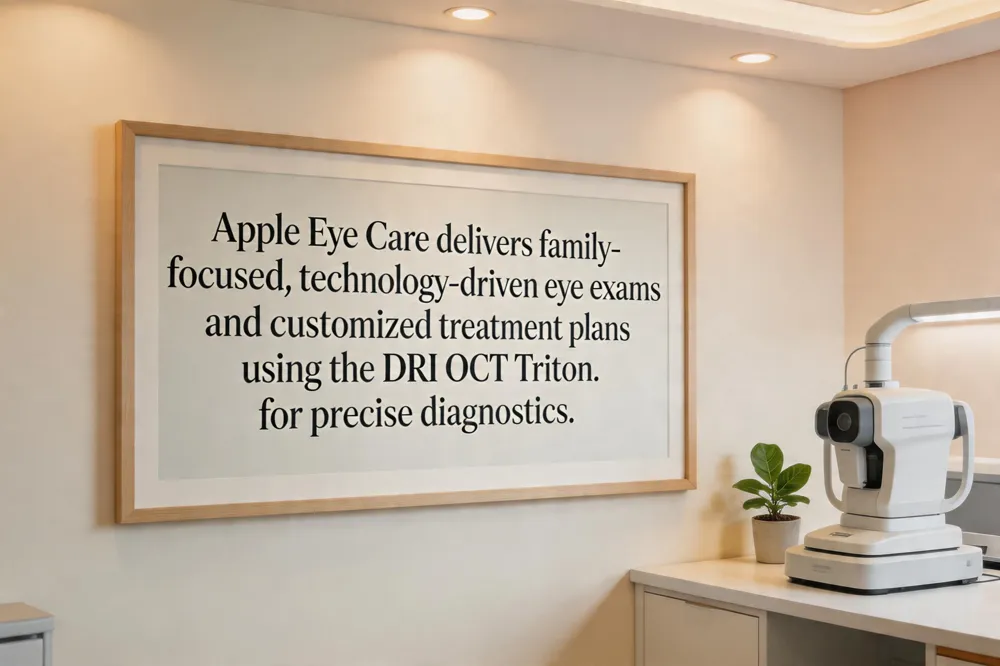 Apple Eye Care is a family‑focused optometry practice located at 865 N. Resler Dr, Suite F, El Paso, Texas. Led by Dr. Stephen Applebaum, the compassionate team provides comprehensive eye exams, vision‑correction services (glasses, contacts, and laser options) and specialized care for dry eye, cataracts, and glaucoma. Every patient receives a personalized treatment plan that reflects individual lifestyle needs and visual goals.
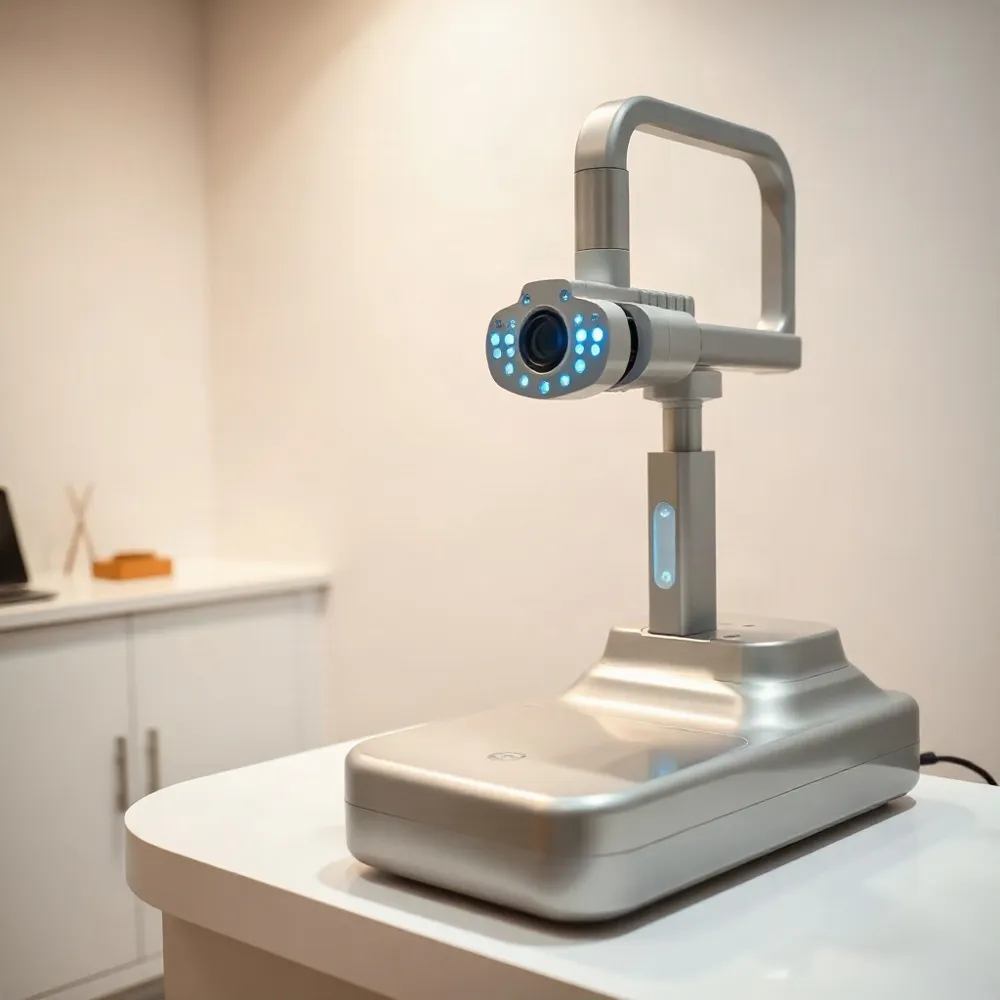
The practice emphasizes thorough, modern examinations. Using the FDA‑approved DRI OCT Triton optical coherence tomography system, clinicians obtain high‑resolution retinal and anterior‑segment images that enable early detection of disease, precise corneal mapping, and safe candidacy assessment for procedures such as LASIK. This advanced diagnostic capability, together with meticulous refraction testing, ensures that vision‑correction recommendations are both accurate and long‑lasting.
Patients appreciate the blend of cutting‑edge technology and a warm, family‑oriented environment. Whether seeking a routine check‑up, a new pair of glasses, or guidance about laser vision correction, Apple Eye Care delivers individualized attention, transparent communication, and a commitment to preserving visual health for years to come.
Understanding and Managing Myopia
 Myopia (nearsightedness)
Myopia, or nearsightedness, is a refractive error where the eye’s focus point falls in front of the retina, causing distant objects to appear blurry while near objects remain clear. It typically develops in childhood as the eyeball grows too long or the cornea and lens become overly steep, and can continue to progress into early adulthood, sometimes reaching high myopia if left unmanaged. Regular comprehensive eye exams are essential to monitor progression and to detect associated risks such as retinal detachment or glaucoma. Vision correction options include minus‑power eyeglasses, soft or rigid contact lenses, and refractive surgeries like LASIK, all of which can be tailored to each patient’s needs. At Apple Eye Care, we combine advanced diagnostics (DRI OCT Triton) with personalized treatment plans—including myopia control therapies—to help patients maintain clear vision and reduce long‑term complications.
Myopia (nearsightedness)
Myopia, or nearsightedness, is a refractive error where the eye’s focus point falls in front of the retina, causing distant objects to appear blurry while near objects remain clear. It typically develops in childhood as the eyeball grows too long or the cornea and lens become overly steep, and can continue to progress into early adulthood, sometimes reaching high myopia if left unmanaged. Regular comprehensive eye exams are essential to monitor progression and to detect associated risks such as retinal detachment or glaucoma. Vision correction options include minus‑power eyeglasses, soft or rigid contact lenses, and refractive surgeries like LASIK, all of which can be tailored to each patient’s needs. At Apple Eye Care, we combine advanced diagnostics (DRI OCT Triton) with personalized treatment plans—including myopia control therapies—to help patients maintain clear vision and reduce long‑term complications.
Progression and Risks Uncontrolled myopia can lead to serious complications later in life, including an increased likelihood of retinal detachment, macular degeneration, and glaucoma. The elongated eye shape strains the retina and optic nerve, making early detection and regular monitoring crucial. Apple Eye Care uses high‑resolution OCT imaging to track eye growth and retinal health, allowing timely interventions before complications arise.
Myopia Control Therapies Apple Eye Care offers evidence‑based myopia management programs for children and adolescents. Options include orthokeratology (overnight corneal reshaping lenses), low‑dose atropine eye drops, and lifestyle counseling that encourages outdoor activities and reduced near‑work strain. These therapies have been shown to slow axial length growth by up to 0.5 mm per year, helping to keep myopia at a lower, safer level while preserving visual acuity.
Visual Acuity: 20/100 vs 20/200
 Vision‑acuity is measured by a fraction such as 20/100 or 20/200. The numerator (20) denotes the test distance in feet, while the denominator indicates the distance at which a person with normal vision can read the same line on an eye chart. Therefore, 20/100 vision is better than 20/200 because you can see detail at 20 feet that a normally sighted person would have to be 100 feet away to read. In practical terms, 20/100 provides clearer distance vision, making activities like driving, reading road signs, and recognizing faces easier. By contrast, 20/200 vision is classified as legal blindness; it often limits independence and may require assistive devices or low‑vision rehabilitation.
Apple Eye Care in El Paso, TX led by Dr. Stephen Applebaum uses modern tools such as the DRI OCT Triton to assess retinal health and determine the safest pathway to improve visual acuity. Options range from personalized glasses and contact lenses to refractive‑surgery referrals (LASIK, PRK, or custom‑topography treatments) for eligible patients. Early evaluation can halt progression, address underlying conditions like dry eye or cataract, and restore sharper vision. A comprehensive eye exam at Apple Eye Care will pinpoint the exact acuity level, discuss legal‑blindness criteria, and outline a customized plan to move from 20/200 toward 20/100 or better.
LASIK Success Stories and Considerations
 Patient Testimonials
Stories from Apple Eye Care patients illustrate how LASIK can be life‑changing. A longtime glasses wearer saw the numbers on a clock for the first time after a painless procedure performed by Dr. Frederick Nelson. Other patients reported immediate 20/20 vision, freedom from contacts during sports, and renewed confidence in daily activities.
Patient Testimonials
Stories from Apple Eye Care patients illustrate how LASIK can be life‑changing. A longtime glasses wearer saw the numbers on a clock for the first time after a painless procedure performed by Dr. Frederick Nelson. Other patients reported immediate 20/20 vision, freedom from contacts during sports, and renewed confidence in daily activities.
Procedure Overview LASIK reshapes the cornea with a femtosecond laser flap and an excimer laser ablation, correcting myopia, hyperopia, and astigmatism. Apple Eye Care uses the FDA‑approved DRI OCT Triton for precise corneal mapping, ensuring safe, personalized treatment. Most patients experience rapid visual recovery within days and minimal discomfort.
Can people with Sjögren's syndrome undergo LASIK? People with Sjögren’s syndrome are generally high‑risk for LASIK because severe dry‑eye can impair corneal healing and raise complication rates. Eligibility requires well‑controlled disease, adequate corneal thickness, and aggressive dry‑eye management. Many surgeons favor PRK or non‑surgical corrections for these patients, and a thorough pre‑operative evaluation by Dr. Stephen Applebaum’s team is essential.
VSP Vision Insurance Apple Eye Care is an in‑network VSP provider. VSP members can schedule a WellVision Exam® with Dr. Applebaum, receive frame allowances, lens discounts, and use VSP’s Premier Edge™ locations for additional savings. The office handles claim submissions, ensuring members capture the full value of their benefits.
LASIK Eye Surgery LASIK offers rapid, long‑term visual correction with a high success rate. Candidates must have a stable prescription, sufficient corneal thickness, and no uncontrolled eye disease. Risks such as temporary glare, halos, or dry eye are low but discussed during the comprehensive evaluation. Apple Eye Care’s personalized approach and advanced imaging aim for optimal, lasting outcomes.
Future Directions and Emerging Therapies
 Macular degeneration remains a leading cause of irreversible vision loss, and while no therapy can fully reverse the retinal damage of age‑related macular degeneration (AMD), early detection and aggressive treatment can halt progression. Wet AMD patients often regain lost acuity when anti‑VEGF injections are administered promptly, and emerging modalities such as photobiomodulation, complement‑inhibiting agents, and AREDS2 nutritional protocols modestly improve outcomes for dry AMD.
Gene‑therapy research is moving rapidly toward retinal regeneration. A Harvard Medical School study demonstrated that delivery of three Yamanaka factors (Oct4, Sox2, Klf4) via adeno‑associated virus re‑programmed retinal ganglion cells in mice, restoring visual function and promoting optic‑nerve regeneration even in glaucoma models. Although still pre‑clinical, this epigenetic “reboot” strategy suggests a future where age‑related vision loss could be partially reversed.
Advanced imaging, especially the DRI OCT Triton system used at Apple Eye Care in El Paso, Texas, plays a pivotal role in both current management and future therapies. High‑resolution OCT enables precise mapping of retinal layers, early identification of AMD‑related changes, and monitoring of gene‑therapy effects on retinal architecture. By integrating cutting‑edge imaging with personalized care, clinicians can better select candidates for novel interventions and track visual recovery over time.
Has anyone ever reversed macular degeneration? No, there is currently no cure that can fully reverse age‑related macular degeneration once retinal damage has occurred. However, early detection and aggressive treatment can halt progression and, in some cases, restore a portion of lost vision—particularly in wet AMD when anti‑VEGF injections are given promptly. Emerging approaches such as photobiomodulation and complement‑inhibiting injections have shown modest visual gains and slowed anatomic loss in certain patients with dry AMD. Nutritional therapy (AREDS2) and lifestyle changes can also reduce the risk of further deterioration. While the underlying disease cannot be undone, timely, personalized care can preserve and sometimes improve visual function.
Conclusion
Apple Eye Care’s LASIK program demonstrates that modern laser vision correction can deliver rapid, painless, and lasting visual freedom. Patient stories—from a lifelong glasses wearer who read a clock for the first time after surgery to a professional athlete who returned to sport without contacts—highlight the life‑changing impact of precise, personalized care. Advanced diagnostics such as the DRI OCT Triton ensure safe candidacy assessment, while dry‑eye management and thorough pre‑operative counseling minimize complications. The practice’s family‑focused ethos, led by Dr. Stephen Applebaum, guarantees individualized treatment plans and compassionate follow‑up, reinforcing the commitment to restore clear sight for every age and lifestyle. By integrating cutting‑edge technology, evidence‑based protocols, and transparent financing, Apple Eye Care not only corrects refractive errors but also enhances confidence, independence, and overall quality of life. Their comprehensive approach, which includes regular retinal imaging, cataract monitoring, and glaucoma prevention, ensures patients maintain optimal visual health long after surgery.